Streptocephalus woottoni
Riverside fairy shrimp
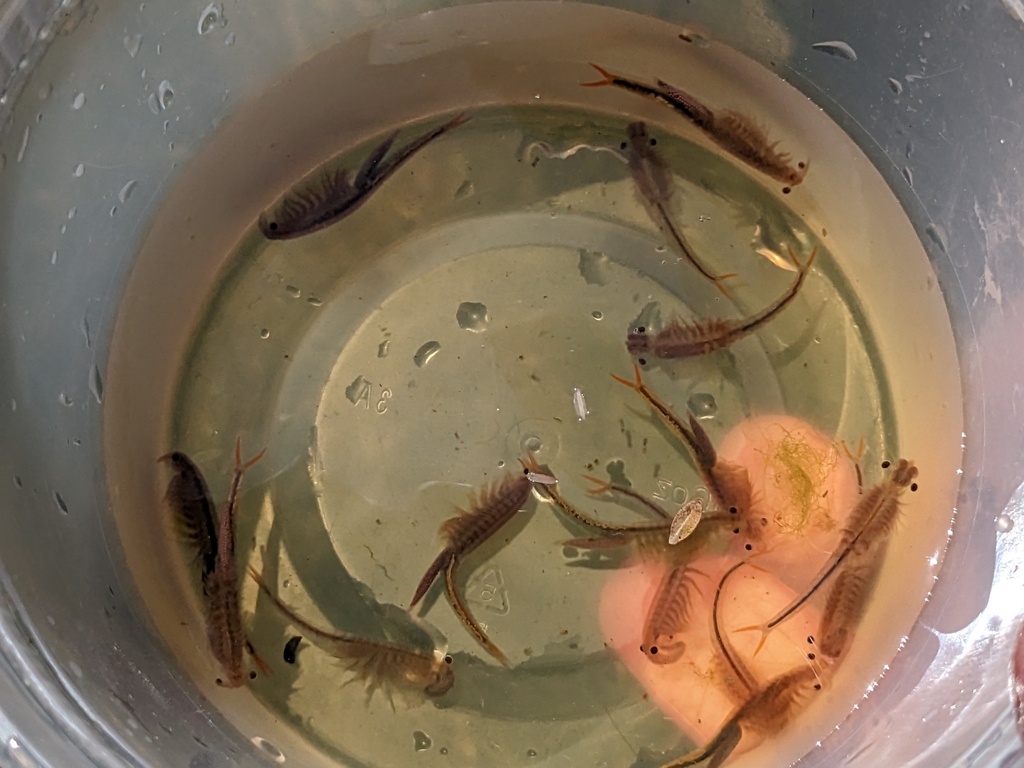
no rights reserved · CC0
Family: Streptocephalidae · Class: Branchiopoda · Order: Anostraca
Conservation status: Endangered · G1G2 S2
Streptocephalus woottoni (Riverside fairy shrimp) is a California animal in the Streptocephalidae family.
The Riverside fairy shrimp is a small freshwater crustacean measuring 12.7 to 25.4 mm (0.5 to 1.0 inch) in length. Males are distinguished from other fairy shrimp species primarily by their modified second pair of antennae, which are enlarged and specialized for grasping females during mating. Like other anostracan crustaceans, Riverside fairy shrimp possess a translucent body with numerous paired swimming appendages called phyllopods that create characteristic undulating swimming movements. Historically, Riverside fairy shrimp occurred throughout portions of southern California and northwestern Baja California, Mexico. The species was documented from Los Angeles, Orange, Riverside, San Diego, and Ventura counties (USFWS 1993). However, the species has been extirpated from much of its former range, with current populations restricted to portions of Ventura, Riverside, Orange, and San Diego counties. The historical range extended into Los Angeles County, but no extant populations are known from this area. Riverside fairy shrimp inhabit seasonal freshwater pools, including vernal pools and other ephemeral wetlands that hold water for relatively short periods. These pools are typically non-vegetated and occur in grassland and coastal sage scrub habitats. The species requires pools that maintain water for a minimum of 120 consecutive days to complete their life cycle, based on laboratory studies of their development time (Hathaway & Simovich 1996). Unlike some fairy shrimp species that tolerate alkaline conditions, Riverside fairy shrimp occur in pools with relatively low alkalinity levels. The species exhibits a typical anostracan life cycle, with drought-resistant eggs that can remain dormant in pool sediments for years until favorable conditions return. Upon pool inundation, eggs hatch and the shrimp develop through multiple molts over several weeks. Adults are filter feeders, consuming algae, bacteria, protozoa, and organic detritus suspended in the water column. Reproduction occurs through mating, with fertilized eggs being released to settle in pool sediments before the pools dry. The timing of pool filling and duration of inundation are critical factors determining reproductive success. The Riverside fairy shrimp was federally listed as endangered on August 3, 1993 (USFWS 1993). A recovery plan was completed in 1998, and the species received critical habitat designation in the same year covering approximately 1,950 acres across the four-county range. Primary threats include habitat loss and fragmentation from urban development, agriculture, and infrastructure projects. Non-native plant invasions alter pool hydrology and water chemistry, while climate change poses additional challenges through altered precipitation patterns. The species' dependence on highly specific seasonal wetland conditions and its restricted range make it particularly vulnerable to environmental changes. Recovery efforts focus on habitat protection, restoration of degraded pools, and management of existing populations through monitoring and threat reduction.
Classification
Class: Branchiopoda · Order: Anostraca · Family: Streptocephalidae
Conservation status
Endangered · G1G2 S2
Frequently asked questions
How is Streptocephalus woottoni classified?
Streptocephalus woottoni belongs to class Branchiopoda, order Anostraca, family Streptocephalidae.
What family does Streptocephalus woottoni belong to?
Streptocephalus woottoni is in the Streptocephalidae family.
Is Streptocephalus woottoni protected or of conservation concern?
Streptocephalus woottoni carries the following status: Endangered · G1G2 S2.
What is Streptocephalus woottoni?
The Riverside fairy shrimp is a small freshwater crustacean measuring 12.7 to 25.4 mm (0.5 to 1.0 inch) in length.
Is Streptocephalus woottoni found in California?
Yes. Streptocephalus woottoni is recorded in California in The California Species Project's catalogue.
More California species
This species has no close relatives in our California data — here are other species to explore.
Data from The California Species Project — 14,000+ California species with verified data from CNPS, CDFW, USFWS, and more.