Streptopelia chinensis
Spotted Dove
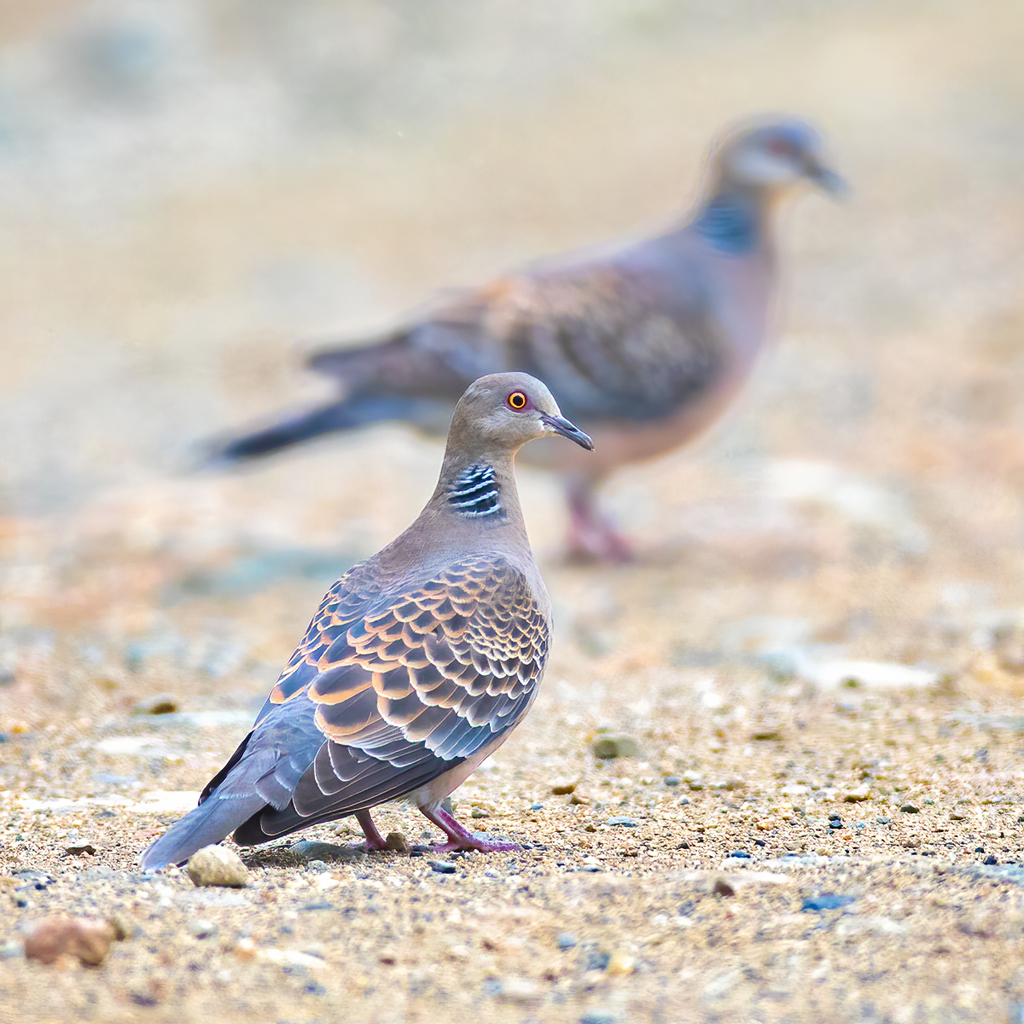
(c) egorbirder, some rights reserved (CC BY) · licence
Family: Columbidae · Class: Aves · Order: Columbiformes
Streptopelia chinensis (Spotted Dove) is a California animal in the Columbidae family.
The Spotted Dove is a medium-sized dove measuring 28-32 cm (11-12.6 inches) in length with a wingspan of 47-50 cm (18.5-19.7 inches). Adults weigh 120-170 grams (4.2-6.0 ounces). The species displays predominantly grayish-brown plumage with a distinctive black collar spotted with white on the nape of the neck, giving the species its common name. The back and wings show scaled patterns of darker brown edging on the feathers. The breast is pinkish-brown grading to pale gray on the belly. Males and females appear similar, though males may be slightly larger with more pronounced neck markings. Originally native to Southeast Asia, the Spotted Dove was introduced to California in the early 1900s and has established breeding populations primarily in urban and suburban areas throughout much of the state. Current populations are concentrated in the Los Angeles Basin, San Francisco Bay Area, Central Valley cities, and coastal urban centers from San Diego to Eureka. The species has expanded its range inland to cities in the Sierra Nevada foothills and desert communities of southeastern California. Spotted Doves inhabit urban parks, residential neighborhoods, agricultural areas, and riparian woodlands below 1,200 meters (3,937 feet) elevation. They show strong preference for areas with a mixture of trees for nesting and open ground for foraging. Common habitat types include city parks with mature trees, suburban yards with ornamental plantings, agricultural edges, and cemetery grounds. The species adapts well to human-modified landscapes and thrives in areas with regular water sources. Spotted Doves are primarily granivorous, feeding on seeds of grasses, herbs, and cultivated grains. They frequently forage on lawns and in gardens for fallen seeds, supplementing their diet with small fruits and occasionally green vegetation. The species forages primarily on the ground, often in pairs or small flocks. Breeding occurs year-round in California's mild climate, with peak activity from March through September. Nests are constructed as flimsy platforms of twigs placed in tree forks, shrubs, or human-made structures 2-6 meters above ground. Females typically lay two white eggs per clutch, with incubation lasting 14-16 days. Both parents share incubation and feeding duties, producing 3-5 broods annually under favorable conditions. As a non-native species, the Spotted Dove is not afforded protection under federal or state wildlife laws. Population trends in California appear stable in urban areas, though the species has experienced some decline in certain regions since peak abundance in the 1980s-1990s. Competition with native Mourning Doves and changing urban landscaping practices may influence local population dynamics. The species poses minimal ecological concern as it primarily utilizes human-modified habitats and shows limited impact on native bird communities.
Classification
Class: Aves · Order: Columbiformes · Family: Columbidae
Frequently asked questions
How is Streptopelia chinensis classified?
Streptopelia chinensis belongs to class Aves, order Columbiformes, family Columbidae.
What family does Streptopelia chinensis belong to?
Streptopelia chinensis is in the Columbidae family.
What is Streptopelia chinensis?
The Spotted Dove is a medium-sized dove measuring 28-32 cm (11-12.6 inches) in length with a wingspan of 47-50 cm (18.5-19.7 inches).
Is Streptopelia chinensis found in California?
Yes. Streptopelia chinensis is recorded in California in The California Species Project's catalogue.
Related species
Other California species in the same genus, family, or bioregion.
Data from The California Species Project — 14,000+ California species with verified data from CNPS, CDFW, USFWS, and more.