Streptopelia decaocto
Eurasian Collared-Dove
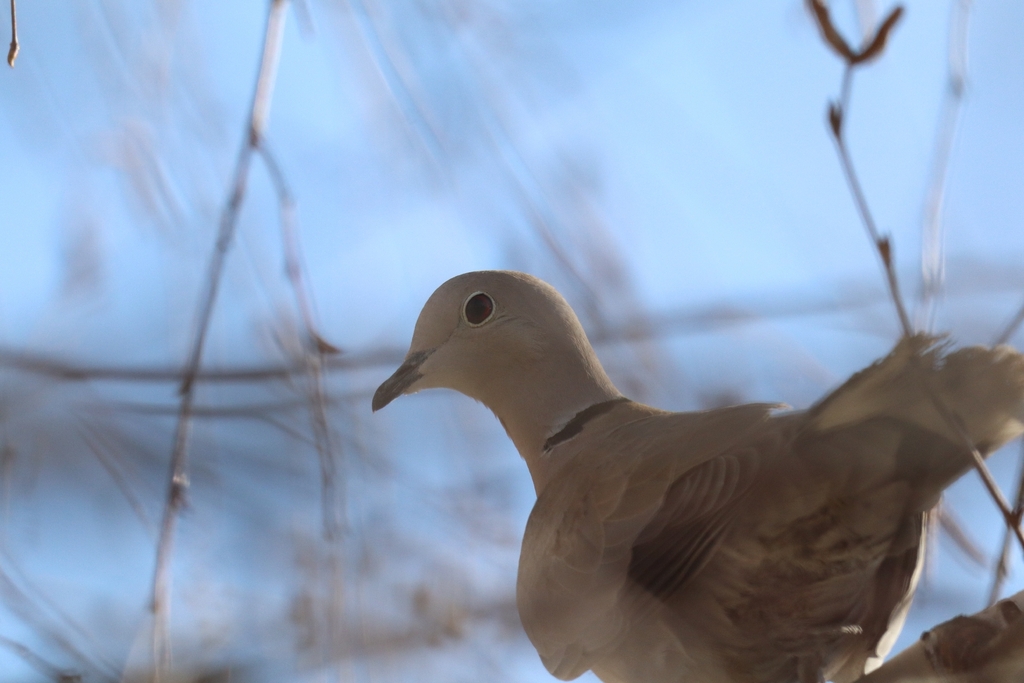
(c) Radu Teodoreanu, some rights reserved (CC BY) · licence
Family: Columbidae · Class: Aves · Order: Columbiformes
Streptopelia decaocto (Eurasian Collared-Dove) is a California animal in the Columbidae family.
The Eurasian Collared-Dove is a medium-sized dove measuring 32 to 33 centimeters (12.6 to 13.0 inches) in length with a wingspan of 47 to 55 centimeters (18.5 to 21.7 inches). Adults weigh between 125 and 240 grams (4.4 to 8.5 ounces). The plumage is predominantly pale grayish-buff with a distinctive black collar marking across the nape, outlined in white below. The tail is long and square-ended, appearing dark gray above with prominent white corners visible in flight. The underparts are paler than the back, ranging from pale gray to pinkish-buff. The bill is dark gray to black, and the legs are reddish-purple. Originally native to Asia, this species has undergone rapid range expansion across Europe since the 1930s and reached North America in the 1980s. In California, Eurasian Collared-Doves were first recorded in the 1990s and have since established populations throughout much of the state. The species now occurs from the Central Valley through southern California, with documented populations in urban and suburban areas of Los Angeles, Orange, Riverside, San Bernardino, and Ventura counties. Northern expansion continues, with recent records from the San Francisco Bay Area and Sacramento Valley. Eurasian Collared-Doves occupy diverse habitats but show strong preference for human-modified environments. The species thrives in residential areas, parks, agricultural lands, and urban centers from sea level to approximately 1,500 meters (4,900 feet) elevation. They commonly utilize ornamental trees, power lines, and buildings for nesting and roosting. Unlike native mourning doves, collared-doves show less dependence on natural habitats and greater tolerance for urbanization. The species exhibits year-round breeding behavior in California's mild climate, with peak activity from March through October. Pairs construct flimsy platform nests of twigs and stems, typically 3 to 10 meters (10 to 33 feet) above ground in trees or on artificial structures. Females lay two glossy white eggs per clutch, with incubation lasting 14 to 18 days. Multiple broods per year are common, with some pairs producing up to six clutches annually. Diet consists primarily of seeds and grains, supplemented by green plant material and occasional invertebrates. The species readily visits bird feeders and forages on lawns and agricultural fields. The Eurasian Collared-Dove is not listed under federal or state endangered species legislation and is considered an introduced species in North America. Population trends show continued expansion and increase throughout California. The species' adaptability to human environments and prolific breeding capacity have facilitated rapid colonization. While not currently considered a conservation concern, ongoing monitoring assesses potential impacts on native dove species through competition for resources. The rapid establishment across California demonstrates the species' ecological plasticity and successful adaptation to Mediterranean climate conditions.
Classification
Class: Aves · Order: Columbiformes · Family: Columbidae
Frequently asked questions
How is Streptopelia decaocto classified?
Streptopelia decaocto belongs to class Aves, order Columbiformes, family Columbidae.
What family does Streptopelia decaocto belong to?
Streptopelia decaocto is in the Columbidae family.
What is Streptopelia decaocto?
The Eurasian Collared-Dove is a medium-sized dove measuring 32 to 33 centimeters (12.6 to 13.0 inches) in length with a wingspan of 47 to 55 centimeters (18.5 to 21.7 inches).
Is Streptopelia decaocto found in California?
Yes. Streptopelia decaocto is recorded in California in The California Species Project's catalogue.
Related species
Other California species in the same genus, family, or bioregion.
Data from The California Species Project — 14,000+ California species with verified data from CNPS, CDFW, USFWS, and more.