Streptopelia risoria
Ringed Turtle-Dove
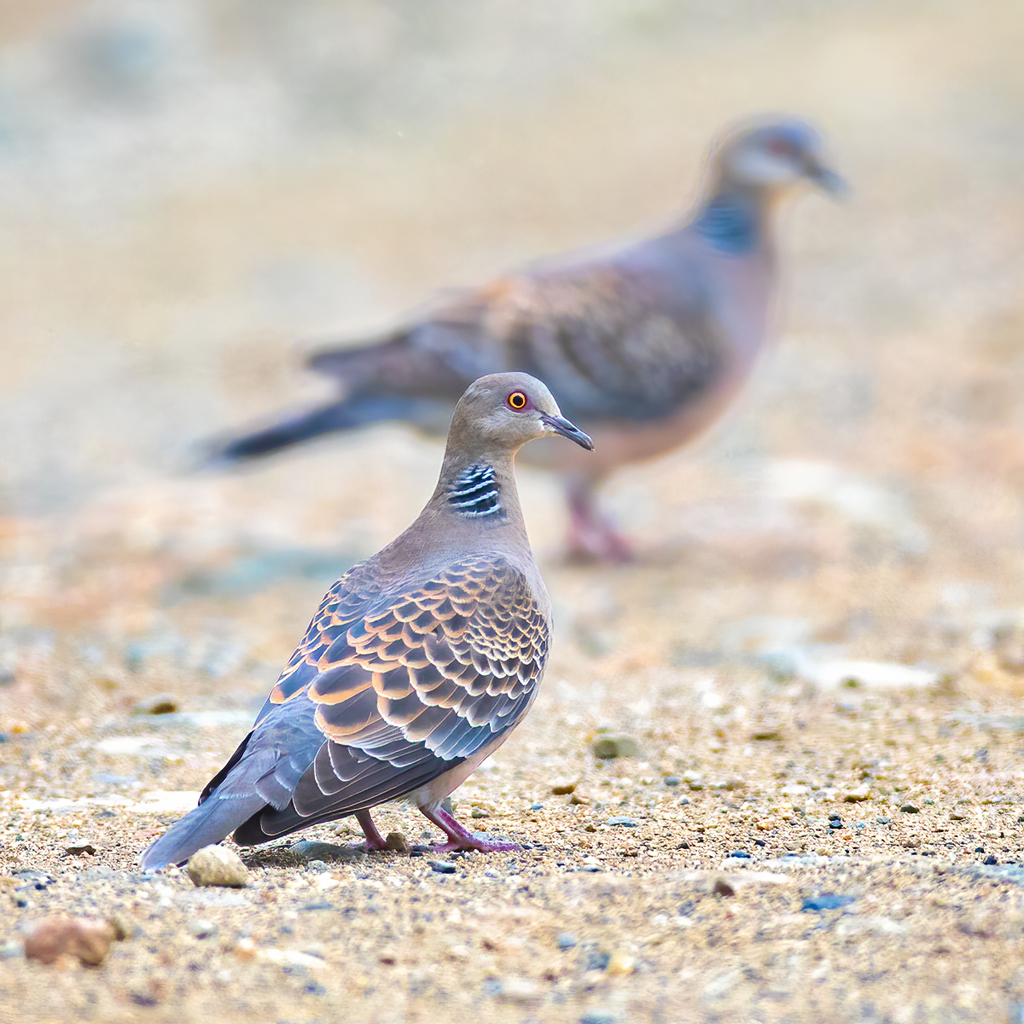
(c) egorbirder, some rights reserved (CC BY) · licence
Family: Columbidae · Class: Aves · Order: Columbiformes
Streptopelia risoria (Ringed Turtle-Dove) is a California animal in the Columbidae family.
The Ringed Turtle-Dove is a medium-sized dove measuring 25-28 cm (10-11 inches) in length with a wingspan of 47-55 cm (18.5-21.7 inches). Adults typically weigh 150-180 grams (5.3-6.3 ounces). The species displays pale sandy-brown to cream-colored plumage with a distinctive black half-collar or ring around the back and sides of the neck, from which it derives its common name. The wings show darker flight feathers, and the tail features white outer feathers visible in flight. Males and females appear similar, though males may display slightly brighter plumage during breeding season. The bill is dark gray to black, and the legs are reddish-pink. The Ringed Turtle-Dove is not native to California or North America. This species originates from Africa and parts of Asia, with its natural range extending from the Sahel region of Africa through the Middle East to India. In California, populations exist primarily as feral or escaped cage birds that have established small breeding colonies in urban and suburban areas. These populations are most commonly reported in Southern California, particularly in Los Angeles, Orange, and San Diego counties, though sightings occur sporadically throughout the state's urban centers. In its introduced California range, the species inhabits parks, residential areas with mature trees, agricultural areas, and urban environments. Ringed Turtle-Doves prefer areas with a combination of open ground for foraging and trees or structures for nesting and roosting. They adapt well to human-modified landscapes and are often found near grain storage facilities, bird feeding stations, and areas with abundant seed sources. The species shows tolerance for various elevation ranges but is most common in lowland areas. Ringed Turtle-Doves are granivorous, feeding primarily on seeds, grains, and occasionally small fruits. They forage on the ground, often in small flocks, and readily visit bird feeders. Breeding can occur year-round in favorable conditions, with peak activity during spring and summer months. Pairs construct simple platform nests of twigs in trees, shrubs, or on building ledges. Females typically lay two white eggs per clutch, with an incubation period of 14-16 days. Both parents share incubation duties and care for the young. The species produces multiple broods per year under suitable conditions. Their distinctive cooing call consists of a repetitive "coo-coo-coo" pattern that is softer than that of most native dove species. The Ringed Turtle-Dove has no federal or state conservation status in California as it is a non-native species. Populations in California remain localized and relatively small, sustained primarily through continued escapes or releases from captivity rather than established wild breeding success. Unlike some introduced dove species, Ringed Turtle-Doves have not become widespread or invasive in California. The species faces typical urban bird challenges including predation by cats, vehicle strikes, and habitat loss through development. Climate change may affect future distribution patterns, potentially allowing expansion into previously unsuitable areas as temperatures warm.
Classification
Class: Aves · Order: Columbiformes · Family: Columbidae
Frequently asked questions
How is Streptopelia risoria classified?
Streptopelia risoria belongs to class Aves, order Columbiformes, family Columbidae.
What family does Streptopelia risoria belong to?
Streptopelia risoria is in the Columbidae family.
What is Streptopelia risoria?
The Ringed Turtle-Dove is a medium-sized dove measuring 25-28 cm (10-11 inches) in length with a wingspan of 47-55 cm (18.5-21.7 inches).
Is Streptopelia risoria found in California?
Yes. Streptopelia risoria is recorded in California in The California Species Project's catalogue.
Related species
Other California species in the same genus, family, or bioregion.
Data from The California Species Project — 14,000+ California species with verified data from CNPS, CDFW, USFWS, and more.