Strix occidentalis
Spotted Owl
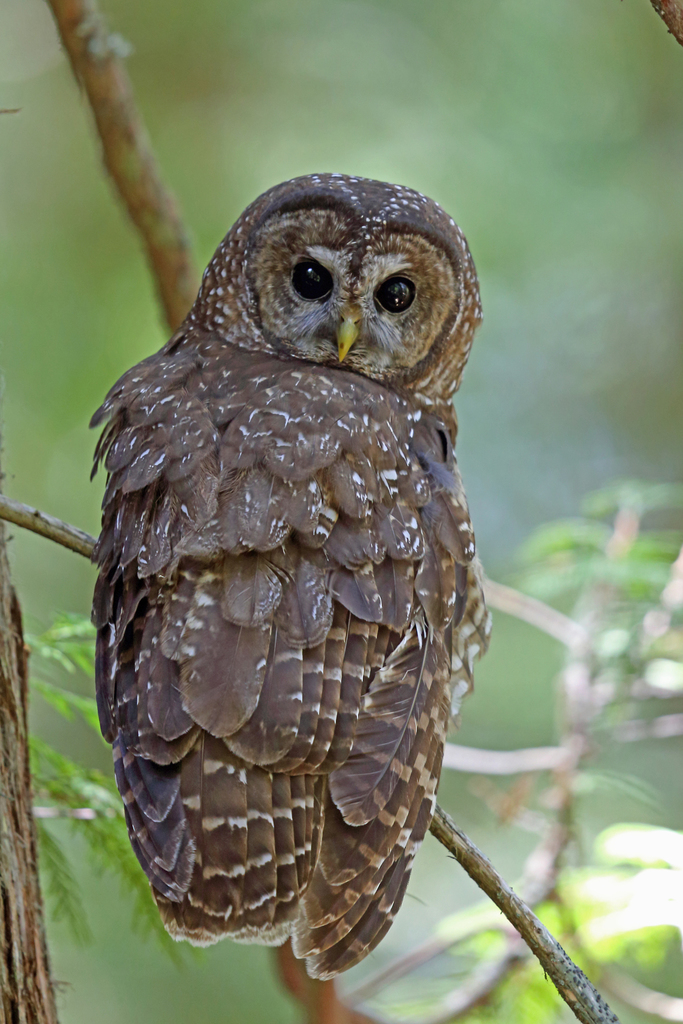
(c) Nigel Voaden, some rights reserved (CC BY) · licence
Family: Strigidae · Class: Aves · Order: Strigiformes
Strix occidentalis (Spotted Owl) is a California animal in the Strigidae family.
The Spotted Owl is a large, stocky owl with a distinctive appearance that includes a round head lacking ear tufts, dark brown eyes, and prominent white spots scattered across brown plumage. Adults measure 41-48 cm (16-19 inches) in length with a wingspan of 107-114 cm (42-45 inches). Females are typically larger than males, weighing 520-760 grams compared to males at 460-630 grams. The species occurs in three distinct subspecies across western North America. In California, two subspecies are present: the California Spotted Owl (Strix occidentalis occidentalis) inhabits the southern Cascade Range, Sierra Nevada, and coast ranges, while the Northern Spotted Owl (Strix occidentalis caurina) occurs in northwestern California's coastal forests. The California subspecies ranges from sea level to approximately 2,700 meters elevation, with populations distributed from the Oregon border south through the Sierra Nevada to Kern County. Spotted Owls require mature and old-growth forest habitats characterized by multilayered, multispecies canopies with large conifer overstory trees and shade-tolerant understory vegetation. At lower elevations, the species occupies habitats dominated by hardwoods, primarily oak woodlands, while higher elevation sites feature mixed conifer forests with Douglas-fir, ponderosa pine, and true firs. Critical habitat components include large trees for nesting, dense canopy cover for roosting, and open understory areas for foraging. The species shows strong site fidelity, often using the same territories for multiple years. Spotted Owls are primarily nocturnal hunters that feed almost exclusively on small mammals, particularly flying squirrels, woodrats, and other rodents. They are opportunistic predators that also consume birds, reptiles, and insects when available. Breeding typically begins in March, with females laying 2-3 white eggs in tree cavities, on platforms created by broken treetops, or in abandoned nests of other species. The female incubates eggs for approximately 30 days while the male provides food. Young fledge after 34-36 days but remain dependent on parents for several months. Conservation status varies among subspecies, reflecting different levels of habitat loss and population decline. The Northern Spotted Owl was listed as threatened under the Endangered Species Act in 1990 and has experienced continued population declines, with recent assessments indicating it may warrant reclassification to endangered status. The California Spotted Owl, while not federally listed, has experienced population declines of 30-50% in some areas according to NatureServe. Primary threats include habitat loss from logging, wildfire, and development, as well as competition from the more aggressive Barred Owl, which has expanded its range westward. Climate change poses additional challenges by altering forest composition and increasing wildfire frequency and intensity. The species requires large territories of suitable habitat, making it particularly vulnerable to forest fragmentation.
Classification
Class: Aves · Order: Strigiformes · Family: Strigidae
Frequently asked questions
How is Strix occidentalis classified?
Strix occidentalis belongs to class Aves, order Strigiformes, family Strigidae.
What family does Strix occidentalis belong to?
Strix occidentalis is in the Strigidae family.
What is Strix occidentalis?
The Spotted Owl is a large, stocky owl with a distinctive appearance that includes a round head lacking ear tufts, dark brown eyes, and prominent white spots scattered across brown plumage.
Is Strix occidentalis found in California?
Yes. Strix occidentalis is recorded in California in The California Species Project's catalogue.
Related species
Other California species in the same genus, family, or bioregion.
Data from The California Species Project — 14,000+ California species with verified data from CNPS, CDFW, USFWS, and more.