Strix occidentalis occidentalis pop. 1
California spotted owl - coastal-southern California DPS
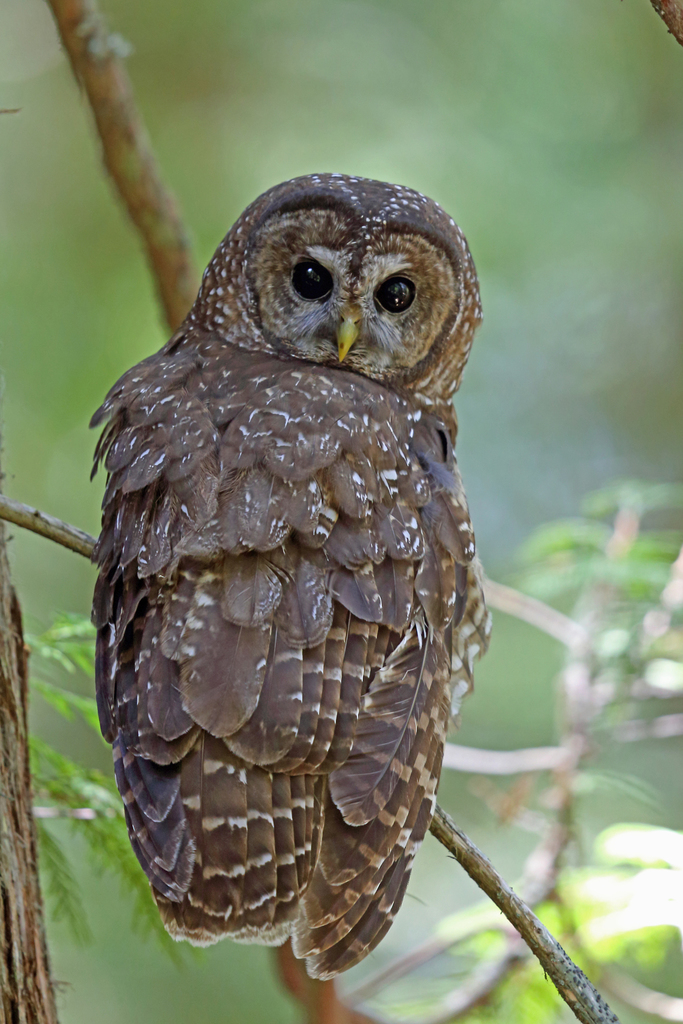
(c) Nigel Voaden, some rights reserved (CC BY) · licence
Family: Strigidae · Class: Aves · Order: Strigiformes
Conservation status: Proposed Endangered
Strix occidentalis occidentalis pop. 1 (California spotted owl - coastal-southern California DPS) is a California animal in the Strigidae family.
The California spotted owl (Strix occidentalis occidentalis) is a medium-sized owl and one of three recognized subspecies of spotted owl in North America. Adults measure 41-48 cm (16-19 inches) in length with a wingspan of 107-114 cm (42-45 inches). The species displays brown and white barred plumage with distinctive white spots on the head, back, and wings. Facial discs are grayish-brown with darker concentric circles, and the eyes are dark brown. Unlike the closely related northern spotted owl, California spotted owls exhibit lower genetic variation and are generally lighter in coloration. The California spotted owl occurs throughout the Sierra Nevada mountain range in California and Nevada, and in southern and coastal California including the Coastal, Transverse, and Peninsular mountain ranges. The range extends into Sierra San Pedro Martir in Baja California Norte, Mexico. A distinct geographic separation exists between the Sierra Nevada and Coastal-Southern California populations. The U.S. Fish and Wildlife Service recognizes two distinct population segments: the Sierra Nevada DPS and the Coastal-Southern California DPS. California spotted owls are primarily found on lands managed by the U.S. Forest Service and National Park Service. The species inhabits structurally diverse coniferous and mixed forests with larger trees and moderate to dense canopy cover. They prefer old-growth and mature forests with complex vertical structure, including multiple canopy layers and abundant snags for nesting. Nesting occurs in cavities of large trees, broken-top snags, or occasionally on platforms created by mistletoe brooms. The species demonstrates strong site fidelity, often returning to the same territory for multiple years. California spotted owls are primarily nocturnal hunters, feeding on small mammals including woodrats, flying squirrels, pocket gophers, and mice. They also consume birds, reptiles, and arthropods. Breeding occurs from March through August, with females typically laying 1-3 eggs. Juveniles remain dependent on parents for several months after fledging, learning essential hunting skills during this extended period. The species is non-migratory but may move seasonally within their territory based on prey availability and weather conditions. In February 2023, the U.S. Fish and Wildlife Service proposed listing the Coastal-Southern California distinct population segment as endangered and the Sierra Nevada DPS as threatened under the Endangered Species Act. The Coastal-Southern California DPS faces threats from continuing population declines, fragmented habitat, and risks from high-severity fire, tree mortality, and drought. The Sierra Nevada DPS confronts similar threats plus the recent invasion of barred owls, which compete for territory and prey resources. Since approximately 2020, barred owls have penetrated California spotted owl range in the Sierra Nevada, though their numbers remain relatively low and scattered. California spotted owls are also listed as a species of special concern by the California Department of Fish and Wildlife. Climate change exacerbates existing threats through increased wildfire frequency and intensity, prolonged drought periods, and shifts in forest composition.
Classification
Class: Aves · Order: Strigiformes · Family: Strigidae
Conservation status
Proposed Endangered
Frequently asked questions
How is Strix occidentalis occidentalis pop. 1 classified?
Strix occidentalis occidentalis pop. 1 belongs to class Aves, order Strigiformes, family Strigidae.
What family does Strix occidentalis occidentalis pop. 1 belong to?
Strix occidentalis occidentalis pop. 1 is in the Strigidae family.
Is Strix occidentalis occidentalis pop. 1 protected or of conservation concern?
Strix occidentalis occidentalis pop. 1 carries the following status: Proposed Endangered.
What is Strix occidentalis occidentalis pop. 1?
The California spotted owl (Strix occidentalis occidentalis) is a medium-sized owl and one of three recognized subspecies of spotted owl in North America.
Is Strix occidentalis occidentalis pop. 1 found in California?
Yes. Strix occidentalis occidentalis pop. 1 is recorded in California in The California Species Project's catalogue.
Related species
Other California species in the same genus, family, or bioregion.
Data from The California Species Project — 14,000+ California species with verified data from CNPS, CDFW, USFWS, and more.