Strix varia
Barred Owl
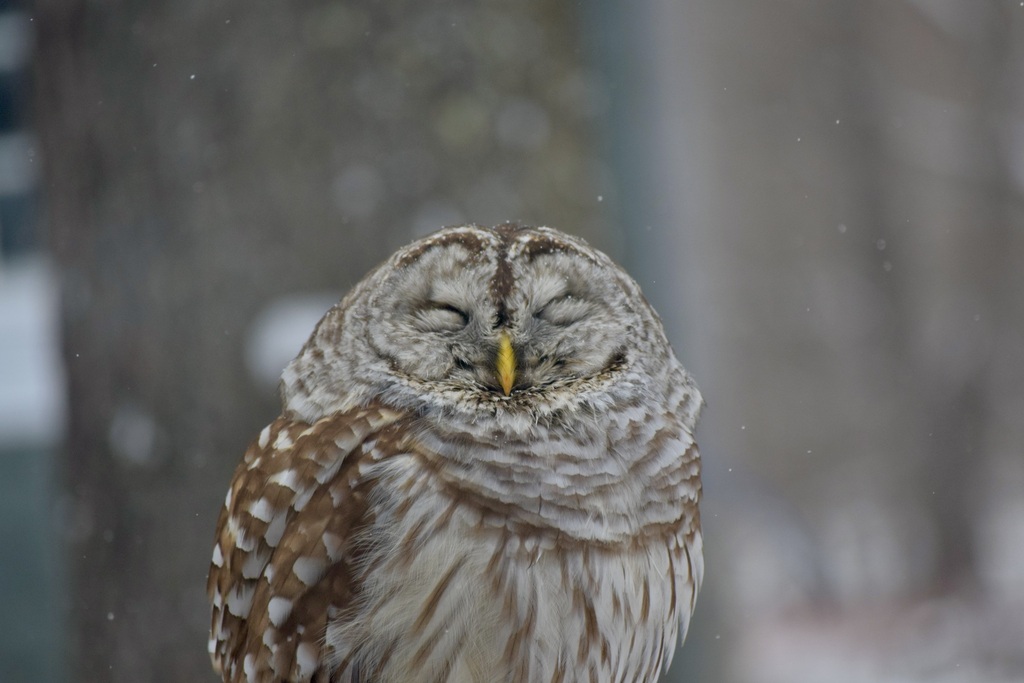
(c) Bernie Paquette, some rights reserved (CC BY) · licence
Family: Strigidae · Class: Aves · Order: Strigiformes
Strix varia (Barred Owl) is a California animal in the Strigidae family.
The Barred Owl is a medium-sized owl native to eastern North America that has expanded its range westward into California and the Pacific Northwest. Adults measure 40-63 cm (16-25 inches) in length with a wingspan of 96-125 cm (38-49 inches). They weigh 468-1,050 grams (1.0-2.3 pounds), with females typically larger than males. The species displays distinctive brown and white barred plumage across the wings, back, and tail, with vertical brown streaking on a white chest and belly. The facial disc is grayish-brown with darker concentric circles, and the eyes are dark brown, unlike the yellow eyes of most North American owls. The bill is yellow, and the legs and feet are feathered. Historically confined to eastern North America from southeastern Canada to the Gulf Coast, Barred Owls began expanding westward in the mid-20th century. In California, the species was first documented in the 1970s and has since established populations primarily in the northern coastal regions and Sierra Nevada foothills. Current California populations occur in Humboldt, Del Norte, Siskiyou, Shasta, and Mendocino counties, with occasional records extending south to Sonoma County. The westward expansion has been facilitated by forest fragmentation, fire suppression policies, and human development creating suitable habitat corridors. Barred Owls inhabit mature forests with dense canopy cover, particularly mixed coniferous-deciduous woodlands near water sources. In California, they occupy old-growth and second-growth forests dominated by Douglas fir, redwood, and mixed hardwood species. The species requires large trees with suitable nesting cavities, typically 6-18 meters (20-60 feet) above ground. They prefer areas with permanent water sources such as streams, wetlands, and riparian corridors that support abundant prey populations. Barred Owls are opportunistic predators with a diverse diet including small mammals, amphibians, reptiles, birds, fish, and invertebrates. Primary prey consists of mice, voles, shrews, and squirrels, but they readily consume frogs, salamanders, crayfish, and small fish. Breeding occurs from March through August, with peak activity in April and May. Females lay 2-4 white eggs in tree cavities, with an incubation period of 28-33 days. Young fledge after 35-40 days but remain dependent on parents for several months. The species is known for its distinctive hooting call, often described as "who-cooks-for-you." Barred Owls are not federally listed and maintain stable populations across most of their range. However, their westward expansion has created significant conservation concerns for native spotted owl populations in the Pacific Northwest. Barred Owls compete directly with spotted owls for habitat and prey, and may hybridize with the endangered northern spotted owl. The U.S. Fish and Wildlife Service has conducted experimental removal programs in some areas to protect spotted owl populations. In California, Barred Owls are considered a non-native species, and their continued expansion raises concerns about impacts on native owl species and forest ecosystems.
Classification
Class: Aves · Order: Strigiformes · Family: Strigidae
Frequently asked questions
How is Strix varia classified?
Strix varia belongs to class Aves, order Strigiformes, family Strigidae.
What family does Strix varia belong to?
Strix varia is in the Strigidae family.
What is Strix varia?
The Barred Owl is a medium-sized owl native to eastern North America that has expanded its range westward into California and the Pacific Northwest.
Is Strix varia found in California?
Yes. Strix varia is recorded in California in The California Species Project's catalogue.
Related species
Other California species in the same genus, family, or bioregion.
Data from The California Species Project — 14,000+ California species with verified data from CNPS, CDFW, USFWS, and more.