Strymon avalona
Avalon Scrub-Hairstreak
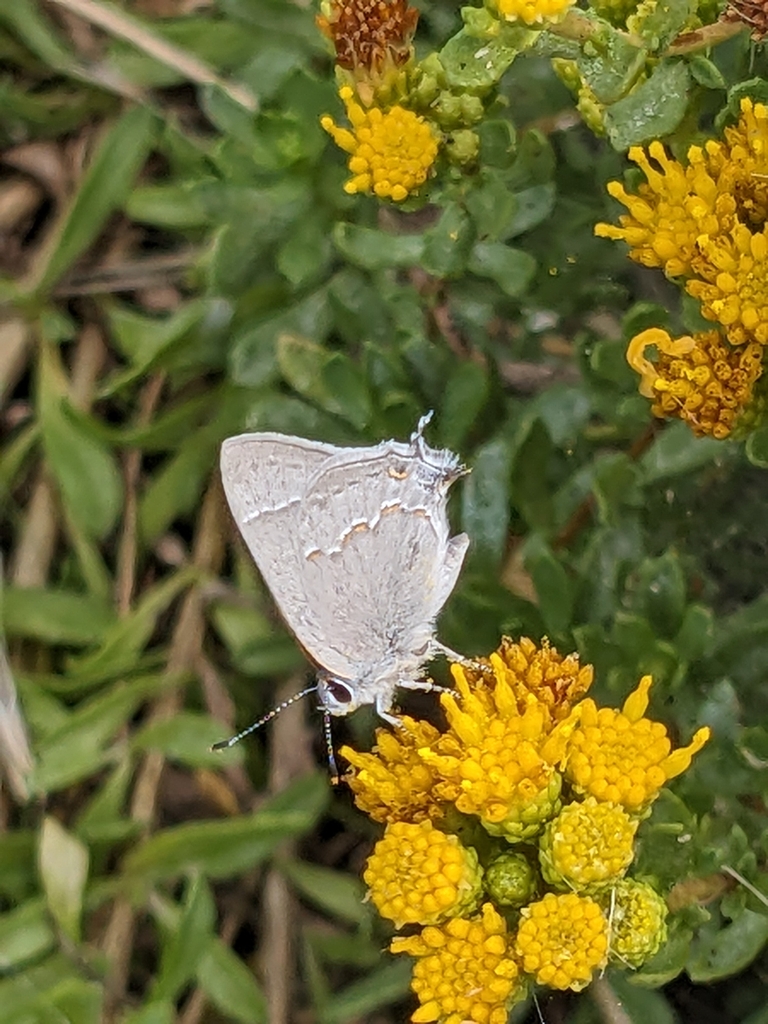
(c) Aaron Kreisberg, some rights reserved (CC BY) · licence
Family: Lycaenidae · Class: Insecta · Order: Lepidoptera
Strymon avalona (Avalon Scrub-Hairstreak) is a California animal in the Lycaenidae family.
The Avalon Scrub-Hairstreak (Strymon avalona) is a small butterfly endemic to Santa Catalina Island, located approximately 35 kilometers (22 miles) southwest of Los Angeles in the Pacific Ocean. This species represents one of California's most geographically restricted butterflies, with its entire global range confined to this single island. Adults exhibit the typical hairstreak morphology with a wingspan of approximately 25-30 mm (1.0-1.2 inches). The dorsal wing surfaces are gray-brown with subtle blue iridescence in males, while females display more uniform brown coloration. The ventral hindwings feature characteristic eyespots and thin tail-like projections that give hairstreaks their common name. These false antennae help confuse predators about the butterfly's head orientation. The underside displays a complex pattern of white, gray, and orange markings that provide camouflage when the butterfly rests with wings closed. Historically, the species occurred throughout suitable habitat on Santa Catalina Island. Current distribution appears more restricted due to habitat modification and the introduction of non-native species. The butterfly inhabits coastal sage scrub and chaparral communities, typically at elevations from sea level to approximately 400 meters (1,300 feet). It shows strong association with areas containing its host plants and requires relatively undisturbed native vegetation. The Avalon Scrub-Hairstreak depends entirely on two native legumes: silverleaf lotus (Lotus argophyllus var. ornithopus) and deerbrush (Lotus scoparius). Females deposit eggs singly on host plant buds and young leaves. Larvae are cryptically colored green caterpillars that feed on the foliage and developing seed pods. The species likely completes multiple generations per year, with peak adult activity occurring during spring and early summer months when host plants are actively growing. Adults are primarily nectarivores, visiting various native flowering plants including buckwheat species and other members of the coastal sage scrub community. Like many island endemic species, the Avalon Scrub-Hairstreak faces significant conservation challenges despite lacking formal federal or state listing status. Primary threats include habitat degradation from introduced herbivores, particularly feral goats and pigs that have historically damaged native vegetation on Santa Catalina Island. Competition from non-native plant species reduces the availability and quality of host plants. Urban development and recreational activities on the island create additional habitat fragmentation. Climate change poses emerging threats through altered precipitation patterns and increased fire risk that could affect the limited coastal sage scrub habitat. The Catalina Island Conservancy, which manages approximately 88% of Santa Catalina Island, conducts habitat restoration projects that benefit this species. Efforts include removal of invasive species, native plant restoration, and control of feral ungulate populations. The island's isolation provides some protection from mainland threats but also limits options for population rescue or genetic exchange. Continued monitoring of population trends and habitat quality remains essential for this endemic butterfly's long-term survival.
Classification
Class: Insecta · Order: Lepidoptera · Family: Lycaenidae
Frequently asked questions
How is Strymon avalona classified?
Strymon avalona belongs to class Insecta, order Lepidoptera, family Lycaenidae.
What family does Strymon avalona belong to?
Strymon avalona is in the Lycaenidae family.
What is Strymon avalona?
The Avalon Scrub-Hairstreak (Strymon avalona) is a small butterfly endemic to Santa Catalina Island, located approximately 35 kilometers (22 miles) southwest of Los Angeles in the Pacific Ocean.
Is Strymon avalona found in California?
Yes. Strymon avalona is recorded in California in The California Species Project's catalogue.
Related species
Other California species in the same genus, family, or bioregion.
Data from The California Species Project — 14,000+ California species with verified data from CNPS, CDFW, USFWS, and more.