Strymon istapa
Mallow Scrub-Hairstreak
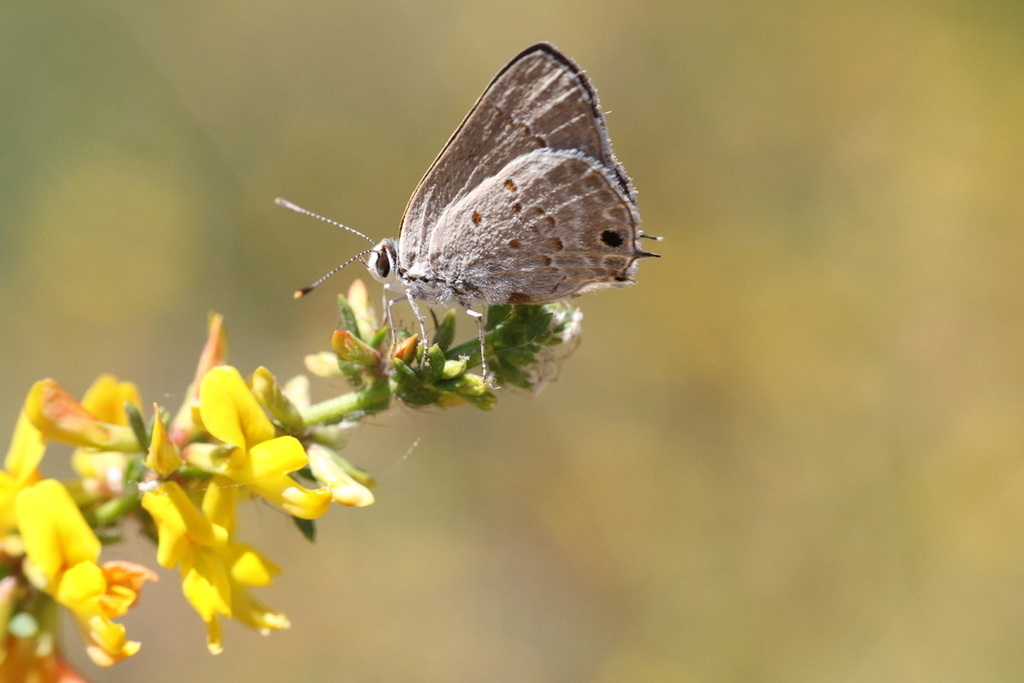
(c) Emily Herriott, some rights reserved (CC BY) · licence
Family: Lycaenidae · Class: Insecta · Order: Lepidoptera
Strymon istapa (Mallow Scrub-Hairstreak) is a California animal in the Lycaenidae family.
The Mallow Scrub-Hairstreak is a small butterfly in the family Lycaenidae with distinctive wing patterns and specialized habitat requirements. Adults measure approximately 22-28 mm (0.9-1.1 inches) in wingspan. The dorsal surfaces are typically brown to grayish-brown, while the ventral hindwings display a complex pattern of white, orange, and black markings with characteristic hairlike tails extending from the hindwing margins. Males often exhibit subtle blue scaling on the dorsal forewings. The species can be distinguished from related hairstreaks by its specific wing pattern and association with mallow host plants. The Mallow Scrub-Hairstreak ranges from Brazil north through Central America, the West Indies, and Mexico to southern California, southern Arizona, South Texas, and peninsular Florida. In California, the species occurs primarily in coastal and desert regions of the southern counties, including Imperial, Riverside, San Bernardino, Orange, Los Angeles, Ventura, and Santa Barbara counties. The butterfly represents the northern extent of a primarily Neotropical distribution. This species inhabits areas where its host plants occur, typically in disturbed sites, coastal scrub, desert washes, and urban environments. In California, it is found from sea level to approximately 1,200 meters (3,900 feet) elevation. The butterfly requires open, sunny locations with adequate nectar sources and proximity to larval host plants. Coastal populations often utilize sites near beaches, lagoons, and estuarine margins where salt-tolerant mallows grow. Mallow Scrub-Hairstreaks are multivoltine, producing multiple generations per year in favorable climates. Adults are active throughout much of the year in southern California, with peak abundance typically occurring during warmer months. Females deposit single eggs on flower buds, young leaves, or stems of host plants in the mallow family (Malvaceae), including alkali mallow (Sida hederacea) and coastal Indian mallow (Abutilon permolle). The species also utilizes bay cedar (Suriana maritima) as a host plant. Larvae feed on flowers, developing seeds, and young foliage. Adults nectar on various flowering plants, including lantana, pentas, and native wildflowers. The Mallow Scrub-Hairstreak is not currently listed under federal or California endangered species legislation. However, California populations face pressure from habitat loss due to coastal development, urbanization, and agricultural conversion. Many of the weedy, disturbed habitats where host plants occur are vulnerable to development or habitat modification. Climate change may affect the distribution of both the butterfly and its host plants. The species benefits from the persistence of its host plants in urban and suburban environments, though populations remain localized and potentially vulnerable to local extirpations. Conservation efforts focus on maintaining habitat corridors and protecting areas where native mallow species persist.
Classification
Class: Insecta · Order: Lepidoptera · Family: Lycaenidae
Frequently asked questions
How is Strymon istapa classified?
Strymon istapa belongs to class Insecta, order Lepidoptera, family Lycaenidae.
What family does Strymon istapa belong to?
Strymon istapa is in the Lycaenidae family.
What is Strymon istapa?
The Mallow Scrub-Hairstreak is a small butterfly in the family Lycaenidae with distinctive wing patterns and specialized habitat requirements.
Is Strymon istapa found in California?
Yes. Strymon istapa is recorded in California in The California Species Project's catalogue.
Related species
Other California species in the same genus, family, or bioregion.
Data from The California Species Project — 14,000+ California species with verified data from CNPS, CDFW, USFWS, and more.