Strymon melinus
Gray Hairstreak
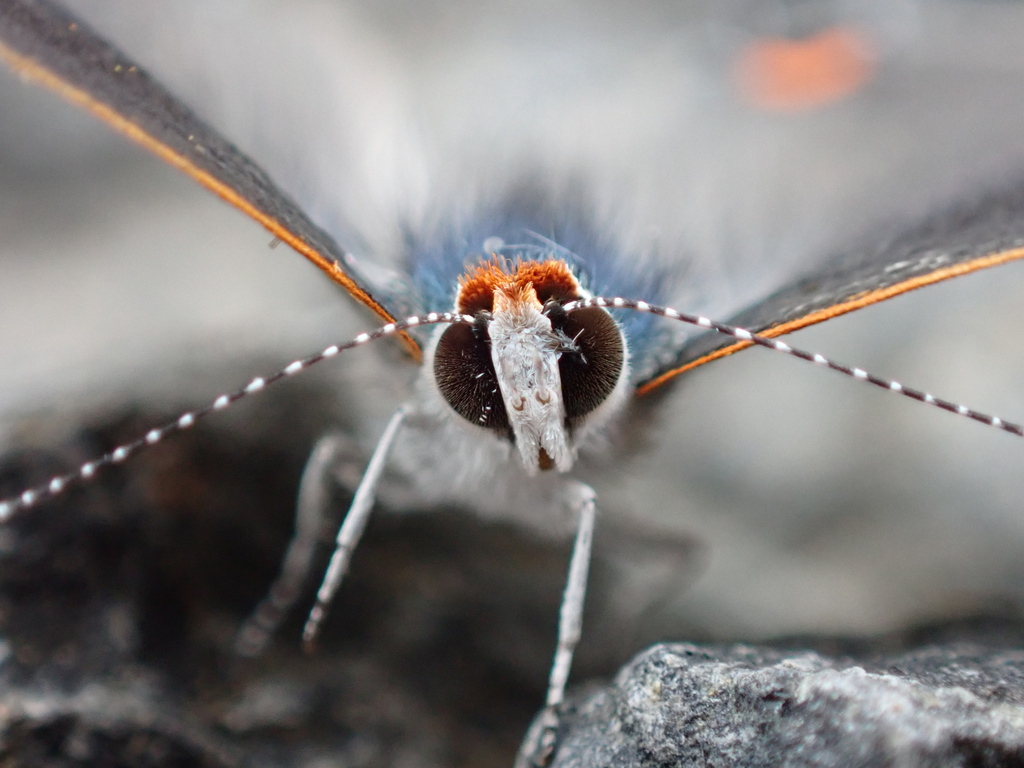
(c) dhasdf, some rights reserved (CC BY) · licence
Family: Lycaenidae · Class: Insecta · Order: Lepidoptera
Strymon melinus (Gray Hairstreak) is a California animal in the Lycaenidae family.
The Gray Hairstreak is a small butterfly with forewings measuring 11 to 16 mm (0.4 to 0.6 inches) in length. The dorsal wing surfaces are brownish-gray to slate-gray, while the ventral surfaces display a distinctive pattern of white-edged black and orange lines across pale gray wings. Males typically exhibit a small scent patch on the forewings. Both sexes possess characteristic hairstreak features including thin tail-like extensions on the hindwings and small orange and black eyespots near the wing tips, which may help deflect predator attacks away from vital body parts. The Gray Hairstreak has the most extensive range of any hairstreak species in North America, occurring throughout the continental United States from southern Canada south to Mexico and continuing southward to Venezuela. In California, the species is found statewide from sea level to mountainous regions, inhabiting both urban and rural environments. This widespread distribution reflects the species' high adaptability to diverse climatic conditions and habitats. Gray Hairstreaks occupy an exceptionally broad range of habitats, including gardens, parks, agricultural areas, roadsides, desert washes, chaparral, oak woodlands, and mountain meadows. The species thrives in disturbed habitats and human-modified landscapes, often being more abundant in areas with mixed vegetation types. Adults are commonly observed in sunny, open areas where flowering plants provide nectar sources. This species demonstrates extensive host plant flexibility, utilizing flowers and fruits from an almost endless variety of plants across multiple plant families. Larvae most frequently feed on members of the pea family (Fabaceae) including beans, clovers, and various legumes, as well as plants in the mallow family (Malvaceae) such as cotton and mallow species. This polyphagous feeding strategy allows the Gray Hairstreak to exploit diverse plant resources and colonize new habitats rapidly. Adults are active throughout the warmer months, with multiple generations per year in favorable climates. In California, breeding can occur from March through November depending on elevation and local conditions. Males engage in territorial behavior, perching on prominent vegetation to intercept passing females. Mating occurs after brief courtship flights, and females deposit single eggs on flower buds or young fruits of host plants. The Gray Hairstreak is not federally or state listed and appears to have stable populations throughout its range. The species' broad host plant usage, habitat flexibility, and tolerance of human disturbance have likely contributed to its conservation success. Unlike many specialized butterfly species, Gray Hairstreaks often benefit from agricultural practices and urban development that create edge habitats and diverse plant communities. Climate change may potentially expand suitable habitat northward, though extreme weather events could impact local populations. The species serves as an important pollinator and represents a conservation success story among North American butterflies.
Classification
Class: Insecta · Order: Lepidoptera · Family: Lycaenidae
Frequently asked questions
How is Strymon melinus classified?
Strymon melinus belongs to class Insecta, order Lepidoptera, family Lycaenidae.
What family does Strymon melinus belong to?
Strymon melinus is in the Lycaenidae family.
What is Strymon melinus?
The Gray Hairstreak is a small butterfly with forewings measuring 11 to 16 mm (0.4 to 0.6 inches) in length.
Is Strymon melinus found in California?
Yes. Strymon melinus is recorded in California in The California Species Project's catalogue.
Related species
Other California species in the same genus, family, or bioregion.
Data from The California Species Project — 14,000+ California species with verified data from CNPS, CDFW, USFWS, and more.