Stygobromus cherylae
Barr's Amphipod
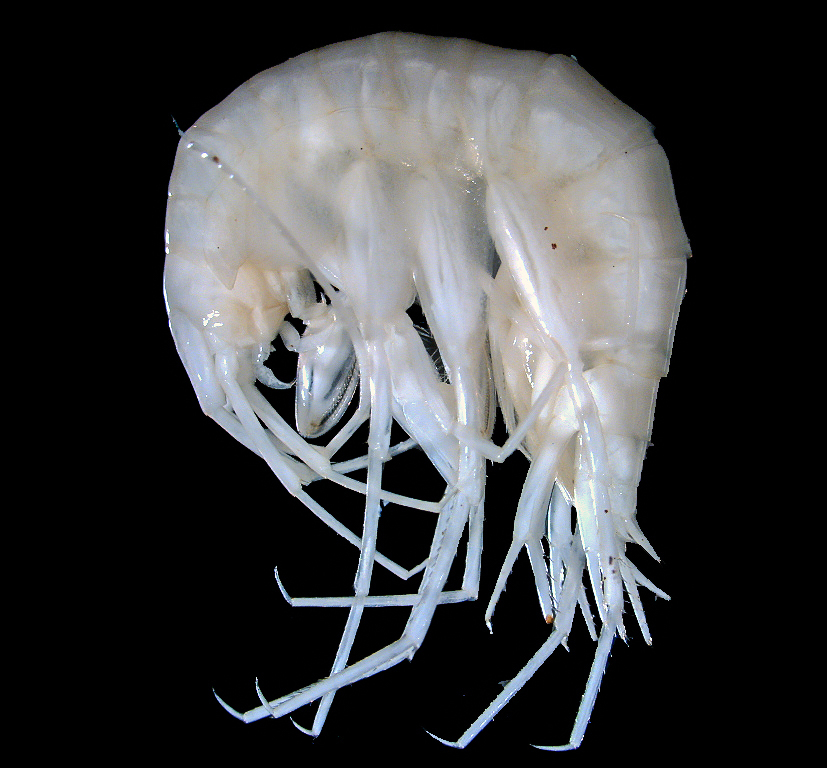
(c) Dr. Andrew G. Cannizzaro, some rights reserved (CC BY) · licence
Family: Crangonyctidae · Class: Malacostraca · Order: Amphipoda
Conservation status: G1 S1
Stygobromus cherylae (Barr's Amphipod) is a California animal in the Crangonyctidae family.
Barr's amphipod (Stygobromus cherylae) is a small, cave-dwelling crustacean endemic to a single location in Sonoma County, California. As a member of the family Crangonyctidae, this subterranean amphipod exhibits the typical elongated, laterally compressed body form characteristic of groundwater-adapted species. Like other Stygobromus species, it likely possesses reduced or absent eyes and pigmentation as adaptations to the perpetually dark groundwater environment. The species has an extremely restricted range, known only from its type locality in an unnamed spring box and feeder pipe just east of the Maacama Creek bridge in Sonoma County (NatureServe Explorer). This represents one of the most geographically limited distributions of any described amphipod species in North America. The precise coordinates and detailed habitat description remain associated with the original collection site near Maacama Creek. Barr's amphipod inhabits groundwater systems accessed through artificial structures including spring boxes and associated pipes. The species occupies the interface between surface springs and deeper groundwater aquifers, utilizing both natural spring flows and human-made water collection infrastructure. This habitat type is characteristic of many California Stygobromus species, which often colonize spring systems and shallow groundwater in mountainous and foothill regions. The groundwater environment provides stable temperatures and continuous water flow essential for these specialized invertebrates. As a groundwater amphipod, S. cherylae likely feeds on organic matter that enters the aquatic system through surface infiltration, including decomposing plant material, bacteria, and small organic particles. Reproduction probably follows the pattern typical of Stygobromus species, with direct development and brooding of young in specialized pouches. The species likely has a relatively long generation time and low reproductive rate, common characteristics among groundwater-adapted invertebrates. Seasonal activity patterns remain undocumented, though groundwater habitats typically provide stable conditions year-round. Barr's amphipod holds a global conservation rank of G1, indicating it is critically imperiled globally due to extreme rarity (NatureServe Explorer). The species also receives a state rank of S1 in California, reflecting its critical conservation status within the state. The extremely limited range makes the species vulnerable to any disturbance or modification of its single known habitat. Potential threats include groundwater extraction, contamination of the spring system, and modifications to the water collection infrastructure where it was discovered. Climate change may also pose risks through altered groundwater recharge patterns in the region. The species was described relatively recently and remains poorly studied compared to more widespread amphipods. Additional surveys of similar groundwater habitats in Sonoma County and surrounding areas may reveal additional populations, though the specialized nature of these environments and the species' apparent habitat specificity suggest any additional occurrences would likely be highly localized. Conservation efforts would benefit from protection of the known habitat and comprehensive surveys of similar spring systems in the broader region.
Classification
Class: Malacostraca · Order: Amphipoda · Family: Crangonyctidae
Conservation status
G1 S1
Frequently asked questions
How is Stygobromus cherylae classified?
Stygobromus cherylae belongs to class Malacostraca, order Amphipoda, family Crangonyctidae.
What family does Stygobromus cherylae belong to?
Stygobromus cherylae is in the Crangonyctidae family.
Is Stygobromus cherylae protected or of conservation concern?
Stygobromus cherylae carries the following status: G1 S1.
What is Stygobromus cherylae?
Barr's amphipod (Stygobromus cherylae) is a small, cave-dwelling crustacean endemic to a single location in Sonoma County, California.
Is Stygobromus cherylae found in California?
Yes. Stygobromus cherylae is recorded in California in The California Species Project's catalogue.
Related species
Other California species in the same genus, family, or bioregion.
Data from The California Species Project — 14,000+ California species with verified data from CNPS, CDFW, USFWS, and more.