Stygobromus gallawayae
Gallaway's Amphipod
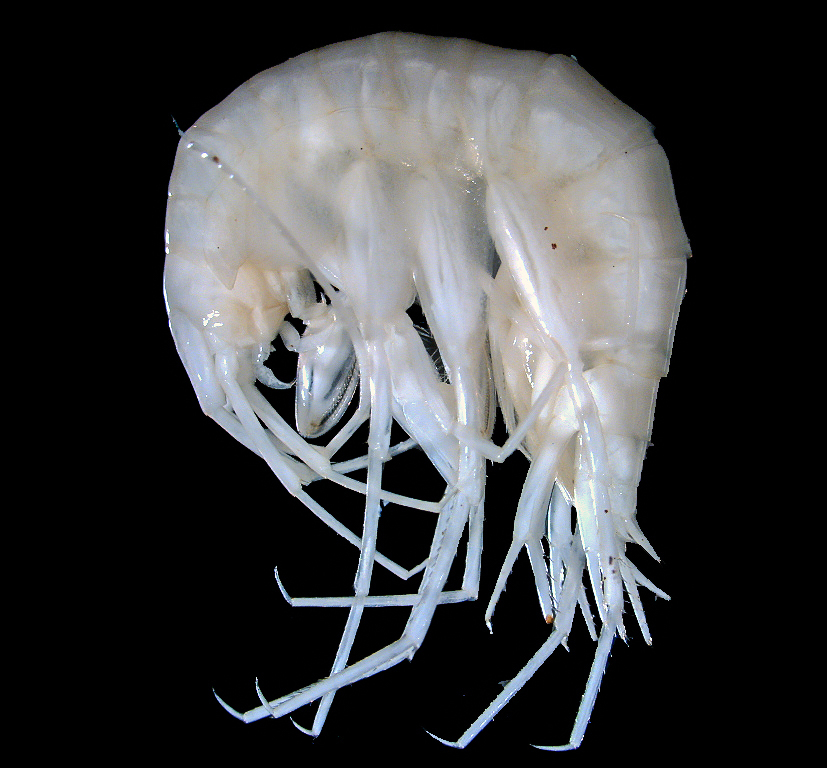
(c) Dr. Andrew G. Cannizzaro, some rights reserved (CC BY) · licence
Family: Crangonyctidae · Class: Malacostraca · Order: Amphipoda
Conservation status: G1 S1
Stygobromus gallawayae (Gallaway's Amphipod) is a California animal in the Crangonyctidae family.
Gallaway's Amphipod is a small, blind crustacean endemic to groundwater systems in the western United States. This stygobiotic species belongs to the family Crangonyctidae and represents one of the most imperiled freshwater invertebrates in North America. Adults measure approximately 5-8 millimeters in length and lack pigmentation, appearing translucent to pale white. The body is laterally compressed and elongated, typical of subterranean amphipods. Eyes are absent or highly reduced, an adaptation to the perpetually dark cave and groundwater environments where the species occurs. Gallaway's Amphipod has an extremely restricted range, known only from a few groundwater sites in the Death Valley region of California and Nevada. The species occurs in areas with unique hydrogeological conditions, including isolated springs and associated underground water systems. Its distribution is closely tied to ancient aquifer systems that have remained stable for thousands of years, creating the specialized conditions necessary for this endemic fauna. This species inhabits phreatic zones of aquifers, cave pools, and associated groundwater-fed springs. The habitat is characterized by constant temperatures, typically ranging from 20-25°C (68-77°F), and complete darkness. Water chemistry appears to be critical, with the species requiring specific dissolved mineral concentrations and pH levels. The substrates consist primarily of gravel, sand, and organic detritus where the amphipods forage for food particles. As a filter-feeder and detritivore, Gallaway's Amphipod consumes organic matter, bacteria, and microscopic organisms present in the groundwater system. The species exhibits typical amphipod swimming behavior, using pleopods for propulsion through the water column. Reproduction likely occurs year-round given the stable environmental conditions, with females carrying eggs in a brood pouch until hatching. Development is direct, with juveniles resembling miniature adults. Population dynamics and specific life history parameters remain poorly documented due to the species' inaccessible habitat. The U.S. Fish and Wildlife Service listed Gallaway's Amphipod as endangered under the Endangered Species Act on February 27, 1995. The species faces severe threats from groundwater depletion, contamination, and habitat modification. Mining activities, agricultural water extraction, and urban development pose significant risks to the limited aquifer systems supporting this species. Climate change may exacerbate these threats by altering regional hydrology and increasing water demand. The species' extremely limited distribution and specialized habitat requirements make it particularly vulnerable to extinction. No critical habitat has been designated, and comprehensive population monitoring remains challenging due to the subterranean nature of its habitat. Conservation efforts focus on protecting known groundwater sources and preventing contamination of the aquifer systems where the species occurs.
Classification
Class: Malacostraca · Order: Amphipoda · Family: Crangonyctidae
Conservation status
G1 S1
Frequently asked questions
How is Stygobromus gallawayae classified?
Stygobromus gallawayae belongs to class Malacostraca, order Amphipoda, family Crangonyctidae.
What family does Stygobromus gallawayae belong to?
Stygobromus gallawayae is in the Crangonyctidae family.
Is Stygobromus gallawayae protected or of conservation concern?
Stygobromus gallawayae carries the following status: G1 S1.
What is Stygobromus gallawayae?
Gallaway's Amphipod is a small, blind crustacean endemic to groundwater systems in the western United States.
Is Stygobromus gallawayae found in California?
Yes. Stygobromus gallawayae is recorded in California in The California Species Project's catalogue.
Related species
Other California species in the same genus, family, or bioregion.
Data from The California Species Project — 14,000+ California species with verified data from CNPS, CDFW, USFWS, and more.