Stygobromus grahami
Graham's Cave Amphipod
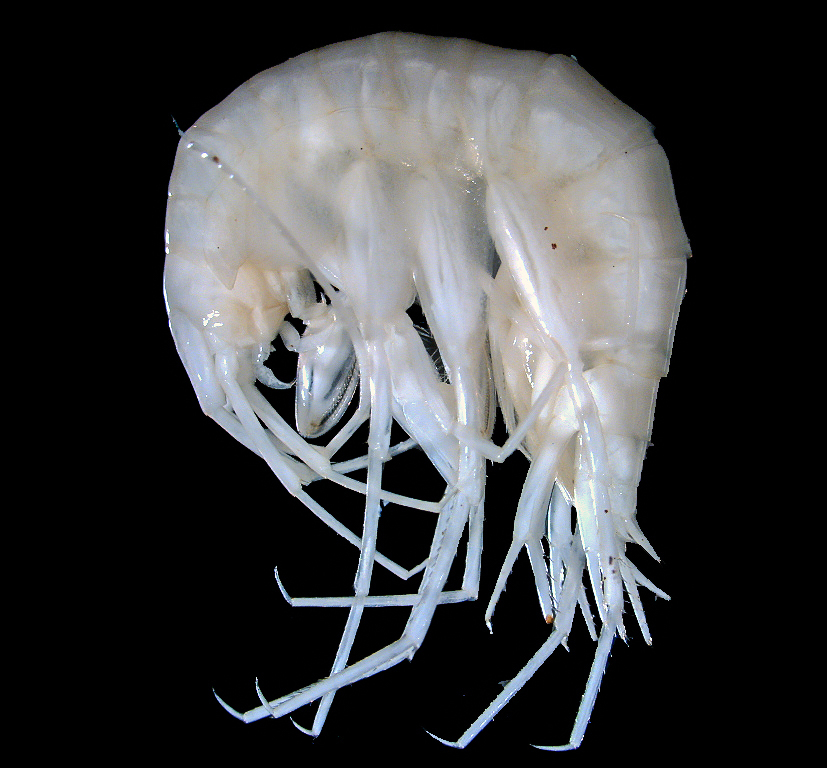
(c) Dr. Andrew G. Cannizzaro, some rights reserved (CC BY) · licence
Family: Crangonyctidae · Class: Malacostraca · Order: Amphipoda
Conservation status: G2 S2
Stygobromus grahami (Graham's Cave Amphipod) is a California animal in the Crangonyctidae family.
Stygobromus grahami, commonly known as Graham's Cave Amphipod, is a subterranean crustacean in the order Amphipoda, family Crangonyctidae. Like other members of the genus Stygobromus, this species is a stygobiont, meaning it is adapted to life in groundwater environments and caves. The species carries a Global/State rank of G2 S2, indicating it is imperiled both globally and within its range due to rarity and vulnerability to threats. As a cave-adapted amphipod, S. grahami likely exhibits typical troglomorphic characteristics common to the genus, including reduced or absent eyes, elongated appendages, and pale or translucent coloration. Freshwater amphipods in this family typically range from 13 to 55 millimeters (0.5 to 2 inches) in length, though specific measurements for this species have not been documented in available literature. The body structure is laterally compressed with a curved posture, giving amphipods their common name of "sideswimmers." The specific range and distribution of Graham's Cave Amphipod remain poorly documented in current scientific literature. Unlike better-studied Texas cave amphipods such as Stygobromus pecki and Stygobromus balconis, which are known from specific cave systems in central Texas, the precise locality records for S. grahami are not readily available in accessible databases or recent publications. Cave amphipods typically inhabit the dark zones of caves, springs, and groundwater systems where they occupy various microhabitats including mainstream gravel riffles, tributary streams, rimstone pools, and areas with silt overlying bedrock substrates. These environments maintain relatively constant cool temperatures and high humidity levels essential for amphipod survival. The species likely requires well-oxygenated water and may be sensitive to changes in water chemistry and flow patterns. Like other Stygobromus species, Graham's Cave Amphipod is presumably a detritivore and opportunistic feeder, consuming organic matter that enters the cave system from surface inputs. Reproduction likely follows typical amphipod patterns with females carrying eggs in a brood pouch until hatching, though specific breeding behaviors and timing for this species have not been documented. Cave amphipods generally have extended lifespans compared to surface relatives due to the stable cave environment and limited food availability. The G2 S2 conservation ranking indicates that Stygobromus grahami faces significant conservation challenges. Cave-dwelling species are particularly vulnerable to groundwater pollution, hydrological changes from surface development, and habitat disturbance from cave visitation. Many cave amphipods have extremely limited distributions, making them susceptible to local extinction from single disturbance events. Scientific documentation for Graham's Cave Amphipod remains extremely limited compared to other North American cave amphipods. Detailed taxonomic descriptions, ecological studies, population assessments, and habitat requirements have not been well documented in accessible literature. This knowledge gap hampers conservation planning and threat assessment for the species. Additional field surveys, taxonomic research, and ecological studies are needed to better understand this species' biology, distribution, and conservation needs.
Classification
Class: Malacostraca · Order: Amphipoda · Family: Crangonyctidae
Conservation status
G2 S2
Frequently asked questions
How is Stygobromus grahami classified?
Stygobromus grahami belongs to class Malacostraca, order Amphipoda, family Crangonyctidae.
What family does Stygobromus grahami belong to?
Stygobromus grahami is in the Crangonyctidae family.
Is Stygobromus grahami protected or of conservation concern?
Stygobromus grahami carries the following status: G2 S2.
What is Stygobromus grahami?
Stygobromus grahami, commonly known as Graham's Cave Amphipod, is a subterranean crustacean in the order Amphipoda, family Crangonyctidae.
Is Stygobromus grahami found in California?
Yes. Stygobromus grahami is recorded in California in The California Species Project's catalogue.
Related species
Other California species in the same genus, family, or bioregion.
Data from The California Species Project — 14,000+ California species with verified data from CNPS, CDFW, USFWS, and more.