Stygobromus harai
Hara's Cave Amphipod
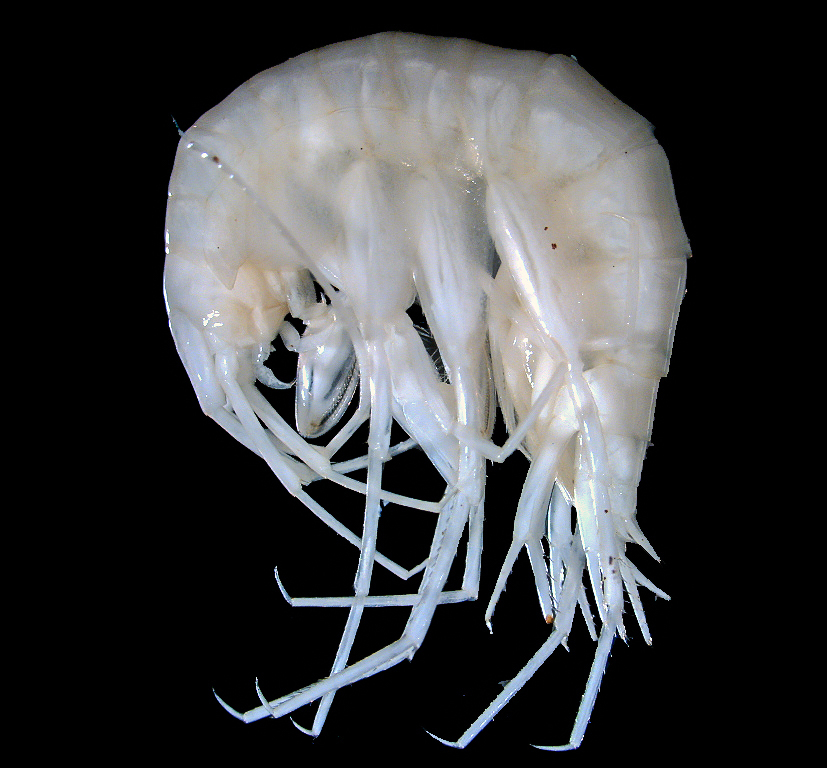
(c) Dr. Andrew G. Cannizzaro, some rights reserved (CC BY) · licence
Family: Crangonyctidae · Class: Malacostraca · Order: Amphipoda
Conservation status: G1 S1
Stygobromus harai (Hara's Cave Amphipod) is a California animal in the Crangonyctidae family.
Hara's cave amphipod is a small, obligate subterranean crustacean endemic to California cave systems. As a member of the family Crangonyctidae, this species belongs to a group of groundwater-dwelling amphipods that have evolved specialized adaptations for life in complete darkness. Like other cave-dwelling amphipods, S. harai likely exhibits typical troglobiotic characteristics including reduced or absent eyes, elongated appendages, and pale or colorless body pigmentation. The species' distribution appears to be extremely limited, occurring only in specific cave or groundwater systems within California. Given its Global/State rank of G1 S1, Hara's cave amphipod represents one of the rarest invertebrate species in both California and globally, with populations restricted to five or fewer occurrences and fewer than 1,000 individuals estimated worldwide. Hara's cave amphipod inhabits the aphotic zone of cave environments or associated groundwater systems. These subterranean habitats typically maintain constant cool temperatures and high humidity year-round. The species likely occupies cave pools, underground streams, or water-saturated sediments within the cave system. Such environments are characterized by the absence of light, stable temperatures, and limited nutrient input from surface sources. As a cave-adapted amphipod, S. harai likely feeds on organic detritus, bacterial biofilms, and decomposing plant material that enters the cave system through surface water infiltration. The species probably exhibits opportunistic feeding behavior, consuming whatever organic matter becomes available in the nutrient-poor cave environment. Reproduction likely follows typical amphipod patterns, with females carrying eggs in a brood pouch, though specific breeding cycles and reproductive timing for this species remain undocumented. The species may exhibit extended development periods and reduced reproductive rates compared to surface-dwelling relatives, adaptations common among cave fauna. The extreme rarity indicated by the G1 S1 ranking reflects significant conservation concern. Cave ecosystems are particularly vulnerable to disturbance because they are isolated, small in area, and support highly specialized endemic fauna with limited dispersal ability. Primary threats to cave amphipods typically include groundwater contamination, altered hydrology from surface development, direct disturbance of cave systems, and climate change impacts on local hydrology. Water quality changes from agricultural runoff, urban development, or industrial activities can severely impact these sensitive organisms. Additionally, any physical disturbance to the cave environment, including recreational caving or quarrying activities, poses direct threats to the limited habitat. The species does not currently appear on federal threatened or endangered species lists, despite its apparent rarity. Scientific documentation for this species remains extremely limited, with basic ecological and biological information lacking from published literature. Enhanced survey efforts and detailed ecological studies would be valuable for understanding population status, habitat requirements, and specific conservation needs. Protection of the cave system and associated groundwater resources represents the primary conservation priority for maintaining viable populations of this endemic California species.
Classification
Class: Malacostraca · Order: Amphipoda · Family: Crangonyctidae
Conservation status
G1 S1
Frequently asked questions
How is Stygobromus harai classified?
Stygobromus harai belongs to class Malacostraca, order Amphipoda, family Crangonyctidae.
What family does Stygobromus harai belong to?
Stygobromus harai is in the Crangonyctidae family.
Is Stygobromus harai protected or of conservation concern?
Stygobromus harai carries the following status: G1 S1.
What is Stygobromus harai?
Hara's cave amphipod is a small, obligate subterranean crustacean endemic to California cave systems.
Is Stygobromus harai found in California?
Yes. Stygobromus harai is recorded in California in The California Species Project's catalogue.
Related species
Other California species in the same genus, family, or bioregion.
Data from The California Species Project — 14,000+ California species with verified data from CNPS, CDFW, USFWS, and more.