Stygobromus hyporheicus
Hyporheic Amphipod
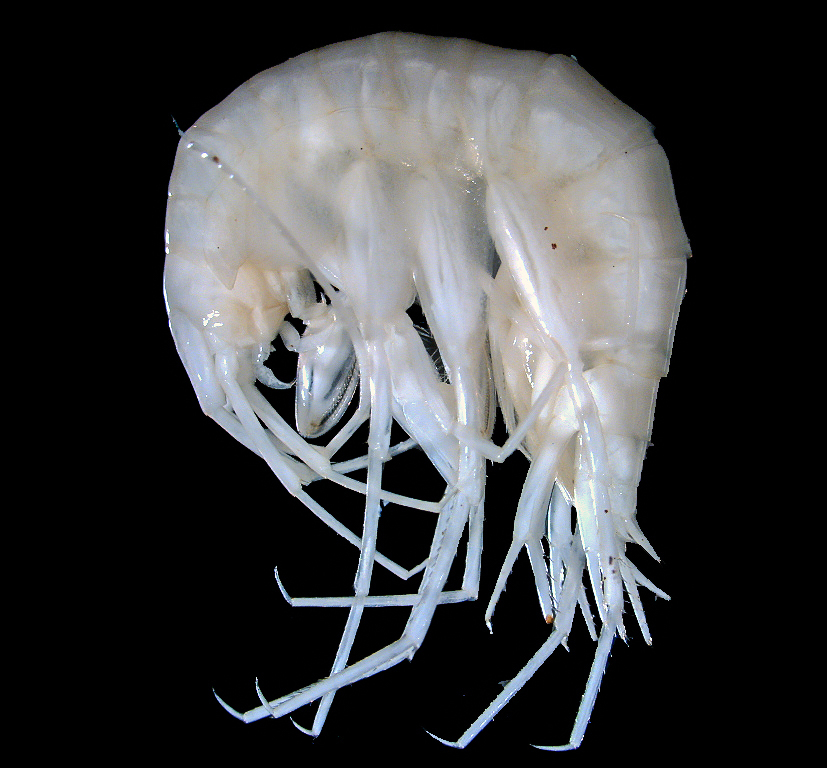
(c) Dr. Andrew G. Cannizzaro, some rights reserved (CC BY) · licence
Family: Crangonyctidae · Class: Malacostraca · Order: Amphipoda
Conservation status: G1 SX
Stygobromus hyporheicus (Hyporheic Amphipod) is a California animal in the Crangonyctidae family.
The Hyporheic Amphipod (Stygobromus hyporheicus) is a small freshwater crustacean in the order Amphipoda, commonly known as scuds or sideswimmers. Like other amphipods, this species likely measures between 13 to 55 mm (0.5 to 2 inches) in length based on typical amphipod morphology. As a member of the genus Stygobromus, it exhibits the characteristic laterally compressed body plan and lacks pigmentation typical of subterranean amphipods. The species possesses the distinctive amphipod features including segmented antennae, compound eyes that may be reduced or absent in cave-adapted forms, and seven pairs of thoracic appendages used for locomotion and feeding. The Hyporheic Amphipod is endemic to California, though specific distribution details within the state have not been well documented in available literature. The species' common name indicates its association with hyporheic zones - the saturated sediments beneath and alongside stream channels where surface water and groundwater mix. This specialized habitat represents one of the most restricted ecological niches among freshwater invertebrates. This species inhabits the hyporheic zone of stream systems, occupying the interstitial spaces within streambed gravels and sediments. The hyporheic environment is characterized by reduced light penetration, stable temperatures, and unique chemical gradients where surface water infiltrates into groundwater systems. These zones typically occur at depths ranging from several centimeters to several meters below the streambed surface. The habitat provides protection from surface disturbances while maintaining connectivity to both surface and groundwater systems that supply nutrients and oxygen. As a hyporheic specialist, this amphipod likely feeds on organic matter, bacteria, and small invertebrates present in the sediment matrix. Reproduction in Stygobromus species typically involves direct development without a free-swimming larval stage, with females carrying eggs in a ventral brood pouch until juveniles emerge as miniature adults. The species' life cycle is presumably adapted to the stable but resource-limited hyporheic environment, potentially exhibiting extended development times and reduced reproductive rates compared to surface-dwelling relatives. The Hyporheic Amphipod carries a Global/State Rank of G1 SX, indicating it is critically imperiled globally and possibly extirpated from California. The 'SX' designation suggests the species may be extinct at the state level, though definitive confirmation is lacking. No federal or state listing status has been assigned as of December 2025. The hyporheic zone faces numerous threats including streambed sedimentation, altered flow regimes from water diversions, groundwater pumping, and pollution from agricultural and urban runoff. Climate change may further impact hyporheic systems through altered precipitation patterns and increased water temperatures. The species' apparent rarity or possible extirpation highlights the vulnerability of specialized groundwater fauna to anthropogenic disturbances. Scientific documentation for this species remains extremely limited. The information presented here synthesizes available taxonomic and ecological data from USFWS databases and general amphipod biology. Additional field surveys and taxonomic research are needed to confirm the species' current status and distribution within California's hyporheic systems.
Classification
Class: Malacostraca · Order: Amphipoda · Family: Crangonyctidae
Conservation status
G1 SX
Frequently asked questions
How is Stygobromus hyporheicus classified?
Stygobromus hyporheicus belongs to class Malacostraca, order Amphipoda, family Crangonyctidae.
What family does Stygobromus hyporheicus belong to?
Stygobromus hyporheicus is in the Crangonyctidae family.
Is Stygobromus hyporheicus protected or of conservation concern?
Stygobromus hyporheicus carries the following status: G1 SX.
What is Stygobromus hyporheicus?
The Hyporheic Amphipod (Stygobromus hyporheicus) is a small freshwater crustacean in the order Amphipoda, commonly known as scuds or sideswimmers.
Is Stygobromus hyporheicus found in California?
Yes. Stygobromus hyporheicus is recorded in California in The California Species Project's catalogue.
Related species
Other California species in the same genus, family, or bioregion.
Data from The California Species Project — 14,000+ California species with verified data from CNPS, CDFW, USFWS, and more.