Stygobromus lacicolus
Lake Tahoe Amphipod
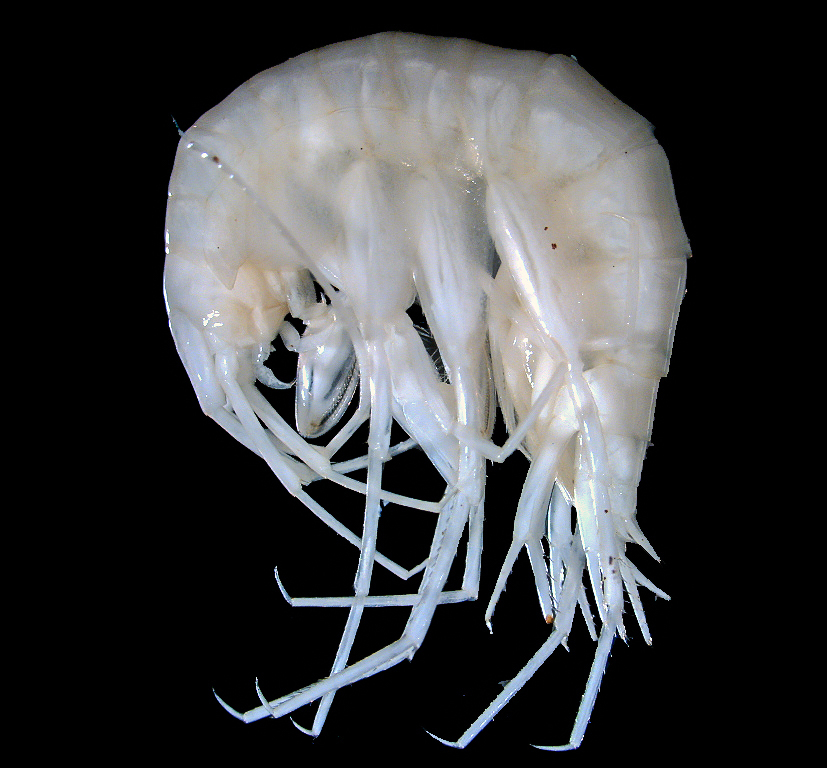
(c) Dr. Andrew G. Cannizzaro, some rights reserved (CC BY) · licence
Family: Crangonyctidae · Class: Malacostraca · Order: Amphipoda
Conservation status: G1 S1
Stygobromus lacicolus (Lake Tahoe Amphipod) is a California animal in the Crangonyctidae family.
The Lake Tahoe amphipod (Stygobromus lacicolus) is a small, blind, aquatic crustacean endemic to the deep waters of Lake Tahoe. Like other stygobiont amphipods, this species is translucent to white in coloration and possesses a laterally compressed body adapted for life in perpetually dark aquatic environments. The species lacks pigmentation and functional eyes, typical adaptations for subterranean and deep-water dwelling amphipods. Body length measurements for this species have not been well documented in the scientific literature, though related Stygobromus species typically range from 3 to 10 mm in length. Stygobromus lacicolus is endemic to Lake Tahoe, a large alpine lake straddling the California-Nevada border in the Sierra Nevada mountains. According to ITIS, this species is known specifically as the "deep lake amphipod," indicating its restriction to the deeper portions of Lake Tahoe's waters (ITIS 2024). The species appears to have an extremely limited range, confined entirely to this single lake system at approximately 1,897 meters (6,224 feet) elevation. This amphipod inhabits the profundal zone of Lake Tahoe, likely occurring in the lake's deeper waters where light penetration is minimal or absent. The species presumably occupies benthic habitats along the lake bottom, potentially associated with organic sediments and detritus. Lake Tahoe's unique characteristics, including its exceptional depth reaching 501 meters (1,645 feet), oligotrophic conditions, and cold temperatures year-round, provide specialized habitat conditions that support this endemic species. Like other amphipods in the genus Stygobromus, S. lacicolus is presumed to be a detritivore, feeding on organic matter, decomposing plant material, and microorganisms present in the sediments of Lake Tahoe's deep waters. Reproductive biology and seasonal activity patterns for this species remain poorly documented. Most Stygobromus species reproduce through direct development, with females carrying eggs and young in a brood pouch until they are released as miniature adults. The species likely exhibits slow growth rates and extended lifespans characteristic of cold-water, deep-lake invertebrates. Stygobromus lacicolus carries a Global rank of G1 and State rank of S1, indicating it is critically imperiled both globally and within California due to its extremely restricted range and small population size. The species faces potential threats from water quality degradation, climate change effects on Lake Tahoe's thermal structure, and possible impacts from introduced species. Research on Lake Tahoe's benthic invertebrate communities has documented changes over recent decades, with exotic species becoming increasingly relevant to conservation considerations (ResearchGate 2024). The species' complete dependence on Lake Tahoe's unique deep-water environment makes it particularly vulnerable to any alterations in the lake's physical or chemical characteristics. Long-term monitoring of Lake Tahoe's native invertebrate communities remains essential for understanding population trends and conservation needs for this endemic amphipod.
Classification
Class: Malacostraca · Order: Amphipoda · Family: Crangonyctidae
Conservation status
G1 S1
Frequently asked questions
How is Stygobromus lacicolus classified?
Stygobromus lacicolus belongs to class Malacostraca, order Amphipoda, family Crangonyctidae.
What family does Stygobromus lacicolus belong to?
Stygobromus lacicolus is in the Crangonyctidae family.
Is Stygobromus lacicolus protected or of conservation concern?
Stygobromus lacicolus carries the following status: G1 S1.
What is Stygobromus lacicolus?
The Lake Tahoe amphipod (Stygobromus lacicolus) is a small, blind, aquatic crustacean endemic to the deep waters of Lake Tahoe.
Is Stygobromus lacicolus found in California?
Yes. Stygobromus lacicolus is recorded in California in The California Species Project's catalogue.
Related species
Other California species in the same genus, family, or bioregion.
Data from The California Species Project — 14,000+ California species with verified data from CNPS, CDFW, USFWS, and more.