Stygobromus mackenziei
Mackenzie's Cave Amphipod
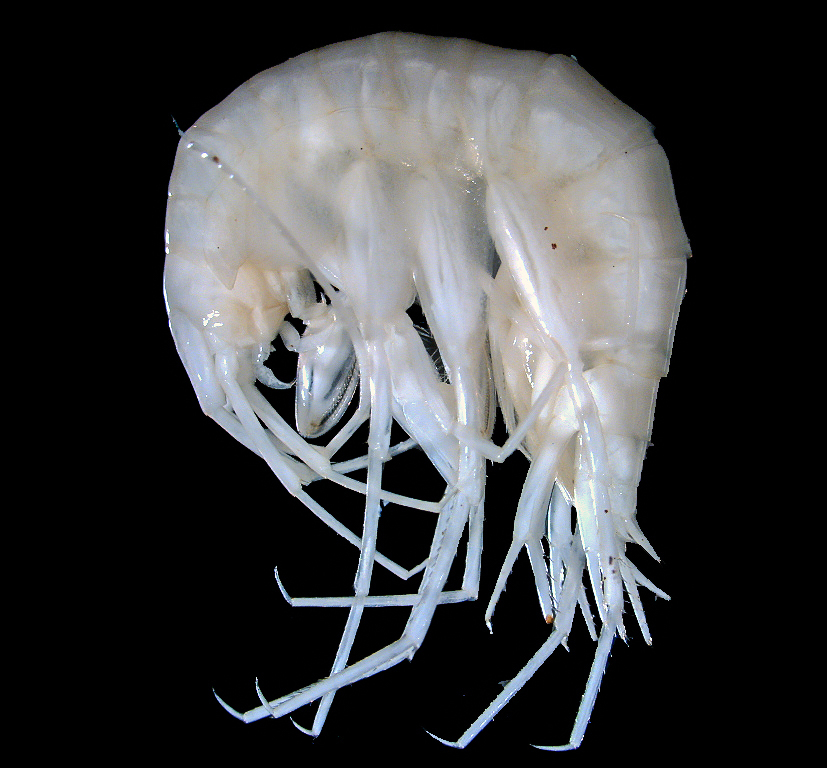
(c) Dr. Andrew G. Cannizzaro, some rights reserved (CC BY) · licence
Family: Crangonyctidae · Class: Malacostraca · Order: Amphipoda
Conservation status: G1 S1
Stygobromus mackenziei (Mackenzie's Cave Amphipod) is a California animal in the Crangonyctidae family.
Mackenzie's cave amphipod (Stygobromus mackenziei) is a small, pale subterranean crustacean endemic to California's cave systems. Like other members of the genus Stygobromus, this species exhibits typical adaptations to cave environments, including reduced pigmentation, elongated antennae and appendages, and reduced or absent eyes. Adults typically measure 3-8 mm in length, with a laterally compressed body characteristic of amphipods. This species is known only from California, representing one of the most geographically restricted amphipods in North America. The exact distribution within California remains poorly documented in scientific literature, though the species appears to be limited to specific cave systems within the state. Cave-obligate amphipods typically have extremely limited ranges, often restricted to single cave systems or small clusters of interconnected caves. Mackenzie's cave amphipod inhabits the aquatic zones of caves, including pools, streams, and groundwater seepage areas within limestone or other soluble rock formations. These environments maintain constant temperatures year-round and provide the stable conditions necessary for obligate cave species. The species likely depends on organic matter transported into caves from surface environments, including leaf litter, organic debris, and nutrients carried by groundwater flow. As a cave-obligate species, Mackenzie's cave amphipod has likely evolved specialized feeding behaviors typical of subterranean amphipods. These crustaceans are generally detritivores and scavengers, feeding on decomposing organic matter, bacterial films, and small invertebrates within the cave ecosystem. Reproduction likely follows the pattern of other Stygobromus species, with direct development and extended parental care. Females typically carry eggs in a brood pouch until hatching, with juveniles resembling miniature adults. The species holds a Global/State rank of G1/S1, indicating it is critically imperiled both globally and within California due to extreme rarity or factors making it highly vulnerable to extinction. This ranking reflects the species' extremely limited distribution and the inherent vulnerability of cave-obligate organisms. Cave ecosystems face numerous threats including groundwater contamination, altered hydrology from surface development, vandalism, and climate change impacts on groundwater systems. The species appears on the U.S. Fish and Wildlife Service's species database, though it currently lacks federal protection status. Detailed ecological studies of Mackenzie's cave amphipod are lacking, limiting our understanding of its specific habitat requirements, population status, and conservation needs. Environmental DNA (eDNA) sampling techniques have shown promise for detecting rare cave amphipods and may prove valuable for monitoring this species (Brewer et al. 2020). The extreme rarity and restricted range of cave-obligate species like S. mackenziei make them particularly susceptible to extinction from single catastrophic events or gradual environmental degradation. Protecting known cave habitats and maintaining groundwater quality are essential for the species' persistence.
Classification
Class: Malacostraca · Order: Amphipoda · Family: Crangonyctidae
Conservation status
G1 S1
Frequently asked questions
How is Stygobromus mackenziei classified?
Stygobromus mackenziei belongs to class Malacostraca, order Amphipoda, family Crangonyctidae.
What family does Stygobromus mackenziei belong to?
Stygobromus mackenziei is in the Crangonyctidae family.
Is Stygobromus mackenziei protected or of conservation concern?
Stygobromus mackenziei carries the following status: G1 S1.
What is Stygobromus mackenziei?
Mackenzie's cave amphipod (Stygobromus mackenziei) is a small, pale subterranean crustacean endemic to California's cave systems.
Is Stygobromus mackenziei found in California?
Yes. Stygobromus mackenziei is recorded in California in The California Species Project's catalogue.
Related species
Other California species in the same genus, family, or bioregion.
Data from The California Species Project — 14,000+ California species with verified data from CNPS, CDFW, USFWS, and more.