Stygobromus myersae
Myer's Amphipod
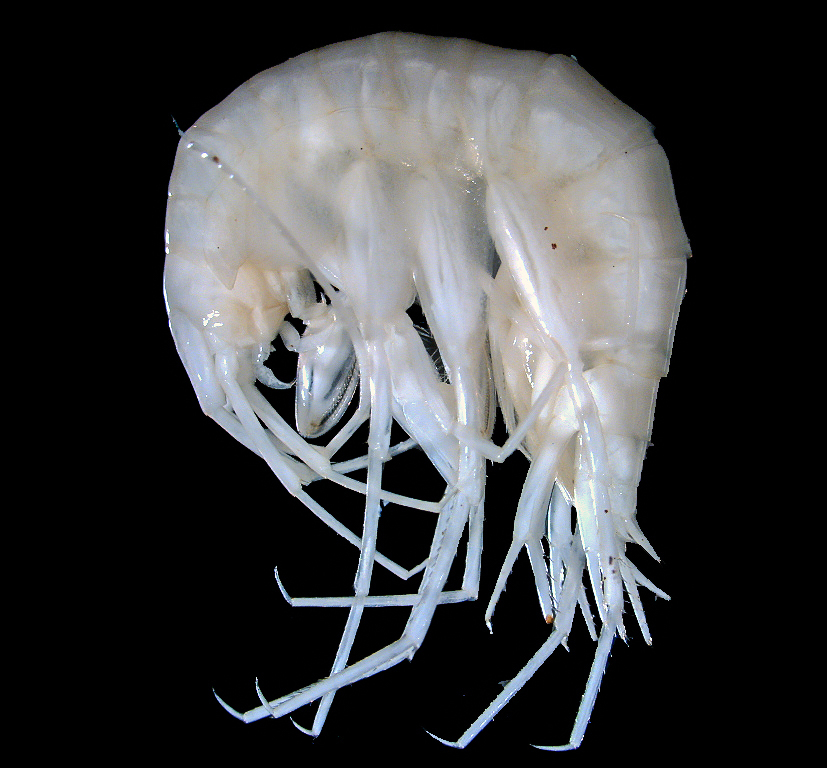
(c) Dr. Andrew G. Cannizzaro, some rights reserved (CC BY) · licence
Family: Crangonyctidae · Class: Malacostraca · Order: Amphipoda
Conservation status: G1G2 S1S2
Stygobromus myersae (Myer's Amphipod) is a California animal in the Crangonyctidae family.
Myer's amphipod (Stygobromus myersae) is a freshwater crustacean in the family Crangonyctidae, a group of small, translucent amphipods adapted to subterranean aquatic environments. Like other members of the genus Stygobromus, this species likely measures 3-8 millimeters (0.1-0.3 inches) in length and exhibits the characteristic elongated, laterally compressed body form typical of amphipods. The species probably lacks pigmentation and functional eyes, adaptations common to cave-dwelling and groundwater fauna. The range and distribution of Myer's amphipod have not been comprehensively documented in available literature. Based on the Global/State Rank of G1G2 S1S2, the species appears to be extremely rare with a very limited geographic distribution, likely restricted to specific groundwater habitats or cave systems in California. The G1G2 ranking indicates the species is critically imperiled to imperiled globally, while the S1S2 ranking suggests similar rarity at the state level. Habitat requirements for this species remain poorly documented. Members of the genus Stygobromus typically inhabit groundwater environments including caves, springs, hyporheic zones, and interstitial spaces in stream gravels. These amphipods are generally associated with cool, stable water temperatures and constant moisture conditions found in subterranean aquatic systems. Specific substrate preferences, water chemistry requirements, and microhabitat needs for S. myersae have not been established through scientific study. Ecological information about Myer's amphipod is extremely limited. Like other Stygobromus species, it is presumably a detritivore, feeding on organic matter that enters groundwater systems through surface infiltration or underground streams. The species likely exhibits the slow growth rates and extended lifespans characteristic of cave-adapted fauna. Reproductive biology, seasonal activity patterns, and population dynamics remain undocumented. The conservation status of Myer's amphipod reflects significant concern about its persistence. The G1G2 S1S2 ranking indicates this species faces substantial risk of extinction, though it does not appear to be federally listed under the Endangered Species Act as of December 2025. Primary threats to groundwater amphipods typically include groundwater contamination, aquifer depletion, surface development that alters hydrology, and climate change effects on groundwater systems. The extremely limited known distribution makes the species particularly vulnerable to localized threats. Scientific documentation for this species remains limited. The information presented here synthesizes available taxonomic and conservation ranking data with general knowledge of Stygobromus ecology. Detailed studies of this species' distribution, habitat requirements, life history, and conservation needs are critically needed. We welcome contributions of verified scientific data, photographs, or field observations to enhance this species account.
Classification
Class: Malacostraca · Order: Amphipoda · Family: Crangonyctidae
Conservation status
G1G2 S1S2
Frequently asked questions
How is Stygobromus myersae classified?
Stygobromus myersae belongs to class Malacostraca, order Amphipoda, family Crangonyctidae.
What family does Stygobromus myersae belong to?
Stygobromus myersae is in the Crangonyctidae family.
Is Stygobromus myersae protected or of conservation concern?
Stygobromus myersae carries the following status: G1G2 S1S2.
What is Stygobromus myersae?
Myer's amphipod (Stygobromus myersae) is a freshwater crustacean in the family Crangonyctidae, a group of small, translucent amphipods adapted to subterranean aquatic environments.
Is Stygobromus myersae found in California?
Yes. Stygobromus myersae is recorded in California in The California Species Project's catalogue.
Related species
Other California species in the same genus, family, or bioregion.
Data from The California Species Project — 14,000+ California species with verified data from CNPS, CDFW, USFWS, and more.