Stygobromus trinus
Trinity County Amphipod
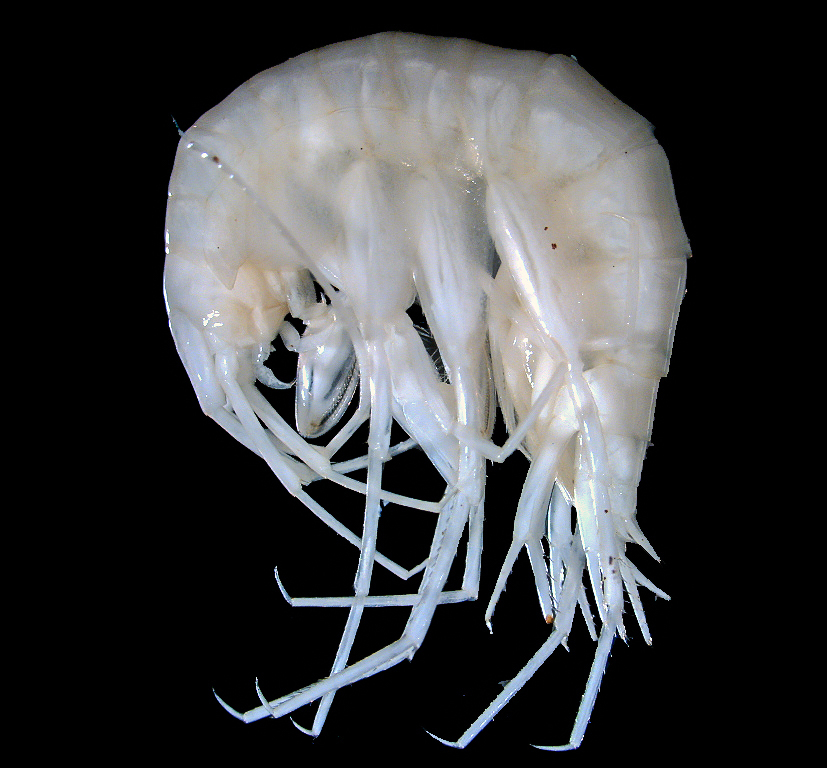
(c) Dr. Andrew G. Cannizzaro, some rights reserved (CC BY) · licence
Family: Crangonyctidae · Class: Malacostraca · Order: Amphipoda
Conservation status: G1 S1
Stygobromus trinus (Trinity County Amphipod) is a California animal in the Crangonyctidae family.
The Trinity County amphipod is a small, cave-dwelling crustacean endemic to Trinity County, California. This species belongs to the genus Stygobromus, a group of groundwater-adapted amphipods characterized by their lack of pigmentation and eyes, adaptations to subterranean aquatic environments. Like other stygobromid amphipods, S. trinus likely measures 3-10 millimeters in length and displays the typical translucent white coloration of cave-adapted crustaceans. Stygobromus trinus is known only from Trinity County in northern California, representing one of the most geographically restricted amphipod species in the state. The species' distribution appears to be confined to specific groundwater systems within this mountainous region. Trinity County's complex geology, featuring numerous fault systems and fractured bedrock formations, creates the specialized hydrological conditions necessary for groundwater-dependent species like this amphipod. The species inhabits subterranean aquatic environments, including cave streams, springs, and groundwater seeps. These habitats are characterized by constant cool temperatures, high humidity, and permanent darkness. The amphipod requires well-oxygenated groundwater with minimal pollution and stable flow regimes. Trinity County's mountainous terrain, with elevations ranging from approximately 300 to over 2,700 meters, provides diverse hydrogeological conditions that may support isolated populations in different watershed systems. As a groundwater obligate species, S. trinus likely feeds on organic matter that enters the cave system, including decomposing plant material, bacteria, and small invertebrates. The species probably exhibits the slow metabolism and extended lifespan typical of cave-adapted invertebrates. Reproduction likely occurs year-round given the stable subterranean environment, with females carrying eggs in a brood pouch. Population dynamics are expected to be characterized by low reproductive rates and high adult survival, making the species particularly vulnerable to environmental disturbances. Stygobromus trinus holds a Global Heritage Rank of G1 and State Heritage Rank of S1, indicating it is critically imperiled both globally and within California. This ranking reflects the species' extremely limited range and small population size. Primary threats to the Trinity County amphipod include groundwater depletion from wells and diversions, contamination from surface activities including mining and forestry operations, and habitat alteration from infrastructure development. Climate change poses additional risks through altered precipitation patterns that could affect groundwater recharge. The species' dependence on pristine groundwater systems makes it particularly sensitive to any activities that affect local hydrology or water quality. Conservation of this species requires protection of its groundwater habitat and careful management of land use activities within its watershed. As of December 2025, the species lacks federal protection under the Endangered Species Act despite its precarious conservation status.
Classification
Class: Malacostraca · Order: Amphipoda · Family: Crangonyctidae
Conservation status
G1 S1
Frequently asked questions
How is Stygobromus trinus classified?
Stygobromus trinus belongs to class Malacostraca, order Amphipoda, family Crangonyctidae.
What family does Stygobromus trinus belong to?
Stygobromus trinus is in the Crangonyctidae family.
Is Stygobromus trinus protected or of conservation concern?
Stygobromus trinus carries the following status: G1 S1.
What is Stygobromus trinus?
The Trinity County amphipod is a small, cave-dwelling crustacean endemic to Trinity County, California.
Is Stygobromus trinus found in California?
Yes. Stygobromus trinus is recorded in California in The California Species Project's catalogue.
Related species
Other California species in the same genus, family, or bioregion.
Data from The California Species Project — 14,000+ California species with verified data from CNPS, CDFW, USFWS, and more.