Sula leucogaster
Brown Booby
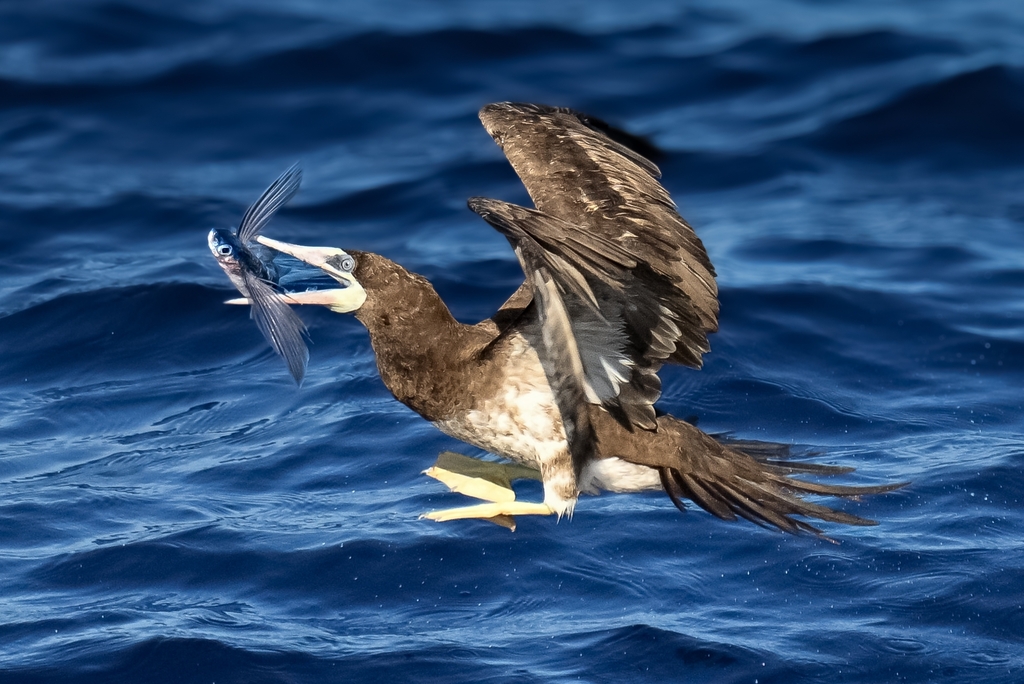
(c) Charlotte Kirchner, some rights reserved (CC BY) · licence
Family: Sulidae · Class: Aves · Order: Suliformes
Sula leucogaster (Brown Booby) is a California animal in the Sulidae family.
The Brown Booby is a large seabird measuring 64 to 74 cm (25 to 29 inches) in length with a wingspan of 132 to 150 cm (52 to 59 inches). Adults weigh between 1.0 and 1.8 kg (2.2 to 4.0 pounds). The species exhibits distinct sexual dimorphism in plumage coloration. Adult males display dark chocolate-brown heads, necks, backs, and wings, with contrasting white underparts extending from the chest to the undertail coverts. Adult females show similar brown upperparts but have brown heads and necks that extend further down the chest. Both sexes possess long, pointed bills that are yellow in males and yellow-green in females, with bare facial skin that becomes more brightly colored during breeding season. The Brown Booby has a pantropical distribution, occurring in warm coastal and marine waters worldwide. In California, the species is primarily found along the southern coast, with regular sightings from San Diego County north to Monterey County. The largest breeding populations in North America occur on offshore islands including the Channel Islands, particularly Anacapa and Santa Barbara Islands. Northern range limits fluctuate with oceanographic conditions, with individuals occasionally observed as far north as central California during warm water events. Brown Boobies inhabit coastal marine environments, favoring areas with warm surface waters and abundant fish populations. They roost and nest on rocky islands, cliffs, and occasionally man-made structures such as piers and jetties. Breeding sites are typically located on flat areas or gentle slopes with minimal vegetation. The species prefers nesting areas that provide protection from prevailing winds while offering easy access to foraging waters within 10 to 20 km of the colony. Brown Boobies are primarily piscivorous, feeding almost exclusively on small schooling fish including anchovies, sardines, mackerel, and flying fish. They employ plunge-diving hunting techniques, diving from heights of 3 to 15 meters into the ocean to capture prey. Breeding occurs year-round in tropical regions, with peak activity varying by location. In California waters, breeding typically occurs from March through September. Females lay one to three pale blue eggs in ground nests constructed of twigs, seaweed, and debris. Incubation lasts 42 to 49 days, with both parents sharing duties. Chicks fledge after approximately 85 to 103 days but may remain dependent on parents for several additional weeks. The Brown Booby is not federally listed under the Endangered Species Act and maintains stable global populations. The species is classified as Least Concern by the International Union for Conservation of Nature. In California, populations appear stable with no major conservation concerns identified. Primary threats include habitat disturbance at nesting colonies, marine pollution including plastic ingestion, fishing gear entanglement, and climate-driven changes in prey availability. Oil spills pose localized risks to coastal populations. Conservation efforts focus on protecting nesting habitat on offshore islands and monitoring population trends through regular seabird surveys.
Classification
Class: Aves · Order: Suliformes · Family: Sulidae
Frequently asked questions
How is Sula leucogaster classified?
Sula leucogaster belongs to class Aves, order Suliformes, family Sulidae.
What family does Sula leucogaster belong to?
Sula leucogaster is in the Sulidae family.
What is Sula leucogaster?
The Brown Booby is a large seabird measuring 64 to 74 cm (25 to 29 inches) in length with a wingspan of 132 to 150 cm (52 to 59 inches).
Is Sula leucogaster found in California?
Yes. Sula leucogaster is recorded in California in The California Species Project's catalogue.
Related species
Other California species in the same genus, family, or bioregion.
Data from The California Species Project — 14,000+ California species with verified data from CNPS, CDFW, USFWS, and more.