Sula nebouxii
Blue-footed Booby
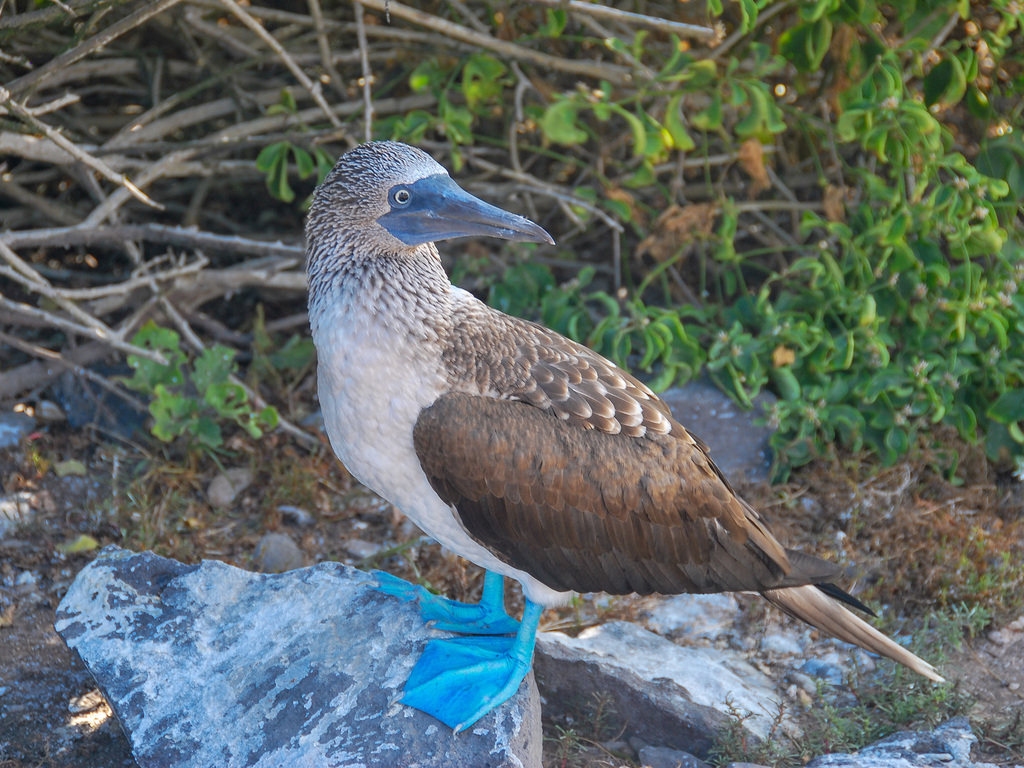
(c) William Stephens, some rights reserved (CC BY) · licence
Family: Sulidae · Class: Aves · Order: Suliformes
Sula nebouxii (Blue-footed Booby) is a California animal in the Sulidae family.
The Blue-footed Booby is a large seabird measuring 76 to 84 centimeters (30 to 33 inches) in length with a wingspan of 152 centimeters (60 inches). Adults weigh between 1.0 and 1.8 kilograms (2.2 to 4.0 pounds). The species is distinguished by its bright blue webbed feet, which become more vivid during breeding season. The plumage consists of brown and white coloration, with a brownish head and neck, white underparts, and brown wings and back. Males are typically smaller than females and possess a distinctive high-pitched whistle, while females produce a deeper honking call. The Blue-footed Booby breeds primarily on islands in the Gulf of California and along the Pacific coast from Baja California to Peru. In California waters, the species occurs as a vagrant visitor, with sightings documented along the coast from San Diego County north to Monterey Bay. The species is considered uncommon to rare in California, with most observations occurring during warm-water events such as El Niño years when tropical species extend their ranges northward. Blue-footed Boobies inhabit marine environments, preferring areas with upwelling currents that concentrate fish populations near the surface. The species forages primarily in nearshore waters over the continental shelf, typically within 10 kilometers of the coastline. During breeding, they nest on bare ground on rocky islands and clifftops, creating simple scrapes without significant nest construction. The species is a specialist piscivore, feeding almost exclusively on small schooling fish including sardines, anchovies, and flying fish. Blue-footed Boobies employ distinctive plunge-diving behavior, diving from heights of 3 to 25 meters (10 to 82 feet) into the ocean to capture prey. Their streamlined bodies and specialized skull structure allow them to withstand the impact of high-speed water entry. Breeding occurs year-round in core populations, with peak activity varying by location. Females lay one to three chalky blue eggs in ground nests, with incubation lasting approximately 41 to 45 days. Both parents share incubation and chick-rearing duties, regurgitating fish to feed their young. The Blue-footed Booby is not federally listed in the United States and is classified as Least Concern by the International Union for Conservation of Nature. However, some populations in the Gulf of California have experienced significant declines. Research published in 2014 documented population decreases exceeding 50% at several breeding colonies, attributed to reduced availability of sardines due to changing ocean conditions and overfishing. Climate variability, particularly warming sea surface temperatures, affects prey distribution and reproductive success. In California, the species faces threats from vessel strikes, entanglement in fishing gear, and disturbance at roosting sites during irregular appearances along the coast.
Classification
Class: Aves · Order: Suliformes · Family: Sulidae
Frequently asked questions
How is Sula nebouxii classified?
Sula nebouxii belongs to class Aves, order Suliformes, family Sulidae.
What family does Sula nebouxii belong to?
Sula nebouxii is in the Sulidae family.
What is Sula nebouxii?
The Blue-footed Booby is a large seabird measuring 76 to 84 centimeters (30 to 33 inches) in length with a wingspan of 152 centimeters (60 inches).
Is Sula nebouxii found in California?
Yes. Sula nebouxii is recorded in California in The California Species Project's catalogue.
Related species
Other California species in the same genus, family, or bioregion.
Data from The California Species Project — 14,000+ California species with verified data from CNPS, CDFW, USFWS, and more.