Sus scrofa
Wild Boar
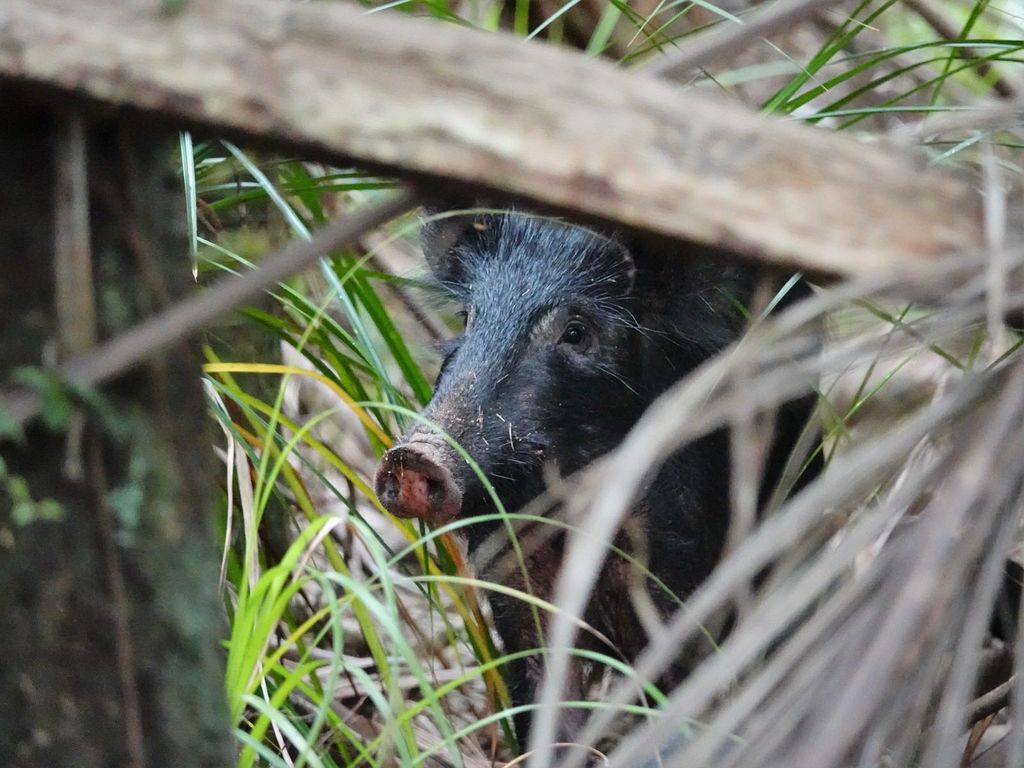
(c) Jacqui Geux, some rights reserved (CC BY) · licence
Family: Suidae · Class: Mammalia · Order: Artiodactyla
Sus scrofa (Wild Boar) is a California animal in the Suidae family.
The wild boar is a large, robust ungulate that serves as the ancestor of domestic pigs. Adult males (boars) typically weigh 75 to 100 kilograms (165 to 220 pounds), while females (sows) are smaller at 60 to 80 kilograms (132 to 176 pounds). The body is covered in coarse, dark bristles that range from dark brown to black, often with grizzled tips. Wild boars have a distinctive wedge-shaped head with a elongated snout ending in a cartilaginous disc used for rooting. Males develop prominent curved tusks that can reach 15 centimeters (6 inches) in length, while females have smaller, less conspicuous canine teeth. The ears are erect and pointed, and the tail is straight with a tufted end. In California, wild boar populations are primarily concentrated in the Central Coast ranges, Sierra Nevada foothills, and scattered locations throughout the state's mountainous regions. The species was introduced to California in the 1920s through releases of European wild boar for hunting purposes, with subsequent hybridization with feral domestic pigs creating the current population. Wild boars now occur in at least 56 of California's 58 counties, with established populations from sea level to elevations exceeding 1,500 meters (4,900 feet). Wild boars inhabit diverse ecosystems including oak woodlands, chaparral, grasslands, and mixed coniferous forests. They show strong preference for areas with dense understory vegetation that provides cover and foraging opportunities. The species requires access to water sources and wallowing sites for thermoregulation, as they lack functional sweat glands. Wild boars are highly adaptable and can exploit both natural and agricultural landscapes. Wild boars are omnivorous with a diet consisting of roots, tubers, acorns, grasses, fruits, invertebrates, small vertebrates, and carrion. Their powerful snouts and strong neck muscles enable extensive soil excavation while foraging, often creating distinctive rooted areas. Breeding occurs year-round in California's mild climate, though peak activity occurs in late fall and winter. Gestation lasts approximately 115 days, with litters averaging 4 to 6 piglets. Females construct grass-lined nests for birthing and early rearing. Wild boars are primarily nocturnal and crepuscular, living in social groups called sounders composed of related females and their offspring. Wild boars are considered an invasive species in California with no legal protection status. As of December 2025, they are classified as exotic game mammals and can be hunted year-round on private property with landowner permission. The species causes significant ecological and economic damage through habitat destruction, competition with native wildlife, predation on ground-nesting birds and small mammals, and agricultural crop damage estimated at millions of dollars annually. Their rooting behavior degrades sensitive riparian areas and contributes to soil erosion and water quality degradation. Management efforts include hunting, trapping, and exclusion fencing, though population control remains challenging due to their high reproductive rate and adaptability.
Classification
Class: Mammalia · Order: Artiodactyla · Family: Suidae
Frequently asked questions
How is Sus scrofa classified?
Sus scrofa belongs to class Mammalia, order Artiodactyla, family Suidae.
What family does Sus scrofa belong to?
Sus scrofa is in the Suidae family.
What is Sus scrofa?
The wild boar is a large, robust ungulate that serves as the ancestor of domestic pigs.
Is Sus scrofa found in California?
Yes. Sus scrofa is recorded in California in The California Species Project's catalogue.
More California species
This species has no close relatives in our California data — here are other species to explore.
Data from The California Species Project — 14,000+ California species with verified data from CNPS, CDFW, USFWS, and more.