Sympetrum illotum
Cardinal Meadowhawk
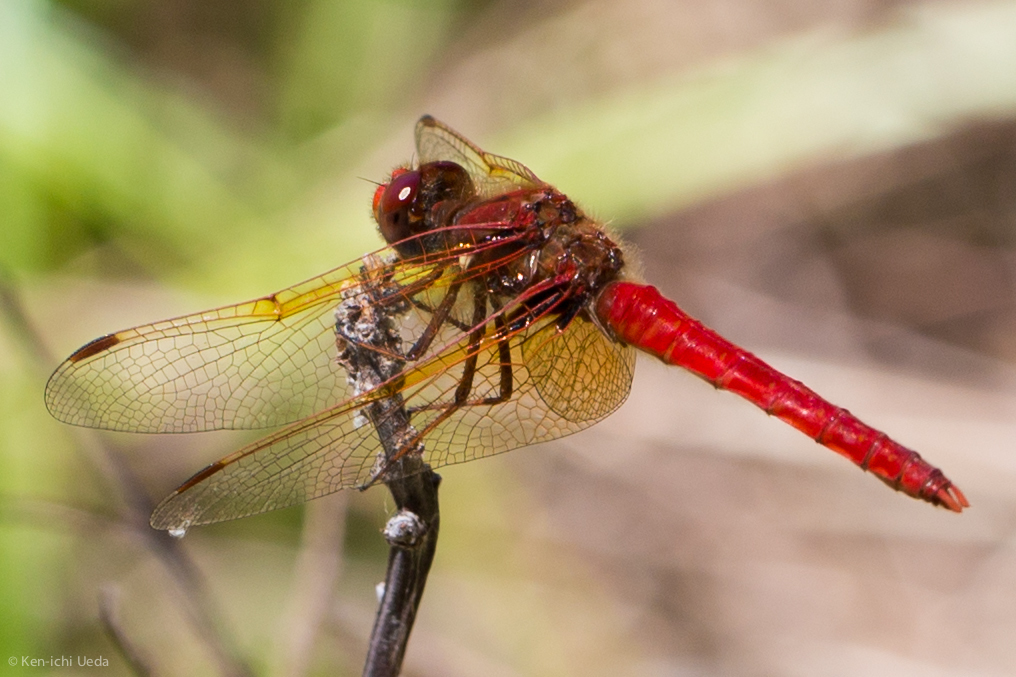
(c) Ken-ichi Ueda, some rights reserved (CC BY) · licence
Family: Libellulidae · Class: Insecta · Order: Odonata
Sympetrum illotum (Cardinal Meadowhawk) is a California animal in the Libellulidae family.
The Cardinal Meadowhawk is a medium-sized dragonfly belonging to the family Libellulidae. Males typically measure 32-40 mm (1.3-1.6 inches) in total length with a wingspan of 55-65 mm (2.2-2.6 inches). Mature males display distinctive reddish coloration on the abdomen and thorax, while females and immature males appear more yellowish or brownish. The species can be distinguished from other meadowhawks by the small dark spots at the base of the hindwings and specific thoracic markings (BugGuide 2024). The Cardinal Meadowhawk has one of the most extensive distributions among North American dragonflies, ranging from southern Canada to northern Mexico. In California, the species occurs throughout much of the state, from sea level to moderate elevations in the mountains. According to BugGuide observations, the species has been documented in multiple California counties including Ventura County, where it was photographed at Point Mugu State Park (BugGuide 2009). This species inhabits a variety of aquatic environments including ponds, lakes, slow-moving streams, and artificial water bodies such as stock tanks and irrigation ditches. Cardinal Meadowhawks prefer areas with emergent vegetation and are often found in open, sunny locations. The larvae develop in shallow, weedy areas of permanent or semi-permanent water bodies. Adults are frequently observed perching on vegetation near water or on exposed surfaces such as rocks and bare ground. Adult Cardinal Meadowhawks are active hunters, capturing flying insects including mosquitoes, midges, flies, and small flying ants. Males are territorial and establish perching sites near water where they intercept potential mates and defend against other males. Mating occurs in flight, followed by tandem egg-laying where the female dips her abdomen into the water to deposit eggs while the male maintains his grip. The flight period varies by latitude and elevation, typically extending from late spring through early fall, with peak activity during summer months. Larvae are aquatic predators that feed on various small invertebrates including mosquito larvae, water fleas, and other aquatic insects. Development from egg to adult typically requires one to two years, depending on climate and water temperature. Larvae overwinter in the sediment or among aquatic vegetation and emerge as adults the following season. The Cardinal Meadowhawk is not currently listed under federal or state endangered species acts and appears to maintain stable populations across most of its range. The species' adaptability to various aquatic habitats, including artificial water sources, has likely contributed to its continued success. However, like many freshwater-dependent species, Cardinal Meadowhawks may face localized threats from habitat loss, water pollution, and climate change effects on wetland ecosystems. The species' wide distribution and habitat flexibility suggest it is less vulnerable than more specialized dragonfly species, though continued monitoring of population trends remains important for conservation planning.
Classification
Class: Insecta · Order: Odonata · Family: Libellulidae
Frequently asked questions
How is Sympetrum illotum classified?
Sympetrum illotum belongs to class Insecta, order Odonata, family Libellulidae.
What family does Sympetrum illotum belong to?
Sympetrum illotum is in the Libellulidae family.
What is Sympetrum illotum?
The Cardinal Meadowhawk is a medium-sized dragonfly belonging to the family Libellulidae.
Is Sympetrum illotum found in California?
Yes. Sympetrum illotum is recorded in California in The California Species Project's catalogue.
Related species
Other California species in the same genus, family, or bioregion.
Data from The California Species Project — 14,000+ California species with verified data from CNPS, CDFW, USFWS, and more.