Sympetrum pallipes
Striped Meadowhawk
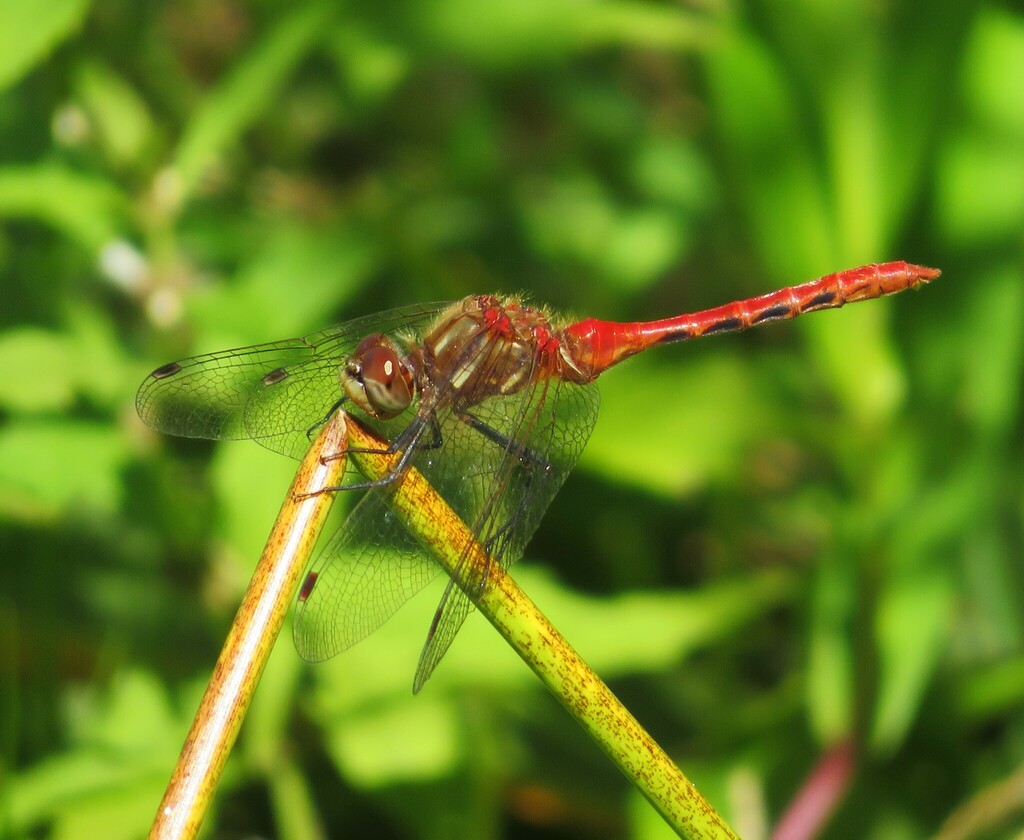
(c) sprcrkwild, some rights reserved (CC BY) · licence
Family: Libellulidae · Class: Insecta · Order: Odonata
Sympetrum pallipes (Striped Meadowhawk) is a California animal in the Libellulidae family.
The Striped Meadowhawk is a medium-sized dragonfly in the family Libellulidae, characterized by distinctive pale stripes on the thorax and jagged black markings along the sides of the abdomen in males. Females display a dark longitudinal stripe on the sides of the abdomen rather than the jagged pattern seen in males. The species exhibits the typical meadowhawk body plan with a moderately robust build and forward-directed, spiny legs arranged in a basket-like configuration for aerial prey capture. Adults possess large compound eyes that nearly touch at the top of the head, providing exceptional vision for hunting. Striped Meadowhawks occur across a broad range in North America, with populations documented from coast to coast. The species is found throughout much of the continental United States and extends into southern Canada. In western North America, including California, the species inhabits suitable wetland habitats from lower elevations to montane regions. According to NatureServe, the species maintains a Global Status of G5, indicating it is demonstrably secure globally with no immediate conservation concerns. This dragonfly inhabits a variety of freshwater wetland environments including ponds, lakes, slow-moving streams, marshes, and constructed wetlands. Adults are commonly observed perching on vegetation near water bodies, particularly favoring exposed perches such as the tips of emergent plants or low shrubs adjacent to breeding habitat. The species shows tolerance for both natural and human-modified aquatic environments, including agricultural drainage ditches and urban retention ponds. Striped Meadowhawks are aerial predators that capture prey during flight using their specialized leg arrangement to form a catching basket. Their diet consists primarily of small flying insects including flies, mosquitoes, beetles, and leafhoppers, earning them the alternative common name of "mosquitohawk." Adults are active hunters during daylight hours, often exhibiting perch-and-sally hunting behavior where they launch from a favored perch to intercept passing prey before returning to the same or nearby location. Mating occurs near water, with females depositing eggs in shallow water or moist substrate near the water's edge. Nymphs are aquatic predators that develop through multiple molts before emerging as adults, typically requiring one year to complete development from egg to adult. The species faces no immediate conservation threats and maintains stable populations across its range. Unlike many specialized dragonfly species that require specific habitat conditions, Striped Meadowhawks demonstrate adaptability to various wetland types and some tolerance for habitat modification. However, like all freshwater-dependent species, they remain vulnerable to broader threats affecting aquatic ecosystems including water pollution, habitat destruction, and climate-induced changes to precipitation patterns and water availability. The species serves as an indicator of wetland ecosystem health and contributes to natural pest control through predation on mosquitoes and other nuisance insects.
Classification
Class: Insecta · Order: Odonata · Family: Libellulidae
Frequently asked questions
How is Sympetrum pallipes classified?
Sympetrum pallipes belongs to class Insecta, order Odonata, family Libellulidae.
What family does Sympetrum pallipes belong to?
Sympetrum pallipes is in the Libellulidae family.
What is Sympetrum pallipes?
The Striped Meadowhawk is a medium-sized dragonfly in the family Libellulidae, characterized by distinctive pale stripes on the thorax and jagged black markings along the sides of the abdomen in males.
Is Sympetrum pallipes found in California?
Yes. Sympetrum pallipes is recorded in California in The California Species Project's catalogue.
Related species
Other California species in the same genus, family, or bioregion.
Data from The California Species Project — 14,000+ California species with verified data from CNPS, CDFW, USFWS, and more.