Sympherobius barberi
Barber's Brown Lacewing
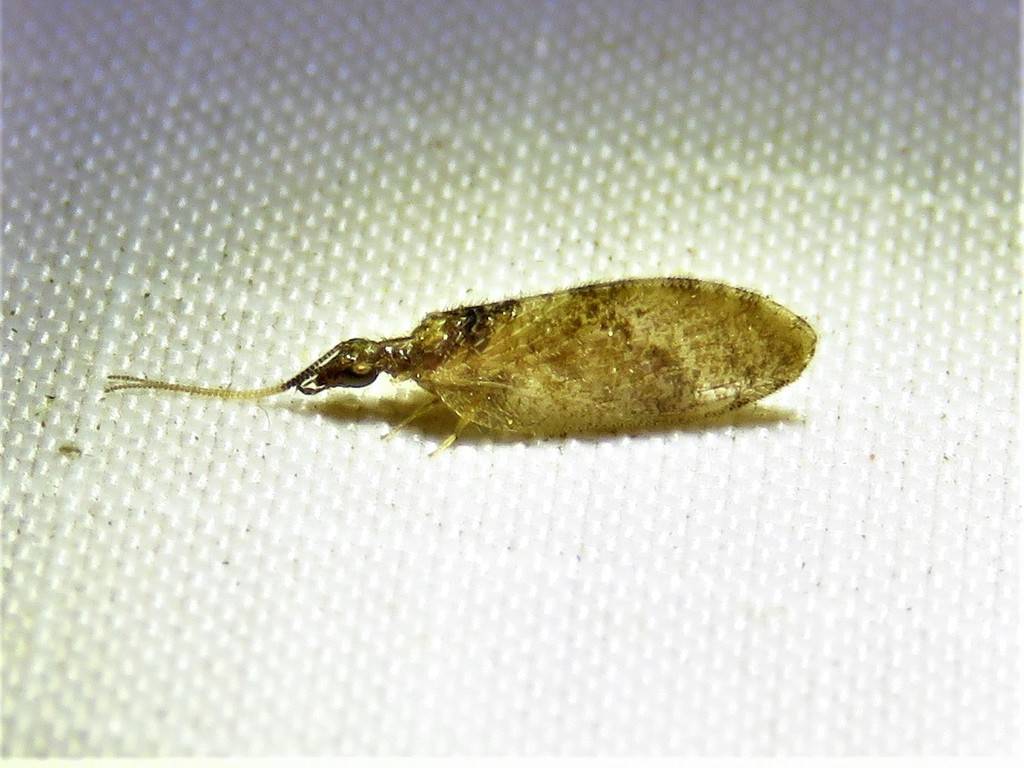
(c) Annika Lindqvist, some rights reserved (CC BY) · licence
Family: Hemerobiidae · Class: Insecta · Order: Neuroptera
Sympherobius barberi (Barber's Brown Lacewing) is a California animal in the Hemerobiidae family.
Barber's Brown Lacewing (Sympherobius barberi) is a small neuropteran insect belonging to the family Hemerobiidae, commonly known as brown lacewings. This species represents one of the lesser-documented members of the brown lacewing family, with limited scientific literature available regarding its specific morphological characteristics. Like other Sympherobius species, adults likely measure 4-8 millimeters in length with delicate, membranous wings that display a brownish coloration and intricate venation patterns typical of the genus. The distribution of Sympherobius barberi appears to be restricted to North America, though specific range information remains poorly documented in scientific literature. The species has been recorded in California, but detailed county-level distribution data and the full extent of its geographic range have not been comprehensively mapped. According to BugGuide, this species falls within the broader distribution patterns of North American Sympherobius species, though specific locality records for S. barberi are limited. Habitat requirements for Barber's Brown Lacewing have not been thoroughly studied or documented. Brown lacewings in the genus Sympherobius typically inhabit forested environments, woodland edges, and areas with diverse vegetation that support aphid populations and other small arthropods. The species likely occurs in both deciduous and mixed forest habitats, potentially at various elevations, though specific elevation ranges and microhabitat preferences remain undocumented. The ecological behavior and life history of Sympherobius barberi follow general patterns observed in related brown lacewing species. Adults are predatory insects that feed on aphids, mites, and other small soft-bodied arthropods. Larvae, known as aphid lions, are also predaceous and likely develop through three instars before pupating in silken cocoons. The species presumably undergoes complete metamorphosis with egg, larval, pupal, and adult stages, though specific details regarding breeding timing, clutch sizes, and seasonal activity patterns have not been documented. Adults may be attracted to artificial lights during evening hours, as observed in related species. Sympherobius barberi currently holds no federal or state conservation listing status. The U.S. Fish and Wildlife Service maintains a species profile for this lacewing, indicating recognition at the federal level, though no special conservation status has been designated. The lack of detailed population data, distribution information, and ecological studies makes assessment of conservation needs challenging. Like many small arthropods, the species may face threats from habitat loss, pesticide use, and climate change, but specific population trends and threat assessments have not been conducted. Scientific documentation for this species remains limited. The information presented here is based on available sources including BugGuide and U.S. Fish and Wildlife Service records. Detailed ecological studies, morphological descriptions, and comprehensive distribution surveys are needed to better understand this species' biology and conservation requirements. We welcome contributions of verified scientific data, photographs, or field observations to enhance this species account.
Classification
Class: Insecta · Order: Neuroptera · Family: Hemerobiidae
Frequently asked questions
How is Sympherobius barberi classified?
Sympherobius barberi belongs to class Insecta, order Neuroptera, family Hemerobiidae.
What family does Sympherobius barberi belong to?
Sympherobius barberi is in the Hemerobiidae family.
What is Sympherobius barberi?
Barber's Brown Lacewing (Sympherobius barberi) is a small neuropteran insect belonging to the family Hemerobiidae, commonly known as brown lacewings.
Is Sympherobius barberi found in California?
Yes. Sympherobius barberi is recorded in California in The California Species Project's catalogue.
Related species
Other California species in the same genus, family, or bioregion.
Data from The California Species Project — 14,000+ California species with verified data from CNPS, CDFW, USFWS, and more.