Sympistis linda
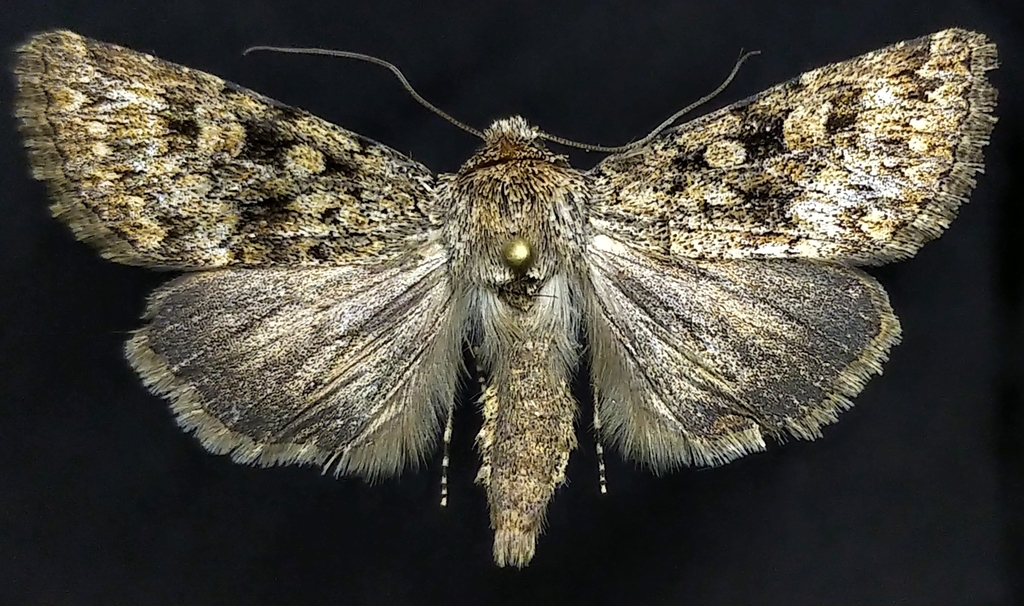
(c) Doug Macaulay, some rights reserved (CC BY) · licence
Family: Noctuidae · Class: Insecta · Order: Lepidoptera
Sympistis linda is a California animal in the Noctuidae family.
Sympistis linda is a moth species in the family Noctuidae, part of the large group of owlet moths. This species belongs to the genus Sympistis, which comprises medium-sized moths typically characterized by forewings with subtle patterns and earth-toned coloration. Adult moths in this genus generally measure 12 to 18 mm in forewing length, with wingspans ranging from 24 to 36 mm. The forewings are typically brown to grayish-brown with darker markings, while the hindwings are usually paler, often whitish or light gray. The range and distribution of Sympistis linda remains poorly documented in the scientific literature. Many Sympistis species are known from western North America, particularly in arid and semi-arid regions. However, specific locality records for S. linda are limited, and comprehensive surveys may be needed to establish its full geographic range within California or other states where it may occur. Like other members of the genus Sympistis, this species likely inhabits dry, open habitats including desert scrublands, chaparral, or grassland areas. Many Sympistis moths are associated with specific elevation ranges, often occurring in foothill or montane environments. The species may show preferences for areas with sparse vegetation or disturbed soils where host plants are present. The life cycle and ecology of Sympistis linda follows the typical pattern of noctuids. Adults are nocturnal, becoming active after sunset to mate and feed. Females deposit eggs on or near host plants, where larvae develop through several instars before pupating in soil or plant debris. The larval stage likely feeds on herbaceous plants, though specific host plant relationships for S. linda have not been definitively established. Many Sympistis species utilize plants in families such as Asteraceae, Chenopodiaceae, or other drought-adapted vegetation. Flight periods for Sympistis moths typically occur during spring and fall months, though timing varies by species and location. Adults may be attracted to artificial lights and can be collected using standard moth trapping techniques. The species likely overwinters as pupae in the soil, emerging as adults when environmental conditions become favorable. The conservation status of Sympistis linda is not well established, as comprehensive population assessments have not been conducted. The species does not appear on federal or state endangered species lists as of December 2025. However, like many specialized moth species, S. linda may face threats from habitat loss due to urban development, agricultural conversion, or changes in land management practices. Climate change may also affect the species through alterations to precipitation patterns and temperature regimes that influence host plant availability and suitable habitat. Further taxonomic and ecological research is needed to better understand the biology, distribution, and conservation needs of Sympistis linda. Systematic surveys using appropriate collection methods would help clarify the species' range and abundance, while studies of larval host plants would provide important ecological information for potential conservation planning.
Classification
Class: Insecta · Order: Lepidoptera · Family: Noctuidae
Frequently asked questions
How is Sympistis linda classified?
Sympistis linda belongs to class Insecta, order Lepidoptera, family Noctuidae.
What family does Sympistis linda belong to?
Sympistis linda is in the Noctuidae family.
What is Sympistis linda?
Sympistis linda is a moth species in the family Noctuidae, part of the large group of owlet moths.
Is Sympistis linda found in California?
Yes. Sympistis linda is recorded in California in The California Species Project's catalogue.
Related species
Other California species in the same genus, family, or bioregion.
Data from The California Species Project — 14,000+ California species with verified data from CNPS, CDFW, USFWS, and more.