Sympistis ragani
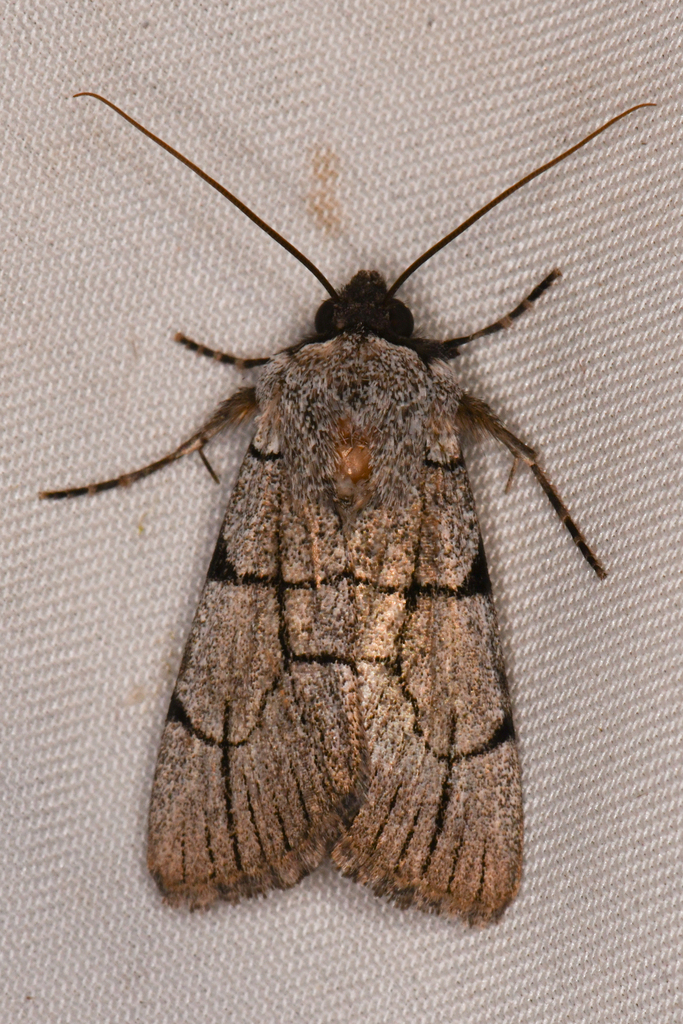
(c) Trevor Van Loon, some rights reserved (CC BY) · licence
Family: Noctuidae · Class: Insecta · Order: Lepidoptera
Sympistis ragani is a California animal in the Noctuidae family.
Sympistis ragani is a moth species in the family Noctuidae, subfamily Noctuinae. This noctuid moth exhibits the typical characteristics of its genus, with forewings that are generally brownish-gray with subtle patterning. The forewings display a complex arrangement of transverse lines and spots, including reniform and orbicular stigmata that are characteristic of noctuids. The hindwings are typically paler than the forewings, often whitish or light gray. Adults have a wingspan measuring approximately 30-35 mm, with males generally smaller than females. The antennae are filiform in both sexes, though males may exhibit slightly more pronounced segments. Sympistis ragani occurs along the Pacific Coast from southwestern Oregon south to southern California. Within California, the species is documented from coastal and near-coastal regions, though specific county records and elevation ranges require further documentation. The distribution appears to be associated with Mediterranean climate zones and coastal scrub ecosystems of the Pacific Coast region. The species inhabits coastal scrubland, chaparral, and oak woodland environments typical of California's Mediterranean climate zones. These habitats are characterized by mild, wet winters and warm, dry summers. The moth likely occurs at elevations ranging from sea level to several hundred meters, following the distribution of suitable host plant communities. Microhabitat preferences include areas with native shrubs and herbaceous plants that serve as larval food sources. As with other members of the genus Sympistis, S. ragani is nocturnal and attracted to artificial lights. Adults are active during specific seasonal periods, likely coinciding with the phenology of their host plants. The larval stage feeds on herbaceous plants, though specific host plant relationships for this species have not been thoroughly documented in the literature. Larvae likely feed on native forbs and may exhibit preferences for plants in families commonly utilized by other Sympistis species, such as Asteraceae or Plantaginaceae. The species completes one generation per year, with adults emerging during late spring or summer months when temperatures are favorable for flight activity. Sympistis ragani does not currently hold any federal or state conservation status designations. The species' conservation status remains poorly understood due to limited systematic survey data and taxonomic research. Like many native moth species in California, S. ragani may face threats from habitat loss due to urban development, agricultural conversion, and invasive plant species that alter native plant communities. Coastal development and habitat fragmentation pose particular risks to species with limited geographic ranges. The impacts of climate change on this species are unknown but could affect the distribution of suitable habitat and host plant communities. Fire regime changes in chaparral and scrubland habitats may also influence population dynamics. Additional research is needed to determine population trends, specific habitat requirements, and conservation needs for this species.
Classification
Class: Insecta · Order: Lepidoptera · Family: Noctuidae
Frequently asked questions
How is Sympistis ragani classified?
Sympistis ragani belongs to class Insecta, order Lepidoptera, family Noctuidae.
What family does Sympistis ragani belong to?
Sympistis ragani is in the Noctuidae family.
What is Sympistis ragani?
Sympistis ragani is a moth species in the family Noctuidae, subfamily Noctuinae.
Is Sympistis ragani found in California?
Yes. Sympistis ragani is recorded in California in The California Species Project's catalogue.
Related species
Other California species in the same genus, family, or bioregion.
Data from The California Species Project — 14,000+ California species with verified data from CNPS, CDFW, USFWS, and more.