Syncaris pacifica
California freshwater shrimp
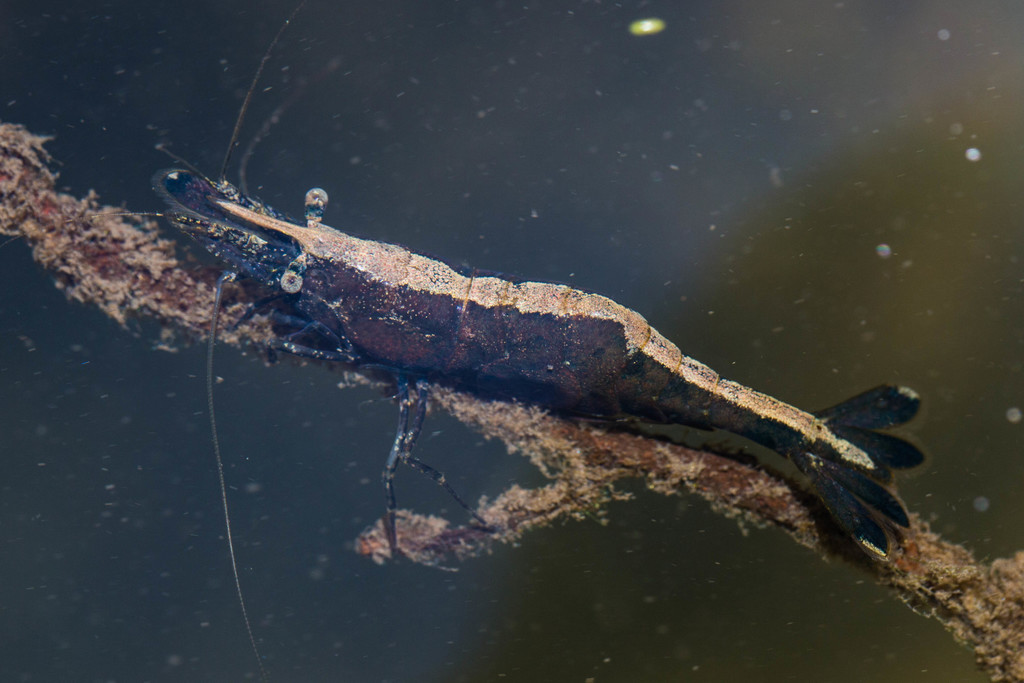
no rights reserved · CC0
Family: Atyidae · Class: Malacostraca · Order: Decapoda
Conservation status: SE · Endangered · G2 S2
Syncaris pacifica (California freshwater shrimp) is a California animal in the Atyidae family.
The California freshwater shrimp is a small crustacean endemic to low-elevation freshwater streams in three California counties. Adults reach a maximum length of 50 mm (1.96 inches), with females generally larger than males (USFWS). The species exhibits sexual dimorphism in coloration: juveniles and males appear translucent to nearly transparent, while mature females are typically brown with a distinctive tan dorsal stripe. The species belongs to the family Atyidae and possesses the characteristic body plan of freshwater shrimp, with a slender form adapted for stream environments. The California freshwater shrimp is restricted to Marin, Sonoma, and Napa counties in California, representing one of the most geographically limited ranges of any North American freshwater crustacean. The species occurs only in low-elevation, low-gradient freshwater streams within this narrow coastal range. Population estimates indicate the species has experienced significant range reduction, though specific historical distribution data remains limited. Optimal habitat consists of streams 30 to 90 cm (12 to 36 inches) in depth with specific microhabitat requirements (USFWS 1998). The shrimp typically shelters near stream pool edges and beneath stream banks, seeking cover under exposed root material from riparian vegetation such as alder and willow, or submerged leafy branches. These habitat features provide essential refugia and foraging areas. The species requires clean, well-oxygenated water with stable flow regimes and appears sensitive to habitat modifications that alter natural stream characteristics. California freshwater shrimp exhibit an annual reproductive cycle with distinctive seasonal timing. Mating occurs between September and November, during which males transfer sperm sacs to females following the female's final molt. Females carry 50 to 120 eggs attached to their pleopods throughout winter months. Young are released in May or early June at approximately 6 mm (0.24 inches) in length, representing a relatively small brood size compared to marine decapods. The species' feeding ecology and detailed behavioral patterns remain understudied, though like other atyid shrimp, they likely function as detritivores and filter feeders in stream ecosystems. The California freshwater shrimp was listed as federally endangered in 1988 and maintains endangered status under both federal and California state regulations as of December 2025. The species faces multiple conservation challenges including habitat degradation from urban development, agricultural impacts, water diversions, and stream channelization. Climate change poses additional threats through altered precipitation patterns and increased water temperatures. Recovery efforts have focused on habitat protection and restoration within the species' limited range. The U.S. Fish and Wildlife Service developed a recovery plan in 1998, with an estimated recovery cost of $39,747,000 and a projected timeline of 10 years (USFWS Recovery Report 2009-2010). Current population trends remain uncertain, highlighting the need for continued monitoring and conservation action to prevent extinction of this endemic California species.
Classification
Class: Malacostraca · Order: Decapoda · Family: Atyidae
Conservation status
SE · Endangered · G2 S2
Frequently asked questions
How is Syncaris pacifica classified?
Syncaris pacifica belongs to class Malacostraca, order Decapoda, family Atyidae.
What family does Syncaris pacifica belong to?
Syncaris pacifica is in the Atyidae family.
Is Syncaris pacifica protected or of conservation concern?
Syncaris pacifica carries the following status: SE · Endangered · G2 S2.
What is Syncaris pacifica?
The California freshwater shrimp is a small crustacean endemic to low-elevation freshwater streams in three California counties.
Is Syncaris pacifica found in California?
Yes. Syncaris pacifica is recorded in California in The California Species Project's catalogue.
More California species
This species has no close relatives in our California data — here are other species to explore.
Data from The California Species Project — 14,000+ California species with verified data from CNPS, CDFW, USFWS, and more.