Synchlora aerata
Wavy-Lined Emerald
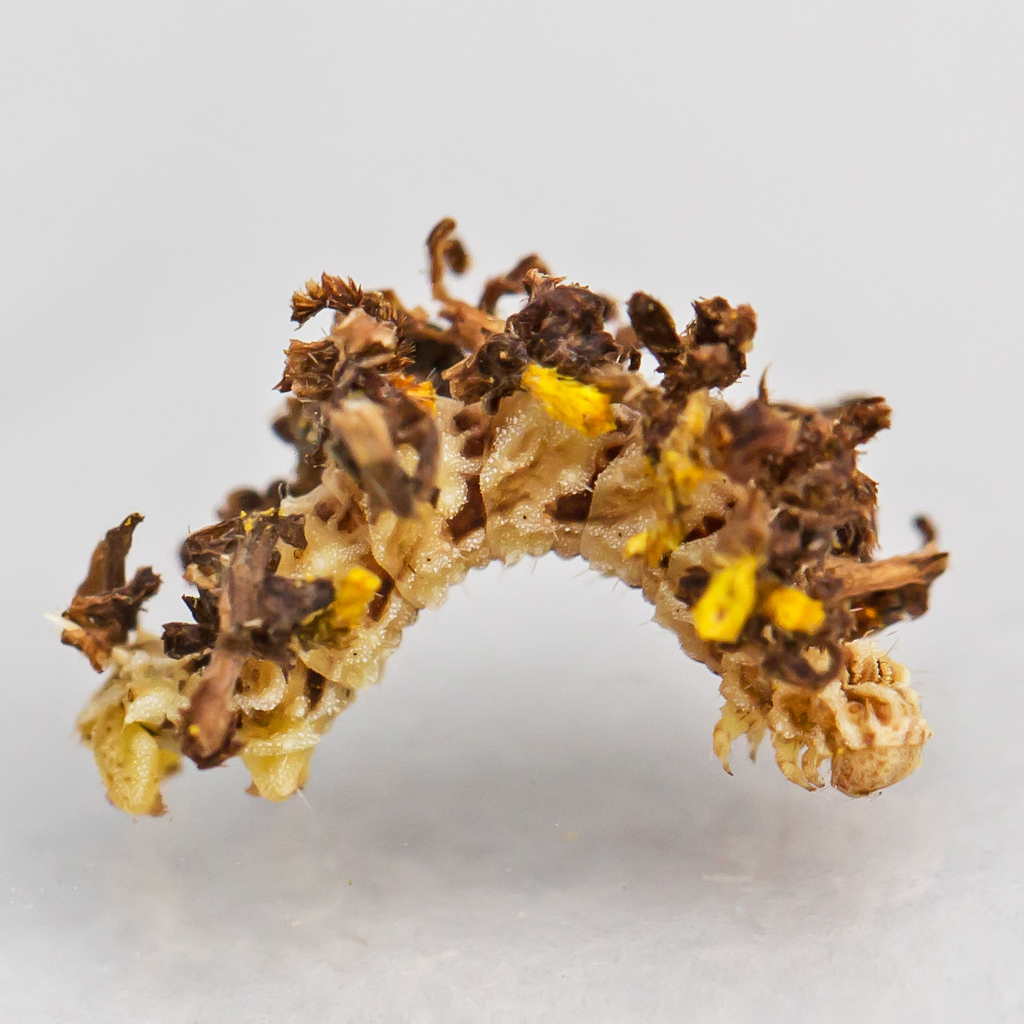
(c) Bill Keim, some rights reserved (CC BY) · licence
Family: Geometridae · Class: Insecta · Order: Lepidoptera
Synchlora aerata (Wavy-Lined Emerald) is a California animal in the Geometridae family.
The Wavy-lined Emerald (Synchlora aerata) is a small geometrid moth in the family Geometridae, subfamily Geometrinae. Adults have a wingspan of 18-25 mm (0.7-1.0 inches), with forewings displaying pale to bright green coloration crossed by thin, irregular white lines that create the characteristic wavy pattern from which the species derives its name. The hindwings are similar in color but typically lack the distinct white markings. Fresh specimens show vibrant emerald green coloration, but this fades to yellow or white in preserved specimens due to the breakdown of green pigments. Males are generally smaller than females and possess feathery antennae, while females have thread-like antennae. Synchlora aerata occurs throughout much of North America, ranging from southern Canada to northern Mexico. In California, the species is found primarily in coastal and montane regions, including the Coast Ranges, Sierra Nevada foothills, and scattered locations in the Central Valley. The distribution extends from sea level to approximately 2,000 meters (6,500 feet) elevation, though it is most commonly encountered below 1,500 meters (4,900 feet). This species inhabits diverse forest and woodland environments, including mixed coniferous forests, oak woodlands, riparian corridors, and chaparral communities. Adults are frequently found in areas with abundant flowering plants, particularly where composite flowers (Asteraceae) are present. The moths show preference for partially shaded environments with access to both nectar sources and suitable host plants for larval development. Wavy-lined Emerald moths are nocturnal and strongly attracted to artificial lights. Adults are active from late spring through early fall, with peak flight periods typically occurring from June through August in California. The species produces multiple generations per year in warmer climates, with overlapping broods extending the flight season. Adults feed on nectar from various flowers, showing particular attraction to white or pale-colored blooms that open at night or remain accessible during evening hours. Larvae are notable for their camouflage behavior, adorning themselves with small pieces of plant material, lichen, and flower petals attached to specialized setae, creating effective camouflage against predators. This decorating behavior is characteristic of several Synchlora species. Caterpillars feed on flowers and developing seeds of various plants, including species in the Asteraceae (sunflower family), Rosaceae (rose family), and other flowering plant families. Pupation occurs in a loose cocoon constructed among leaf litter or attached to vegetation. The Wavy-lined Emerald is not federally or state-listed and appears to maintain stable populations across its range. The species demonstrates adaptability to various habitats and does not face immediate conservation concerns. However, like many moths, populations may be affected by light pollution, habitat fragmentation, and pesticide use in agricultural and urban areas. The species' broad host plant range and multiple generations per year contribute to its apparent resilience in modified landscapes.
Classification
Class: Insecta · Order: Lepidoptera · Family: Geometridae
Frequently asked questions
How is Synchlora aerata classified?
Synchlora aerata belongs to class Insecta, order Lepidoptera, family Geometridae.
What family does Synchlora aerata belong to?
Synchlora aerata is in the Geometridae family.
What is Synchlora aerata?
The Wavy-lined Emerald (Synchlora aerata) is a small geometrid moth in the family Geometridae, subfamily Geometrinae.
Is Synchlora aerata found in California?
Yes. Synchlora aerata is recorded in California in The California Species Project's catalogue.
Related species
Other California species in the same genus, family, or bioregion.
Data from The California Species Project — 14,000+ California species with verified data from CNPS, CDFW, USFWS, and more.