Synchlora frondaria
Southern Emerald
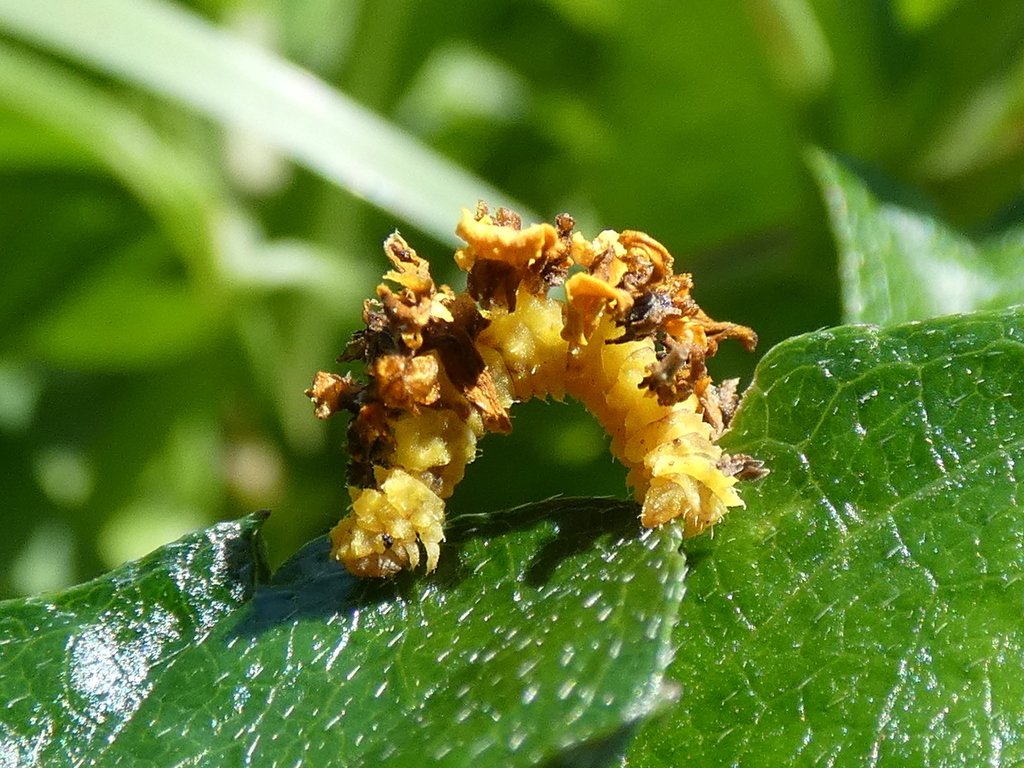
(c) Kai Squires, some rights reserved (CC BY) · licence
Family: Geometridae · Class: Insecta · Order: Lepidoptera
Synchlora frondaria (Southern Emerald) is a California animal in the Geometridae family.
The southern emerald (Synchlora frondaria) is a small moth in the family Geometridae, commonly known as the emerald moths or geometers. This species displays the characteristic green coloration typical of emerald moths, with delicate wing patterns that provide camouflage among foliage. Adults have a wingspan that allows them to blend effectively with their plant hosts during daylight hours when they remain relatively inactive. The southern emerald ranges from Virginia south to Florida and west to Texas, representing a broad southeastern United States distribution. According to BugGuide, the species has been documented in multiple states including California, Florida, and Georgia, though the primary range remains concentrated in the southeastern region. The species extends beyond the continental United States into the Caribbean, Central America, and South America, indicating a wide neotropical distribution pattern. This moth inhabits areas where its host plants occur, including both natural and disturbed habitats. The species adapts to various environments from woodlands to gardens and agricultural areas where suitable host vegetation is present. The habitat flexibility allows the southern emerald to persist across its extensive range in diverse ecological settings. Larval development occurs on multiple host plants, with caterpillars feeding on blackberry (Rubus species), chrysanthemum, Spanish needles (Bidens species), and various other flowering plants. This polyphagous feeding strategy contributes to the species' success across different habitats and geographic regions. According to Butterflies and Moths of North America, the flight period extends from March through October, indicating multiple generations per year in warmer portions of the range. Adults are primarily nocturnal, coming to lights during evening hours. The extended flight season suggests continuous breeding activity throughout much of the active period, with overlapping generations common in areas with favorable climates. Caterpillars likely overwinter in protected locations, pupating in spring to produce the first generation of adults. The species' reproductive strategy involves laying eggs on or near host plants, with larvae developing through several instars before pupation. Adult feeding behavior includes nectar feeding, though specific flower preferences have not been extensively documented. Currently, the southern emerald has no federal or state conservation listing status and appears to maintain stable populations throughout its range. The species' ability to utilize multiple host plants and adapt to both natural and modified habitats suggests resilience to environmental changes. However, like many moth species, populations may be affected by habitat loss, pesticide use, and artificial lighting that can disrupt nocturnal behavior patterns. The broad geographic range and host plant flexibility provide some protection against localized population declines, though comprehensive population monitoring data for this species remains limited.
Classification
Class: Insecta · Order: Lepidoptera · Family: Geometridae
Frequently asked questions
How is Synchlora frondaria classified?
Synchlora frondaria belongs to class Insecta, order Lepidoptera, family Geometridae.
What family does Synchlora frondaria belong to?
Synchlora frondaria is in the Geometridae family.
What is Synchlora frondaria?
The southern emerald (Synchlora frondaria) is a small moth in the family Geometridae, commonly known as the emerald moths or geometers.
Is Synchlora frondaria found in California?
Yes. Synchlora frondaria is recorded in California in The California Species Project's catalogue.
Related species
Other California species in the same genus, family, or bioregion.
Data from The California Species Project — 14,000+ California species with verified data from CNPS, CDFW, USFWS, and more.