Synodus lucioceps
California Lizardfish
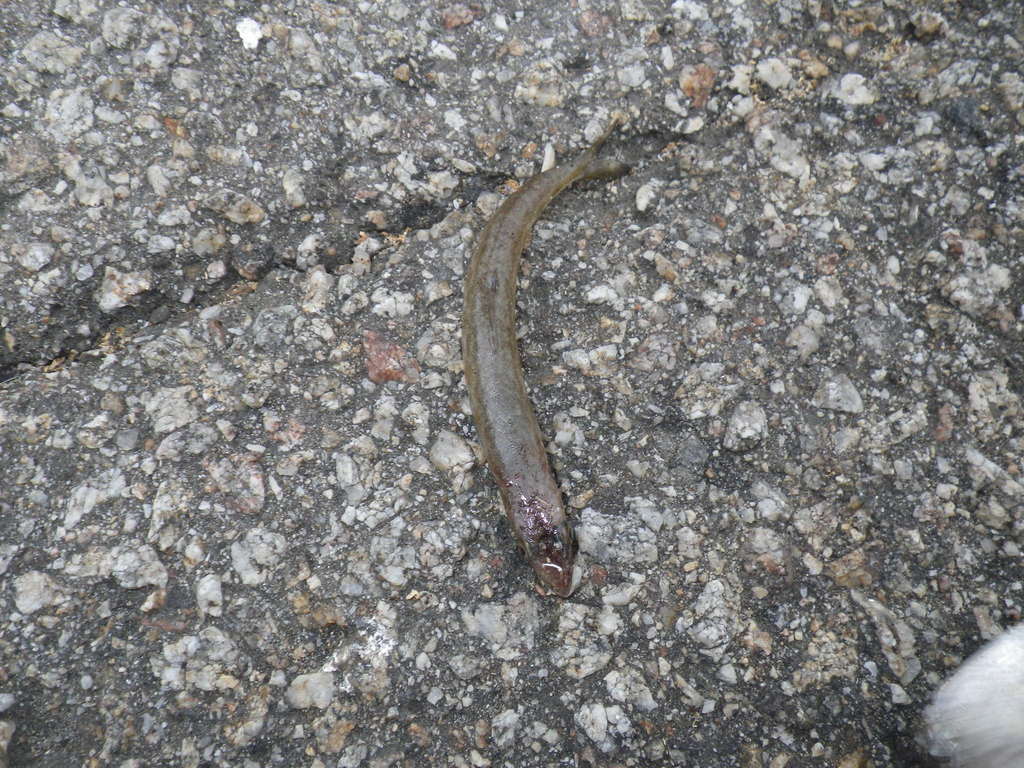
(c) Dominic, some rights reserved (CC BY) · licence
Family: Synodontidae · Class: Actinopterygii · Order: Aulopiformes
Synodus lucioceps (California Lizardfish) is a California animal in the Synodontidae family.
The California lizardfish is a slender, elongate marine fish characterized by its lizard-like appearance and predatory habits. Adults typically reach lengths of 25 to 64 centimeters (10 to 25 inches), with a cylindrical body that tapers toward the tail. The species displays a mottled brown and tan coloration with darker crossbars along the dorsal surface, providing effective camouflage against sandy and rocky substrates. The mouth is large and equipped with sharp, needle-like teeth arranged in multiple rows. A distinctive feature is the large, sail-like dorsal fin positioned midway along the back, and the pelvic fins are located in an abdominal position. California lizardfish occur along the Pacific coast from British Columbia to Baja California, Mexico, with the species being particularly common in California waters. The species inhabits nearshore marine environments from the intertidal zone to depths of approximately 183 meters (600 feet). According to California Department of Fish and Wildlife nearshore monitoring data, California lizardfish ranked as the seventh most commonly caught species in recent surveys, with 414 individuals documented. The species has been recorded in major California estuaries including Ballona Creek and surrounding coastal waters of Los Angeles County. This species prefers sandy and muddy bottoms in bays, estuaries, and coastal waters, often burying itself partially in sediment with only its eyes and mouth exposed. California lizardfish are commonly found in eelgrass beds, shallow lagoons, and areas where freshwater meets saltwater. They demonstrate tolerance for a range of salinities, allowing them to inhabit both marine and brackish water environments. Water temperatures between 10 and 24 degrees Celsius (50 to 75 degrees Fahrenheit) appear optimal for the species. California lizardfish are ambush predators that remain motionless on the bottom waiting for prey to approach. Their diet consists primarily of small fish, crustaceans, and occasionally cephalopods and polychaete worms. The species exhibits opportunistic feeding behavior, with juveniles consuming more invertebrates while adults focus on fish prey. Spawning occurs during spring and summer months, with females releasing pelagic eggs that drift in the water column until hatching. Juveniles settle in shallow, protected waters before moving to deeper habitats as they mature. Currently, the California lizardfish does not hold any special conservation status at federal or state levels. The species appears stable throughout its range and maintains healthy population levels based on fishery survey data. California lizardfish serve as both predator and prey in nearshore ecosystems, supporting larger predatory fish, marine mammals, and seabirds. While not targeted by commercial fisheries, they are occasionally caught as bycatch in trawl operations and may be taken by recreational anglers, though they are not considered a preferred sport fish. The species' ability to tolerate various environmental conditions suggests resilience to moderate habitat changes, though impacts from coastal development and water quality degradation warrant continued monitoring.
Classification
Class: Actinopterygii · Order: Aulopiformes · Family: Synodontidae
Frequently asked questions
How is Synodus lucioceps classified?
Synodus lucioceps belongs to class Actinopterygii, order Aulopiformes, family Synodontidae.
What family does Synodus lucioceps belong to?
Synodus lucioceps is in the Synodontidae family.
What is Synodus lucioceps?
The California lizardfish is a slender, elongate marine fish characterized by its lizard-like appearance and predatory habits.
Is Synodus lucioceps found in California?
Yes. Synodus lucioceps is recorded in California in The California Species Project's catalogue.
More California species
This species has no close relatives in our California data — here are other species to explore.
Data from The California Species Project — 14,000+ California species with verified data from CNPS, CDFW, USFWS, and more.