Synthliboramphus antiquus
Ancient Murrelet
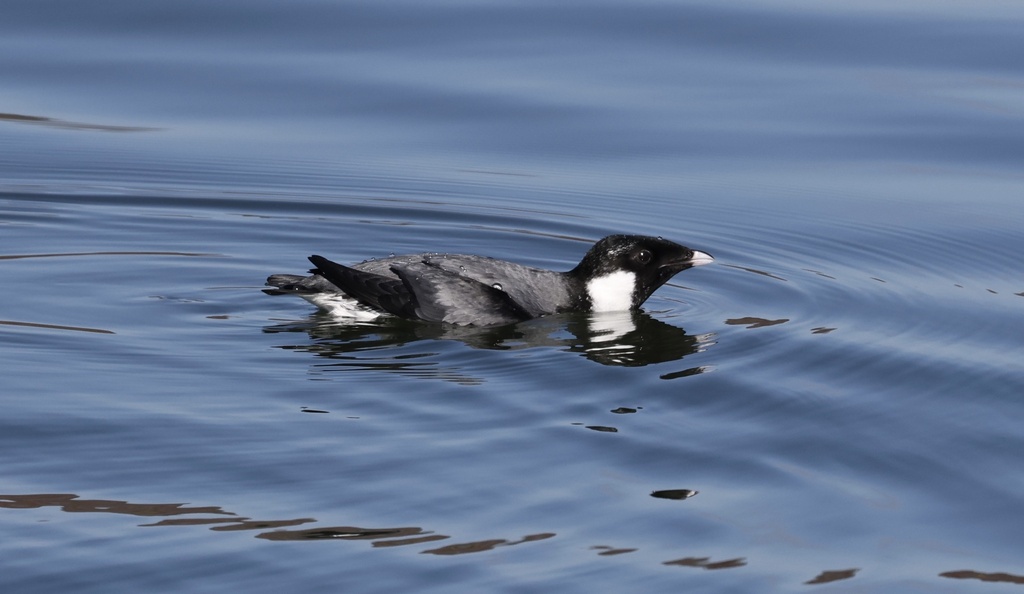
no rights reserved · CC0
Family: Alcidae · Class: Aves · Order: Charadriiformes
Synthliboramphus antiquus (Ancient Murrelet) is a California animal in the Alcidae family.
The Ancient Murrelet is a small seabird measuring 24 to 26 centimeters (9.4 to 10.2 inches) in length with a wingspan of 40 to 42 centimeters (15.7 to 16.5 inches). Adults weigh 190 to 230 grams (6.7 to 8.1 ounces). During breeding season, adults display distinctive black and white plumage with a black head and throat, contrasting white underparts, and dark gray upperparts. White streaks extend from above the eye to the nape, creating distinctive facial markings. The bill is pale yellow to whitish, and the legs are pale blue-gray. Non-breeding adults show reduced contrast with brownish-black upperparts and white extending higher on the face. Ancient Murrelets breed along the North Pacific coast from Alaska to California. In California, breeding colonies are restricted to offshore islands including the Farallon Islands, Castle Rock, and formerly Prince Island near San Francisco. The species winters in nearshore and offshore waters of the North Pacific, with California waters serving as important wintering habitat from approximately October through March. Non-breeding individuals disperse widely across the continental shelf and slope waters. Breeding habitat consists of soil burrows excavated in forested areas on offshore islands, typically under dense vegetation including salmonberry, elderberry, and grasses. Burrows extend 0.5 to 3 meters (1.6 to 9.8 feet) in length and terminate in a chamber lined with vegetation. Outside the breeding season, Ancient Murrelets inhabit pelagic marine waters over the continental shelf and slope, generally within 200 kilometers of shore but occasionally recorded hundreds of kilometers offshore. Ancient Murrelets feed primarily on zooplankton, particularly copepods, euphausiids, and larval fish. They pursue prey underwater using wing-propelled diving, typically foraging within 50 meters of the surface. The species exhibits a unique reproductive strategy among seabirds: chicks leave the nest burrow at 1 to 3 days old, before they can fly, and leap from cliffs to reach the ocean where parents feed them at sea. Breeding occurs from March through August, with females laying two eggs in underground burrows. Incubation lasts 34 to 36 days, shared between both parents. The Ancient Murrelet is not federally listed under the Endangered Species Act, though populations face various conservation challenges. In California, the species is considered a Bird of Conservation Concern by the U.S. Fish and Wildlife Service. Historical breeding colony extirpations have occurred, including the loss of breeding populations from Prince Island near San Francisco. Primary threats include introduced predators on nesting islands, particularly rats and cats, oil spills, fisheries interactions, and climate change effects on prey availability. Light pollution from coastal development can disorient fledglings during their nighttime exodus to sea. Marine protection measures and predator control programs on breeding islands represent key conservation strategies for maintaining stable populations.
Classification
Class: Aves · Order: Charadriiformes · Family: Alcidae
Frequently asked questions
How is Synthliboramphus antiquus classified?
Synthliboramphus antiquus belongs to class Aves, order Charadriiformes, family Alcidae.
What family does Synthliboramphus antiquus belong to?
Synthliboramphus antiquus is in the Alcidae family.
What is Synthliboramphus antiquus?
The Ancient Murrelet is a small seabird measuring 24 to 26 centimeters (9.4 to 10.2 inches) in length with a wingspan of 40 to 42 centimeters (15.7 to 16.5 inches).
Is Synthliboramphus antiquus found in California?
Yes. Synthliboramphus antiquus is recorded in California in The California Species Project's catalogue.
Related species
Other California species in the same genus, family, or bioregion.
Data from The California Species Project — 14,000+ California species with verified data from CNPS, CDFW, USFWS, and more.