Synthliboramphus craveri
Craveri's Murrelet
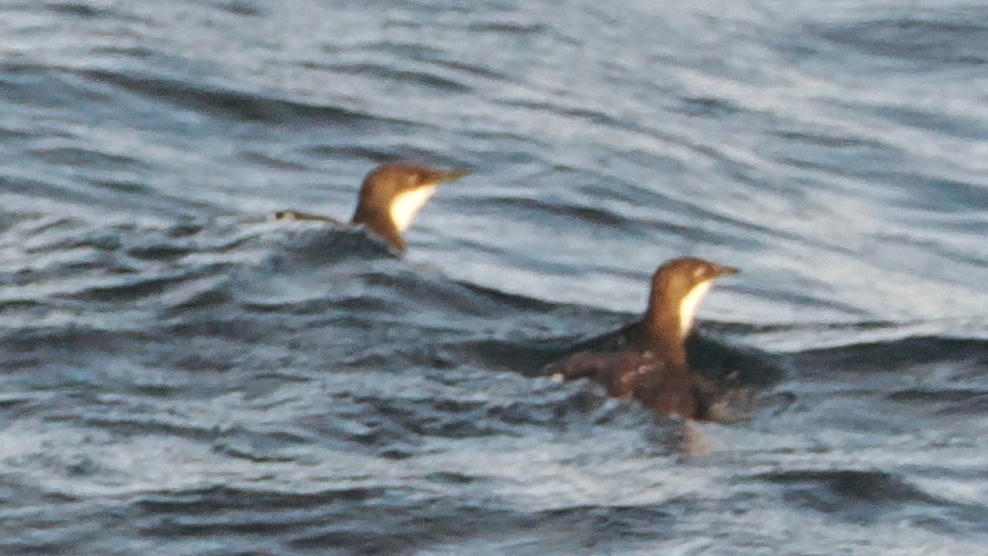
no rights reserved · CC0
Family: Alcidae · Class: Aves · Order: Charadriiformes
Synthliboramphus craveri (Craveri's Murrelet) is a California animal in the Alcidae family.
Craveri's Murrelet is a small seabird measuring 19 to 25 cm (7.5 to 9.8 inches) in length with a wingspan of 33 to 38 cm (13 to 15 inches). Adults weigh approximately 165 to 195 grams. The species displays distinct seasonal plumage. During breeding season, adults exhibit blackish-brown upperparts and white underparts, with a distinctive black cap extending below the eye. The bill is thin, straight, and dark gray to black. In winter plumage, the black cap recedes, and white extends higher on the face and neck. Juveniles resemble winter adults but show more mottled upperparts. Craveri's Murrelet breeds primarily in the Gulf of California, with nesting colonies concentrated on islands off the coasts of Baja California and Sonora, Mexico. The species ranges north along the Pacific Coast during post-breeding dispersal, regularly reaching waters off southern and central California. Individuals have been recorded as far north as Monterey Bay and occasionally to northern California waters. The species occurs in California waters primarily from July through November, with peak abundance typically in August and September. This strictly marine species inhabits warm temperate and subtropical coastal waters. Craveri's Murrelet prefers waters over the continental shelf, typically within 50 km of shore, though individuals may occur farther offshore during migration. The species frequents areas with upwelling and high productivity, often associated with sea surface temperatures between 18 and 24 degrees Celsius. Unlike some murrelets that nest in forests, Craveri's Murrelet nests in rock crevices, caves, and under boulders on offshore islands. Craveri's Murrelet feeds primarily on small schooling fish, particularly anchovies, sardines, and juvenile rockfish. The species also consumes euphausiids, mysid shrimp, and other small crustaceans. Foraging occurs through pursuit diving, with birds using their wings for underwater propulsion. Breeding typically occurs from March through August, with peak activity from April to June. Females lay a single egg or rarely two eggs in concealed nest sites. Both parents share incubation duties for approximately 24 to 26 days. Chicks fledge at night, departing directly to sea with their parents. Craveri's Murrelet is not federally listed under the Endangered Species Act, though populations face several conservation concerns. The species has experienced declines at some breeding colonies, attributed to introduced predators on nesting islands, marine pollution, and climate-driven changes in prey availability. Oil spills pose a significant threat due to the species' coastal distribution and limited breeding range. El Niño events can severely impact breeding success by altering prey distribution and abundance. Current population estimates suggest fewer than 10,000 breeding pairs globally, with the majority concentrated in Mexican waters. The International Union for Conservation of Nature lists the species as Vulnerable, citing its restricted breeding range and declining population trends at monitored colonies.
Classification
Class: Aves · Order: Charadriiformes · Family: Alcidae
Frequently asked questions
How is Synthliboramphus craveri classified?
Synthliboramphus craveri belongs to class Aves, order Charadriiformes, family Alcidae.
What family does Synthliboramphus craveri belong to?
Synthliboramphus craveri is in the Alcidae family.
What is Synthliboramphus craveri?
Craveri's Murrelet is a small seabird measuring 19 to 25 cm (7.5 to 9.8 inches) in length with a wingspan of 33 to 38 cm (13 to 15 inches).
Is Synthliboramphus craveri found in California?
Yes. Synthliboramphus craveri is recorded in California in The California Species Project's catalogue.
Related species
Other California species in the same genus, family, or bioregion.
Data from The California Species Project — 14,000+ California species with verified data from CNPS, CDFW, USFWS, and more.