Syrphus opinator
Black-margined Flower Fly
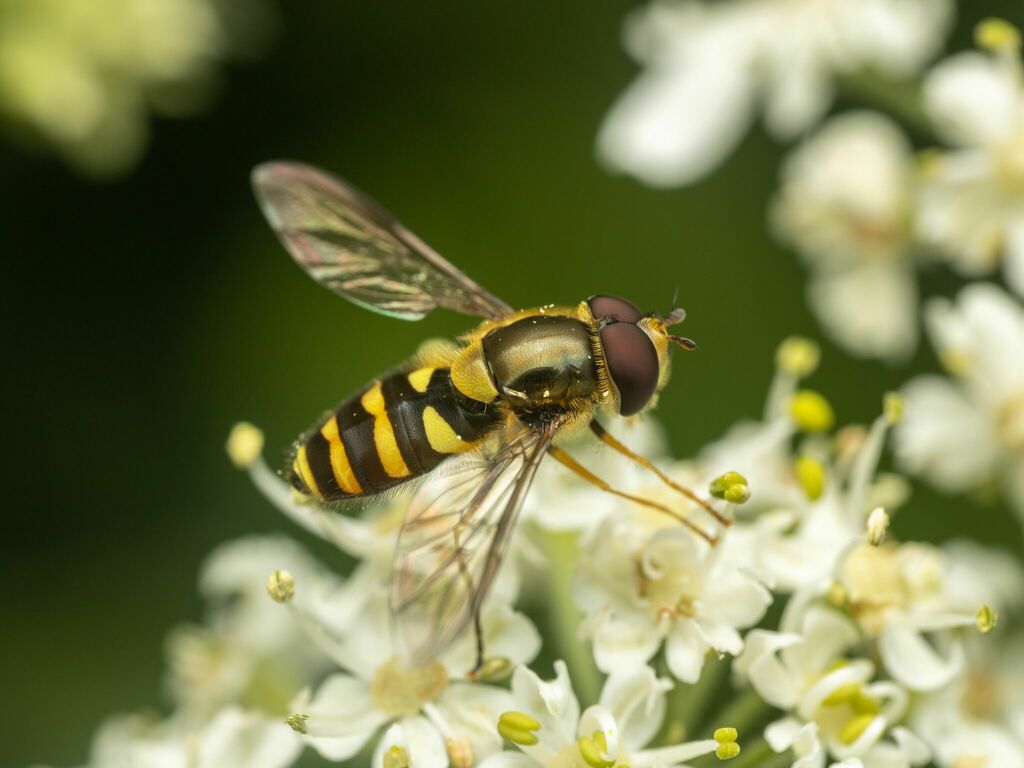
(c) Zachary Dankowicz, some rights reserved (CC BY) · licence
Family: Syrphidae · Class: Insecta · Order: Diptera
Syrphus opinator (Black-margined Flower Fly) is a California animal in the Syrphidae family.
The black-margined flower fly is a dipteran insect in the family Syrphidae, commonly known as hover flies or flower flies. As a member of the genus Syrphus, this species exhibits the characteristic yellow and black coloration typical of many syrphid flies, which serves as Batesian mimicry of stinging wasps and bees. According to BugGuide, S. opinator can be distinguished from the closely related S. torvus by having abdominal fasciae that are restricted to the sides and isolated from the margins, and by lacking the hairy eyes characteristic of S. torvus. Syrphus opinator has a broad distribution across North America, with BugGuide noting it as the common Syrphus species in central California. The species occurs throughout much of the continental United States, extending into Canada. Within California, this hover fly is found in diverse regions from coastal areas to inland valleys and mountainous terrain. The species appears to have a stable population throughout its range, though specific population data has not been documented. This species inhabits a wide variety of environments including forests, grasslands, bogs, and agricultural lands (Skevington et al. 2019). The broad habitat tolerance of S. opinator contributes to its success across diverse geographic regions. Adults are commonly observed visiting flowers in gardens, parks, natural areas, and crop fields where they feed on nectar and play important roles as pollinators. The species shows particular attraction to flowers with accessible nectar sources. Adult black-margined flower flies are active pollinators that feed primarily on nectar from a variety of flowering plants. Like other syrphid flies, the larvae are predaceous, feeding on soft-bodied insects such as aphids, making them beneficial for natural pest control in both agricultural and natural ecosystems. The species typically has multiple generations per year in warmer regions, with adults most commonly observed during spring through fall months when flowers are abundant. Mating occurs on or near flowers, and females lay eggs in locations where aphid colonies are present to provide food for developing larvae. Syrphus opinator does not have federal or state conservation listing status and appears to maintain stable populations throughout its range. The species has been identified as a Species of Greatest Conservation Need in Arkansas, Louisiana, and New York state wildlife action plans, though this designation reflects the need for more research rather than immediate conservation concern. These listings indicate that insufficient data exists to fully assess population trends and conservation status rather than evidence of decline. The species' broad habitat tolerance and widespread distribution suggest it is not currently facing significant conservation threats. However, like many pollinating insects, S. opinator could potentially be affected by habitat loss, pesticide use, and climate change impacts on flowering plant communities that provide essential nectar resources.
Classification
Class: Insecta · Order: Diptera · Family: Syrphidae
Frequently asked questions
How is Syrphus opinator classified?
Syrphus opinator belongs to class Insecta, order Diptera, family Syrphidae.
What family does Syrphus opinator belong to?
Syrphus opinator is in the Syrphidae family.
What is Syrphus opinator?
The black-margined flower fly is a dipteran insect in the family Syrphidae, commonly known as hover flies or flower flies.
Is Syrphus opinator found in California?
Yes. Syrphus opinator is recorded in California in The California Species Project's catalogue.
Related species
Other California species in the same genus, family, or bioregion.
Data from The California Species Project — 14,000+ California species with verified data from CNPS, CDFW, USFWS, and more.