Systasea zampa
Arizona Powdered Skipper
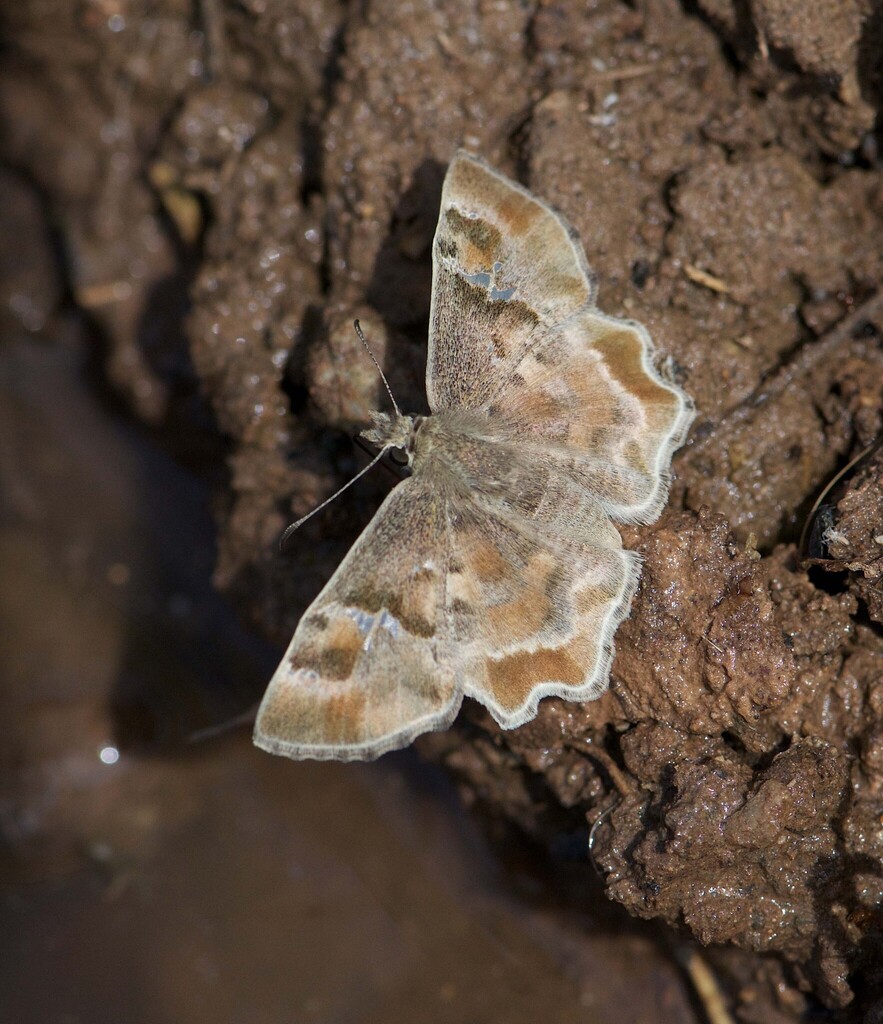
(c) Lon Brehmer, some rights reserved (CC BY) · licence
Family: Hesperiidae · Class: Insecta · Order: Lepidoptera
Systasea zampa (Arizona Powdered Skipper) is a California animal in the Hesperiidae family.
The Arizona Powdered Skipper is a small butterfly in the family Hesperiidae, distinguished by its distinctive wing patterns and specialized habitat requirements. Adults have a wingspan of approximately 25-32 mm (1.0-1.3 inches), with males typically smaller than females. The dorsal wing surfaces are dark brown to blackish with white or cream-colored spots scattered across both forewings and hindwings, giving the species its characteristic 'powdered' appearance. The forewings display a series of small translucent spots arranged in irregular bands, while the hindwings feature more scattered white markings. The ventral surfaces are lighter brown with more prominent white spotting, particularly on the hindwings. Males possess a distinctive costal fold on the forewing containing specialized scent scales. The Arizona Powdered Skipper occurs in southern California, Arizona, New Mexico, and west Texas, representing one of the more geographically restricted skippers in the southwestern United States. In California, populations are documented from desert regions of Imperial, Riverside, and San Bernardino counties, typically in areas adjacent to the Colorado River and Salton Sea. The species reaches its westernmost distribution in the Sonoran Desert of southeastern California. This skipper inhabits arid desert washes, canyon bottoms, and riparian areas where host plants occur. Elevations range from below sea level in the Salton Sea region to approximately 1,500 meters (4,900 feet) in desert mountain ranges. The species requires areas with permanent or seasonal water sources that support the growth of malvaceous plants. Typical habitat includes desert riparian zones, arroyo bottoms, and edges of agricultural areas where native vegetation persists. Larval development reportedly occurs on plants in the mallow family (Malvaceae), though specific host plant relationships require further documentation. Adults are active during daylight hours and exhibit rapid, erratic flight patterns typical of skipper butterflies. Males establish territories near host plants and patrol for females during peak activity periods. According to Scott (1986), the species likely produces multiple broods per year in favorable conditions, with adults observed from March through October in Arizona populations. Adults nectar on various desert wildflowers and may be observed at seepages or mud puddles seeking minerals. The conservation status of the Arizona Powdered Skipper has not been formally assessed at federal or state levels, though the species is considered uncommon throughout its range. Population trends remain poorly documented due to limited systematic monitoring. Potential threats likely include habitat loss from urban development, agricultural conversion, and water diversions that affect riparian vegetation. Climate change may impact the species through altered precipitation patterns and increased temperatures in already extreme desert environments. The specialized habitat requirements and apparent low population densities suggest the species may be vulnerable to environmental changes. Additional research is needed to better understand population status, host plant relationships, and specific conservation needs across the species' range.
Classification
Class: Insecta · Order: Lepidoptera · Family: Hesperiidae
Frequently asked questions
How is Systasea zampa classified?
Systasea zampa belongs to class Insecta, order Lepidoptera, family Hesperiidae.
What family does Systasea zampa belong to?
Systasea zampa is in the Hesperiidae family.
What is Systasea zampa?
The Arizona Powdered Skipper is a small butterfly in the family Hesperiidae, distinguished by its distinctive wing patterns and specialized habitat requirements.
Is Systasea zampa found in California?
Yes. Systasea zampa is recorded in California in The California Species Project's catalogue.
Related species
Other California species in the same genus, family, or bioregion.
Data from The California Species Project — 14,000+ California species with verified data from CNPS, CDFW, USFWS, and more.