Tabanus punctifer
Western Black Horse Fly
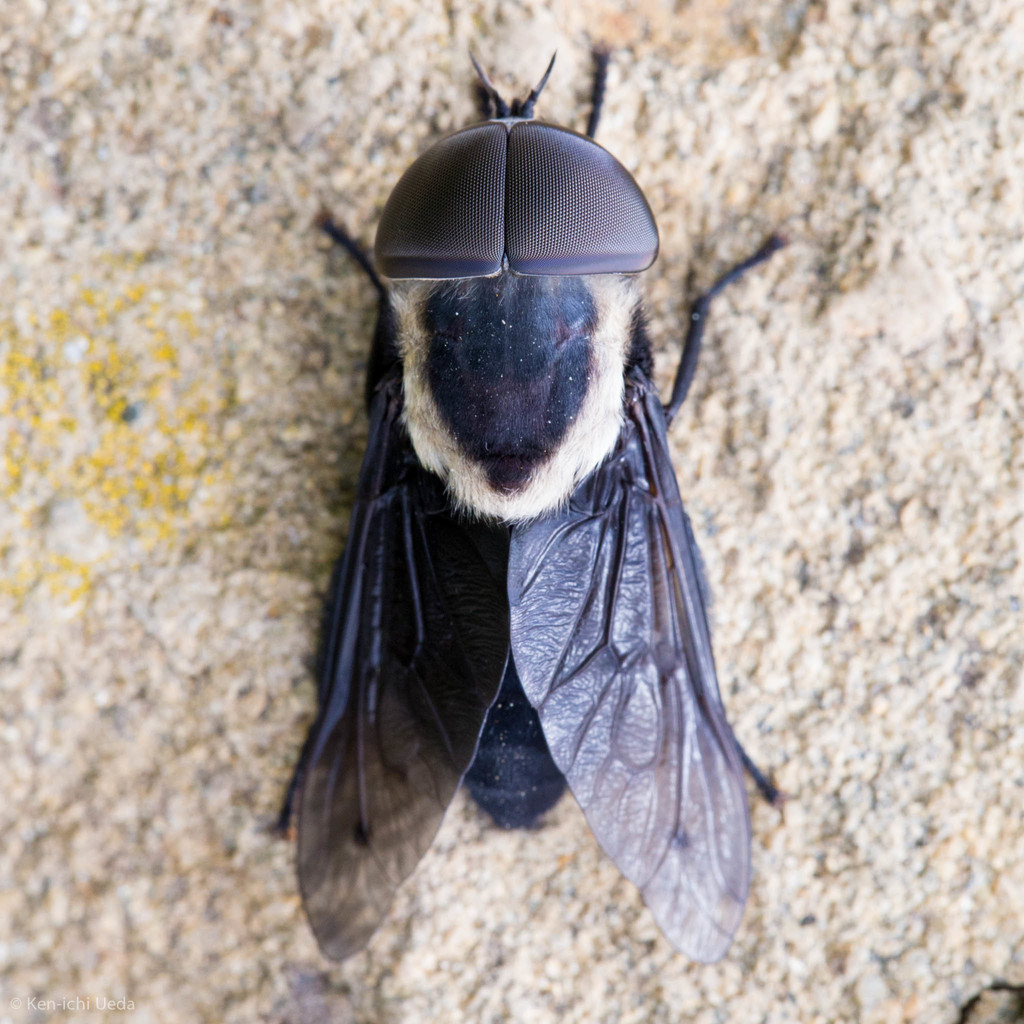
(c) Ken-ichi Ueda, some rights reserved (CC BY) · licence
Family: Tabanidae · Class: Insecta · Order: Diptera
Tabanus punctifer (Western Black Horse Fly) is a California animal in the Tabanidae family.
The Western Black Horse Fly (Tabanus punctifer) is a large biting fly belonging to the family Tabanidae. Adults are robust insects with prominent compound eyes and strong flying capabilities. Like other horse flies, females possess blade-like mouthparts adapted for cutting skin and feeding on blood from mammals, while males feed primarily on nectar and plant fluids. The species displays the typical horse fly body plan with a broad thorax, well-developed wings, and powerful legs. Tabanus punctifer occurs across western North America, with documented populations extending from the Pacific Coast inland to various elevations. The species has been recorded in California, where it appears to have a patchy distribution. According to wildlife refuge inventories, the species occurs in diverse habitats including coastal areas, as documented at Bombay Hook National Wildlife Refuge on the Atlantic Coast, suggesting a broader continental range than the common name implies. The Western Black Horse Fly inhabits a variety of environments from coastal marshes to inland areas. Adults are commonly found in areas with suitable breeding habitat for larval development, which typically includes moist soil, mud, or shallow water environments. The species appears to be associated with both natural and managed landscapes, including wildlife refuges and protected areas where host animals are present. Female horse flies require blood meals for egg development and actively seek mammalian hosts during daylight hours. They are strong fliers capable of traveling considerable distances to locate hosts. Males congregate around flowers and other nectar sources. The larvae are predaceous, developing in moist substrates where they feed on organic matter and other invertebrates. Breeding likely occurs during warmer months when adult activity peaks and suitable conditions exist for larval development. Currently, Tabanus punctifer has no formal conservation status at federal or state levels. The species is not listed under the Endangered Species Act and appears to maintain stable populations across much of its range. However, like many insects associated with wetland and riparian habitats, populations may face pressure from habitat modification, water management practices, and development activities. NatureServe lists the global conservation status as GNR (Global Status Not Ranked), indicating insufficient data for a comprehensive conservation assessment. The ecological role of horse flies extends beyond their reputation as livestock pests. Adults serve as pollinators for various plant species, particularly males which visit flowers regularly. The larvae contribute to nutrient cycling in aquatic and semi-aquatic ecosystems. While females can be significant nuisances to livestock and humans, they also serve as prey for various predators including birds, spiders, and other arthropods. Conservation of wetland habitats that support breeding populations benefits not only this species but entire communities of organisms dependent on these increasingly threatened ecosystems.
Classification
Class: Insecta · Order: Diptera · Family: Tabanidae
Frequently asked questions
How is Tabanus punctifer classified?
Tabanus punctifer belongs to class Insecta, order Diptera, family Tabanidae.
What family does Tabanus punctifer belong to?
Tabanus punctifer is in the Tabanidae family.
What is Tabanus punctifer?
The Western Black Horse Fly (Tabanus punctifer) is a large biting fly belonging to the family Tabanidae.
Is Tabanus punctifer found in California?
Yes. Tabanus punctifer is recorded in California in The California Species Project's catalogue.
Related species
Other California species in the same genus, family, or bioregion.
Data from The California Species Project — 14,000+ California species with verified data from CNPS, CDFW, USFWS, and more.