Tabanus subsimilis
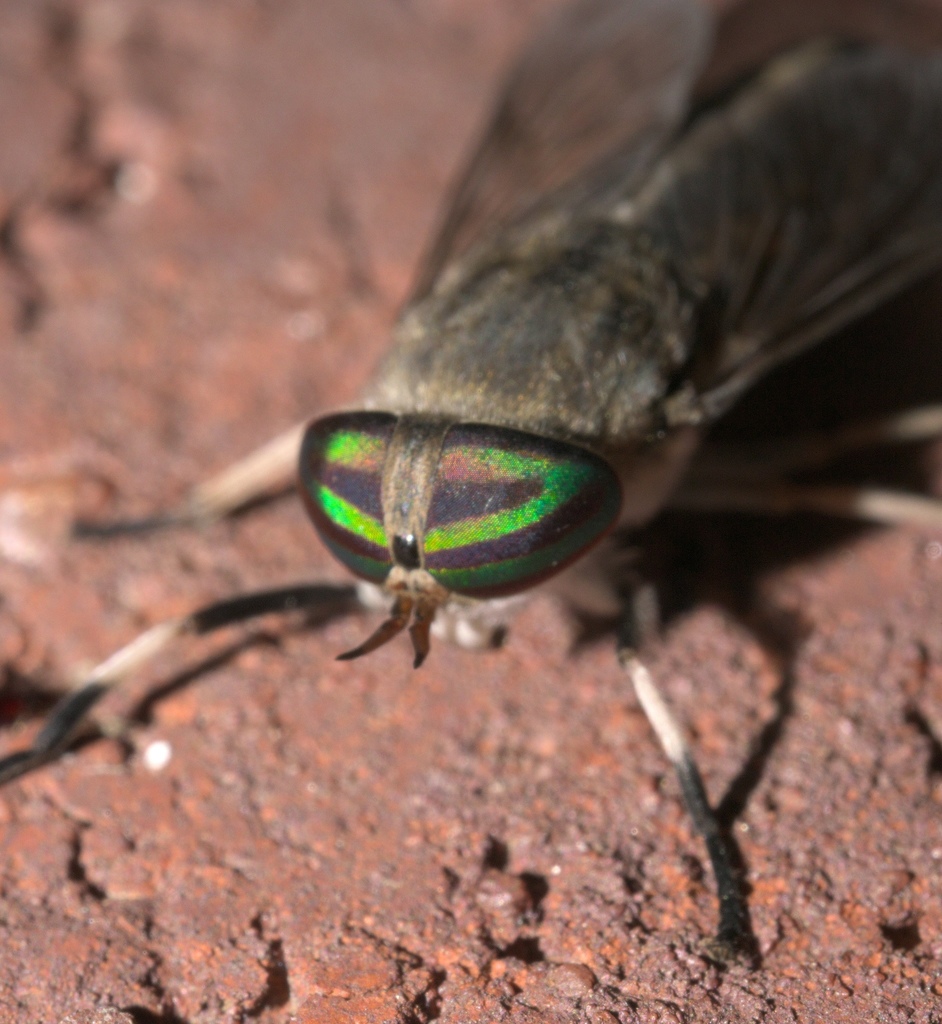
(c) Robert Webster, some rights reserved (CC BY-SA) · licence
Family: Tabanidae · Class: Insecta · Order: Diptera
Tabanus subsimilis is a California animal in the Tabanidae family.
Tabanus subsimilis is a horse fly species in the family Tabanidae, subfamily Tabaninae, tribe Tabanini. As a member of the genus Tabanus, this species shares the typical robust build and blood-feeding behavior characteristic of horse flies. Adult females possess piercing-sucking mouthparts adapted for feeding on mammalian blood, while males feed on nectar and plant fluids. The species exhibits the standard horse fly morphology with large compound eyes, short antennae, and strong flight capabilities. The distribution and range of Tabanus subsimilis within California and North America require further documentation. The U.S. Fish and Wildlife Service maintains taxonomic records for this species, indicating its presence within areas of federal interest or concern. However, specific county-level distribution data and elevation ranges have not been thoroughly documented in available literature. Habitat preferences for Tabanus subsimilis remain poorly characterized in scientific literature. Like other Tabanus species, this horse fly likely inhabits areas near water sources where larvae can develop in moist soil or organic matter. Adult females require access to mammalian hosts for blood meals necessary for egg development, suggesting the species occurs in habitats supporting livestock, wildlife, or human activity. Specific vegetation associations, elevation preferences, and microhabitat requirements have not been well documented. The life cycle of Tabanus subsimilis follows the typical tabanid pattern of complete metamorphosis. Females likely deposit eggs in moist soil near water sources, where larvae develop as predators feeding on organic matter and small invertebrates. Development from egg to adult typically spans one year in temperate climates. Adult activity periods, mating behaviors, host preferences, and seasonal emergence patterns for this species require additional research and documentation. The conservation status of Tabanus subsimilis has not been formally assessed by state or federal agencies. The species does not appear on current federal endangered species lists or California state species of special concern designations. Population trends, primary threats, and conservation needs remain undocumented. As with many invertebrate species, lack of systematic survey data and taxonomic uncertainty may contribute to limited conservation assessment. Tabanus subsimilis represents one of many horse fly species requiring additional research to understand distribution patterns, ecological requirements, and population status. The taxonomy and systematics of North American Tabanus species remain complex, with ongoing revisions and species delimitation studies. Comprehensive field surveys, molecular analyses, and ecological studies would enhance understanding of this species' role in California ecosystems and inform any necessary conservation measures. Scientific documentation for this species remains limited. If you have additional verified information about this species' biology, distribution, or ecology, please contact us to help improve this species account.
Classification
Class: Insecta · Order: Diptera · Family: Tabanidae
Frequently asked questions
How is Tabanus subsimilis classified?
Tabanus subsimilis belongs to class Insecta, order Diptera, family Tabanidae.
What family does Tabanus subsimilis belong to?
Tabanus subsimilis is in the Tabanidae family.
What is Tabanus subsimilis?
Tabanus subsimilis is a horse fly species in the family Tabanidae, subfamily Tabaninae, tribe Tabanini.
Is Tabanus subsimilis found in California?
Yes. Tabanus subsimilis is recorded in California in The California Species Project's catalogue.
Related species
Other California species in the same genus, family, or bioregion.
Data from The California Species Project — 14,000+ California species with verified data from CNPS, CDFW, USFWS, and more.