Tachybaptus dominicus
Least Grebe
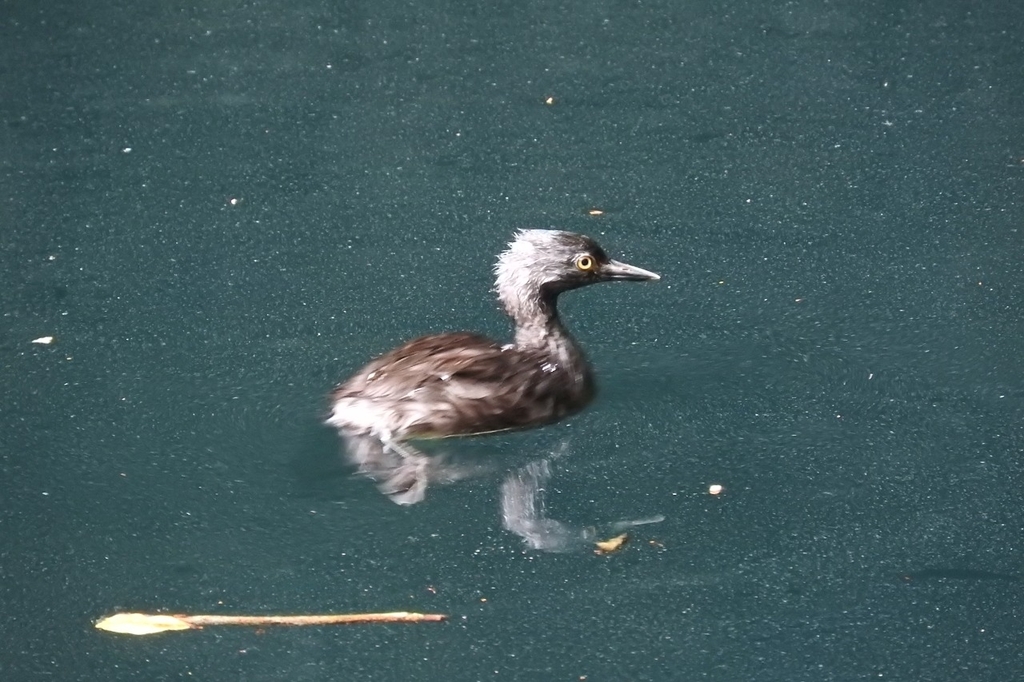
(c) Sebastián de Jesús Herrera Buenfil, some rights reserved (CC BY) · licence
Family: Podicipedidae · Class: Aves · Order: Podicipediformes
Tachybaptus dominicus (Least Grebe) is a California animal in the Podicipedidae family.
The Least Grebe is North America's smallest grebe species, measuring 21 to 27 cm (8.3 to 10.6 inches) in length with a wingspan of 28 to 30 cm (11 to 12 inches). Adults weigh 112 to 180 grams (4.0 to 6.3 ounces). During breeding season, adults display dark gray to blackish plumage on the head, neck, and upperparts, with a distinctive golden-yellow iris. The bill is thin, straight, and dark with a pale tip. Non-breeding adults show lighter gray-brown coloration with a whitish throat and foreneck. The species lacks the white wing patches visible in flight that characterize other North American grebes. Juveniles display striped head patterns with alternating light and dark markings. In California, the Least Grebe occurs primarily in the southeastern desert regions, including the Colorado River valley, Salton Sea area, and Imperial Valley. The species' range extends from the extreme southwestern United States through Mexico, Central America, and into South America as far south as Argentina. California represents the northern edge of the species' range in western North America. Populations in California are largely resident, though some seasonal movement occurs in response to water availability. Least Grebes inhabit shallow freshwater and brackish water bodies including ponds, marshes, irrigation canals, stock tanks, and slow-moving streams. They prefer areas with emergent vegetation such as cattails, bulrushes, and sedges that provide cover and nesting sites. Water depth typically ranges from 0.3 to 2 meters (1 to 6.5 feet). The species adapts to human-modified habitats including agricultural drainage ditches and ornamental ponds when natural wetlands are unavailable. These diving birds feed primarily on small fish, aquatic insects, crustaceans, and amphibian larvae. They capture prey by diving underwater and pursuing it with rapid swimming motions, using their feet for propulsion. Breeding occurs year-round in suitable conditions, with peak activity from March through September. Pairs construct floating nests anchored to emergent vegetation using plant material. Females lay 2 to 7 eggs, typically 4 to 5, with an incubation period of 21 days. Both parents incubate eggs and care for young. Chicks are able to swim shortly after hatching and often ride on their parents' backs for protection and warmth. The Least Grebe is not federally listed and has no special conservation status in California as of December 2025. However, the species faces habitat loss from water diversions, drought, and development pressure on wetland areas in California's desert regions. Climate change and prolonged drought periods threaten water availability in the species' preferred habitats. The Salton Sea's declining water levels and increasing salinity present particular challenges for regional populations. Conservation efforts focus on maintaining and restoring wetland habitats and ensuring adequate water supplies for desert aquatic ecosystems.
Classification
Class: Aves · Order: Podicipediformes · Family: Podicipedidae
Frequently asked questions
How is Tachybaptus dominicus classified?
Tachybaptus dominicus belongs to class Aves, order Podicipediformes, family Podicipedidae.
What family does Tachybaptus dominicus belong to?
Tachybaptus dominicus is in the Podicipedidae family.
What is Tachybaptus dominicus?
The Least Grebe is North America's smallest grebe species, measuring 21 to 27 cm (8.3 to 10.6 inches) in length with a wingspan of 28 to 30 cm (11 to 12 inches).
Is Tachybaptus dominicus found in California?
Yes. Tachybaptus dominicus is recorded in California in The California Species Project's catalogue.
Related species
Other California species in the same genus, family, or bioregion.
Data from The California Species Project — 14,000+ California species with verified data from CNPS, CDFW, USFWS, and more.