Tachytes guatemalensis
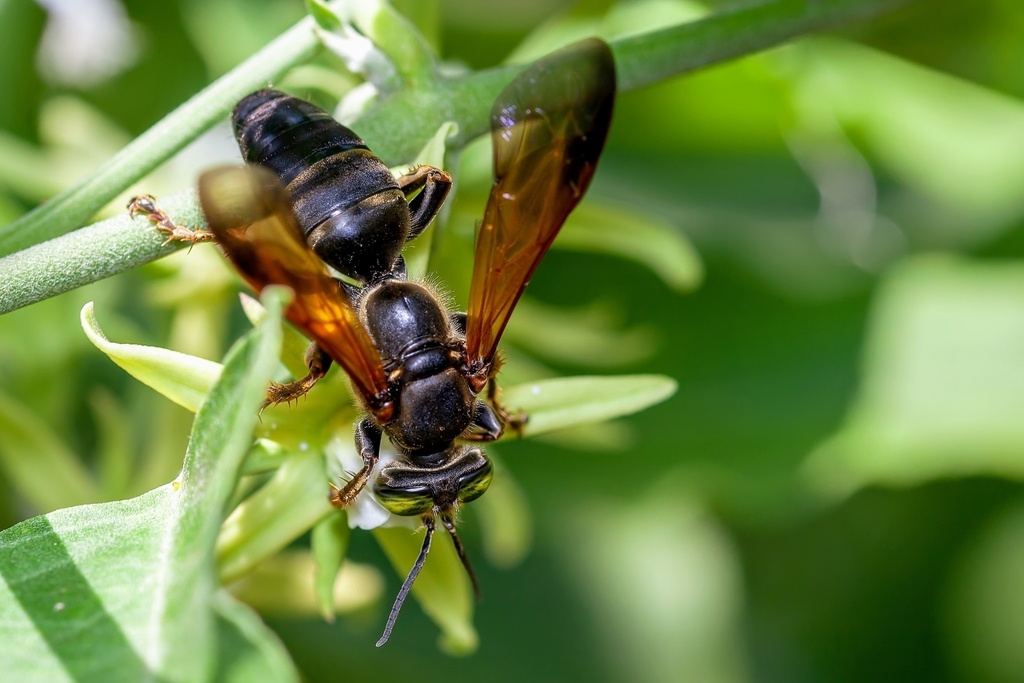
(c) Richard Stovall, some rights reserved (CC BY) · licence
Family: Crabronidae · Class: Insecta · Order: Hymenoptera
Tachytes guatemalensis is a California animal in the Crabronidae family.
Tachytes guatemalensis is a square-headed wasp in the family Crabronidae, subfamily Crabroninae, tribe Larrini. This species belongs to a diverse group of solitary hunting wasps, with the genus Tachytes comprising over 1,300 species worldwide. Physical characteristics specific to T. guatemalensis have not been well documented in available scientific literature, though members of the genus Tachytes are typically small to medium-sized wasps with robust builds and distinctive square-shaped heads that give the group its common name. The historical range and current distribution of T. guatemalensis remain poorly documented. The species name suggests potential origins or early collection localities in Guatemala, though comprehensive range data are not available in current taxonomic databases. Whether this species occurs in California or other western North American locations has not been definitively established through recent surveys or collections. Habitat preferences and ecological requirements for T. guatemalensis have not been specifically studied or reported. Members of the genus Tachytes typically inhabit areas with sandy or loose soils suitable for nest construction, as these wasps are known for their ground-nesting behavior. Many Tachytes species prefer open areas with sparse vegetation, including sandy washes, desert margins, and coastal dunes, though specific microhabitat requirements vary among species. Like other members of the genus, T. guatemalensis is presumed to be a solitary wasp with specialized hunting behavior. Tachytes wasps are typically predators that provision their nests with paralyzed orthopteran insects, particularly grasshoppers and crickets. Females construct burrows in sandy soil where they deposit eggs alongside paralyzed prey items that serve as food for developing larvae. The complete life cycle, including seasonal activity patterns, brood size, and development timing, has not been documented for this species. According to NatureServe, T. guatemalensis is currently ranked as GX (Presumed Extinct) and GNR (Global Status Not Ranked), indicating significant uncertainty about the species' current status and taxonomic validity. This conservation ranking suggests that the species has not been reliably documented in recent decades and may represent either an extinct taxon or a synonym of another described species. The lack of recent collection records and limited historical documentation make assessment of population trends impossible. No specific threats have been identified, though habitat loss and degradation affecting ground-nesting insects could impact populations if they persist. Scientific documentation for this species remains extremely limited despite its inclusion in federal taxonomic databases. The information presented here synthesizes available data from NatureServe and USFWS taxonomic records. Detailed ecological studies, verified distribution records, and taxonomic verification are needed to clarify the status of T. guatemalensis. If you have additional verified information about this species' biology, distribution, or current status, please contact us to help improve this species account.
Classification
Class: Insecta · Order: Hymenoptera · Family: Crabronidae
Frequently asked questions
How is Tachytes guatemalensis classified?
Tachytes guatemalensis belongs to class Insecta, order Hymenoptera, family Crabronidae.
What family does Tachytes guatemalensis belong to?
Tachytes guatemalensis is in the Crabronidae family.
What is Tachytes guatemalensis?
Tachytes guatemalensis is a square-headed wasp in the family Crabronidae, subfamily Crabroninae, tribe Larrini.
Is Tachytes guatemalensis found in California?
Yes. Tachytes guatemalensis is recorded in California in The California Species Project's catalogue.
Related species
Other California species in the same genus, family, or bioregion.
Data from The California Species Project — 14,000+ California species with verified data from CNPS, CDFW, USFWS, and more.