Tachytrechus angustipennis
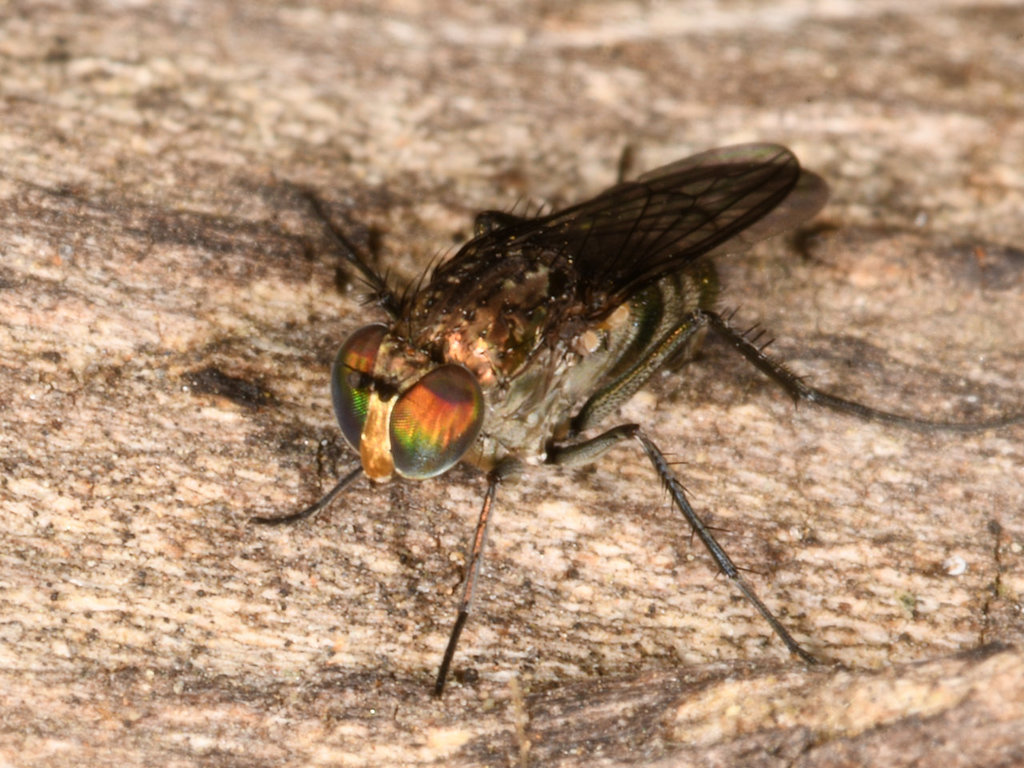
(c) Eddie Dunbar, some rights reserved (CC BY-SA) · licence
Family: Dolichopodidae · Class: Insecta · Order: Diptera
Tachytrechus angustipennis is a California animal in the Dolichopodidae family.
Tachytrechus angustipennis is a small fly species belonging to the long-legged fly family Dolichopodidae. This dipteran species exhibits the characteristic features of its family, including a metallic sheen on the body and elongated legs, though specific morphological measurements for this species have not been documented in available literature. Adults are presumed to be small, typically measuring 2-8 millimeters in length based on family characteristics. The species has a documented distribution that extends beyond California to include Hawaii, where it has been recorded from Kaua'i and O'ahu islands (Evenhuis 1997, Nishida 1997). Recent records indicate its presence has expanded to additional Hawaiian islands, suggesting either natural dispersal or human-mediated transport. Within the continental United States, T. angustipennis appears to have a broader distribution, as evidenced by its inclusion in Species of Greatest Conservation Need lists for multiple states including Arkansas, Louisiana, and New York. Specific habitat requirements for T. angustipennis remain poorly documented. Like other members of the Dolichopodidae family, this species likely inhabits areas with adequate moisture and organic matter, such as forest floors, riparian zones, or areas with decaying vegetation. Dolichopodid flies typically require environments that support their prey organisms and provide suitable breeding substrates, though the precise microhabitat preferences of T. angustipennis have not been characterized. The ecological role and behavior of T. angustipennis follow patterns typical of the Dolichopodidae family. Adults are presumed to be predatory, feeding on smaller arthropods including aphids, mites, and other small insects. The larvae likely develop in moist organic matter, soil, or decaying plant material, where they may feed on microorganisms or organic detritus. Reproductive biology, including mating behaviors, seasonal activity patterns, and developmental timing, has not been specifically documented for this species. T. angustipennis currently lacks formal conservation status at federal or state levels. However, its inclusion on Species of Greatest Conservation Need lists in multiple states suggests concern about population stability or knowledge gaps regarding its status. These designations indicate that the species may be experiencing population declines, has limited distribution, or requires additional research to determine its conservation needs. The lack of comprehensive biological and ecological data represents a significant knowledge gap that hampers effective conservation planning. Scientific documentation for this species remains extremely limited despite its recognition in multiple state wildlife action plans. The information presented here synthesizes available sources from taxonomic databases and state conservation documents. Enhanced field surveys, taxonomic research, and ecological studies are needed to better understand the distribution, habitat requirements, and conservation status of T. angustipennis. We welcome contributions of verified scientific data, photographs, or field observations to enhance this species account.
Classification
Class: Insecta · Order: Diptera · Family: Dolichopodidae
Frequently asked questions
How is Tachytrechus angustipennis classified?
Tachytrechus angustipennis belongs to class Insecta, order Diptera, family Dolichopodidae.
What family does Tachytrechus angustipennis belong to?
Tachytrechus angustipennis is in the Dolichopodidae family.
What is Tachytrechus angustipennis?
Tachytrechus angustipennis is a small fly species belonging to the long-legged fly family Dolichopodidae.
Is Tachytrechus angustipennis found in California?
Yes. Tachytrechus angustipennis is recorded in California in The California Species Project's catalogue.
Related species
Other California species in the same genus, family, or bioregion.
Data from The California Species Project — 14,000+ California species with verified data from CNPS, CDFW, USFWS, and more.