Tadarida brasiliensis
Brazilian Free-tailed Bat
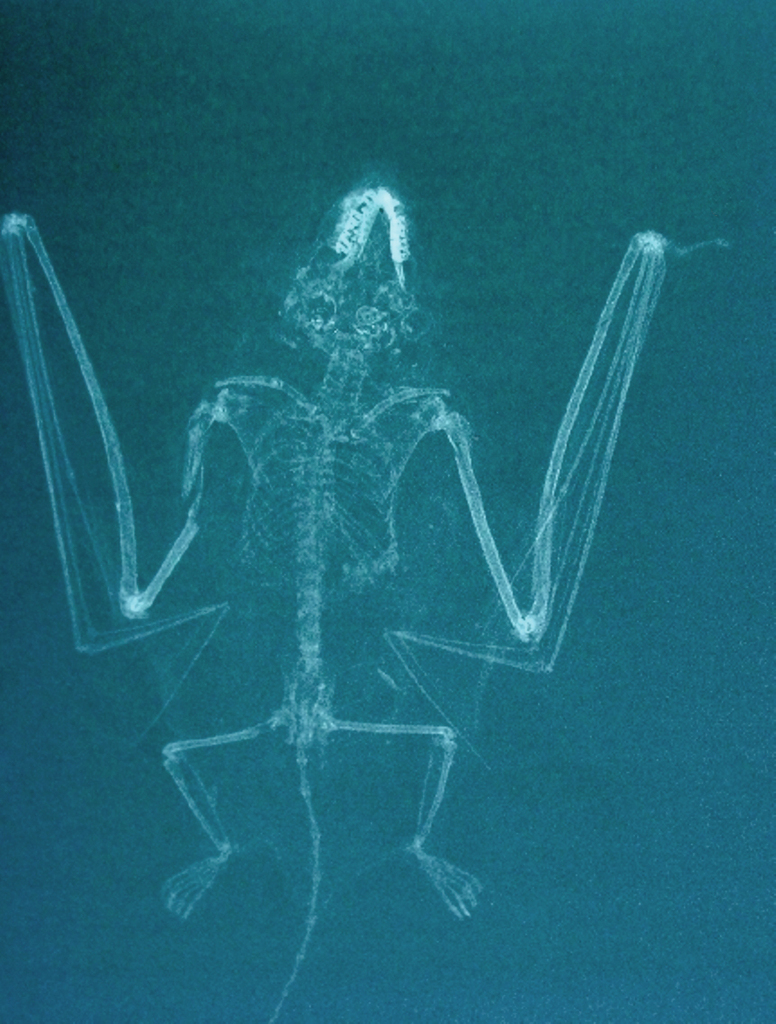
(c) William J. Deml, some rights reserved (CC BY) · licence
Family: Molossidae · Class: Mammalia · Order: Chiroptera
Tadarida brasiliensis (Brazilian Free-tailed Bat) is a California animal in the Molossidae family.
The Brazilian free-tailed bat is a medium-sized molossid bat with a distinctive tail that extends well beyond the interfemoral membrane. Adults measure 90 to 110 mm (3.5 to 4.3 inches) in total length, with forearm length ranging from 36 to 46 mm (1.4 to 1.8 inches). Body weight typically ranges from 11 to 14 grams (0.4 to 0.5 ounces). The species exhibits short, velvety fur that varies from dark brown to grayish-brown on the dorsal surface, with slightly lighter coloration ventrally. The ears are broad and rounded, projecting forward over the eyes, and the wings are long and narrow, adapted for rapid flight. Brazilian free-tailed bats have one of the most extensive distributions of any bat species in the Americas, ranging from the southern United States through Central America to southern South America. In California, the species occurs throughout much of the state, from sea level to elevations exceeding 3,000 meters (9,800 feet). Populations are documented from the Central Valley, coastal regions, desert areas, and mountainous terrain. The species is particularly abundant in urban and agricultural areas where suitable roosting sites and abundant insect prey are available. This species demonstrates extensive roost site flexibility, occupying natural caves, rock crevices, tree hollows, and numerous anthropogenic structures including buildings, bridges, bat houses, and attics. Large maternity colonies may contain thousands to millions of individuals, particularly in caves and under bridges. The species shows preference for warm roost sites with stable temperatures and multiple exit points. In California, major roost sites include sea caves along the coast, abandoned mines in desert regions, and urban structures throughout metropolitan areas. Brazilian free-tailed bats are exclusively insectivorous, employing echolocation to capture prey during aerial foraging. Their diet consists primarily of moths, beetles, flies, mosquitoes, and flying ants, with moths comprising up to 90% of the diet in some regions. These bats are capable of sustained flight at speeds exceeding 100 kilometers per hour (60 miles per hour) and can forage at altitudes up to 3,000 meters (10,000 feet). Mating occurs in early spring, with females giving birth to a single pup after a gestation period of 77 to 84 days. Maternity colonies form in late spring, with synchronized births typically occurring from May through July. Currently, the Brazilian free-tailed bat is not listed under federal or California endangered species legislation and maintains stable populations across most of its range. The species is classified as Least Concern by the International Union for Conservation of Nature as of December 2025. However, local populations face threats from habitat loss, pesticide use, and disturbance of roost sites. White-nose syndrome, a fungal disease affecting North American bat populations, has not significantly impacted this species. Conservation efforts focus on protecting major roost sites, reducing pesticide impacts on insect prey, and maintaining artificial roost structures in urban environments.
Classification
Class: Mammalia · Order: Chiroptera · Family: Molossidae
Frequently asked questions
How is Tadarida brasiliensis classified?
Tadarida brasiliensis belongs to class Mammalia, order Chiroptera, family Molossidae.
What family does Tadarida brasiliensis belong to?
Tadarida brasiliensis is in the Molossidae family.
What is Tadarida brasiliensis?
The Brazilian free-tailed bat is a medium-sized molossid bat with a distinctive tail that extends well beyond the interfemoral membrane.
Is Tadarida brasiliensis found in California?
Yes. Tadarida brasiliensis is recorded in California in The California Species Project's catalogue.
Related species
Other California species in the same genus, family, or bioregion.
Data from The California Species Project — 14,000+ California species with verified data from CNPS, CDFW, USFWS, and more.