Talanites moodyae
Moody's Gnaphosid Spider
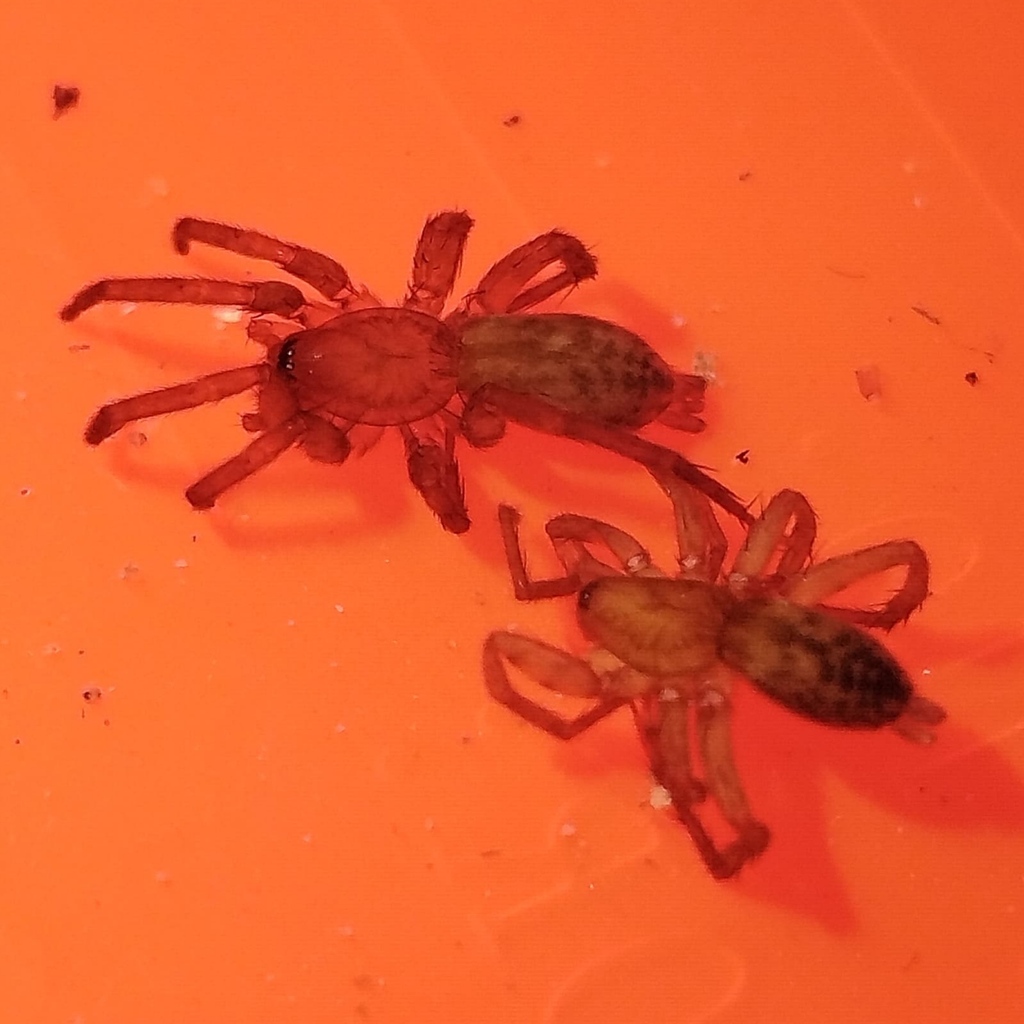
no rights reserved · CC0
Family: Gnaphosidae · Class: Arachnida · Order: Araneae
Conservation status: G2G3 S2S3
Talanites moodyae (Moody's Gnaphosid Spider) is a California animal in the Gnaphosidae family.
Talanites moodyae, commonly known as Moody's Gnaphosid Spider, is a ground spider in the family Gnaphosidae. This species belongs to the order Araneae within the class Arachnida, representing one of California's lesser-documented arachnid species. Like other members of the Gnaphosidae family, this species likely exhibits the characteristic body plan of ground spiders, with a relatively flattened cephalothorax and elongated legs adapted for rapid movement across substrate surfaces. Specific morphological details including body size, coloration patterns, and distinguishing features have not been well documented in available scientific literature. The distribution of Talanites moodyae appears to be restricted to California, though specific county-level occurrence data and detailed range maps are not currently available in accessible databases. The species' limited documentation suggests it may have a narrow geographic range within the state, potentially restricted to specific habitat types or ecological zones. Historical collection records and recent survey data that would clarify the species' current distribution remain sparse. Habitat requirements for this gnaphosid spider have not been thoroughly characterized. Ground spiders in the family Gnaphosidae typically inhabit diverse terrestrial environments, including leaf litter, under rocks and logs, in soil crevices, and within various vegetation communities. They are generally nocturnal hunters that construct silk-lined retreats in protected microhabitats. Without specific field studies, the preferred substrate types, elevation range, and associated plant communities for T. moodyae remain undetermined. Ecological information about Moody's Gnaphosid Spider is extremely limited. Ground spiders are typically active predators that hunt arthropod prey including small insects, other spiders, and various invertebrates. They do not construct webs for prey capture but instead rely on speed and stealth to ambush their quarry. Reproductive biology, seasonal activity patterns, and specific prey preferences for this species have not been documented. Life cycle duration, egg production, and developmental stages remain unknown. The conservation status of Talanites moodyae reflects significant knowledge gaps about this species. It carries a Global/State Rank of G2G3 S2S3, indicating the species is considered imperiled to vulnerable globally and within California. This ranking suggests the species may face threats from habitat loss, environmental changes, or has naturally small population sizes. However, without comprehensive surveys or population monitoring data, the actual conservation needs and threat assessment remain uncertain. The species lacks federal or state listing status, and specific conservation measures have not been identified. Detailed ecological studies of this species are lacking. The information presented here synthesizes available taxonomic and ranking data. Enhanced field surveys, taxonomic research, and ecological studies are needed to develop a comprehensive understanding of this spider's biology, distribution, and conservation requirements.
Classification
Class: Arachnida · Order: Araneae · Family: Gnaphosidae
Conservation status
G2G3 S2S3
Frequently asked questions
How is Talanites moodyae classified?
Talanites moodyae belongs to class Arachnida, order Araneae, family Gnaphosidae.
What family does Talanites moodyae belong to?
Talanites moodyae is in the Gnaphosidae family.
Is Talanites moodyae protected or of conservation concern?
Talanites moodyae carries the following status: G2G3 S2S3.
What is Talanites moodyae?
Talanites moodyae, commonly known as Moody's Gnaphosid Spider, is a ground spider in the family Gnaphosidae.
Is Talanites moodyae found in California?
Yes. Talanites moodyae is recorded in California in The California Species Project's catalogue.
Related species
Other California species in the same genus, family, or bioregion.
Data from The California Species Project — 14,000+ California species with verified data from CNPS, CDFW, USFWS, and more.