Talanites ubicki
Ubick's Gnaphosid Spider
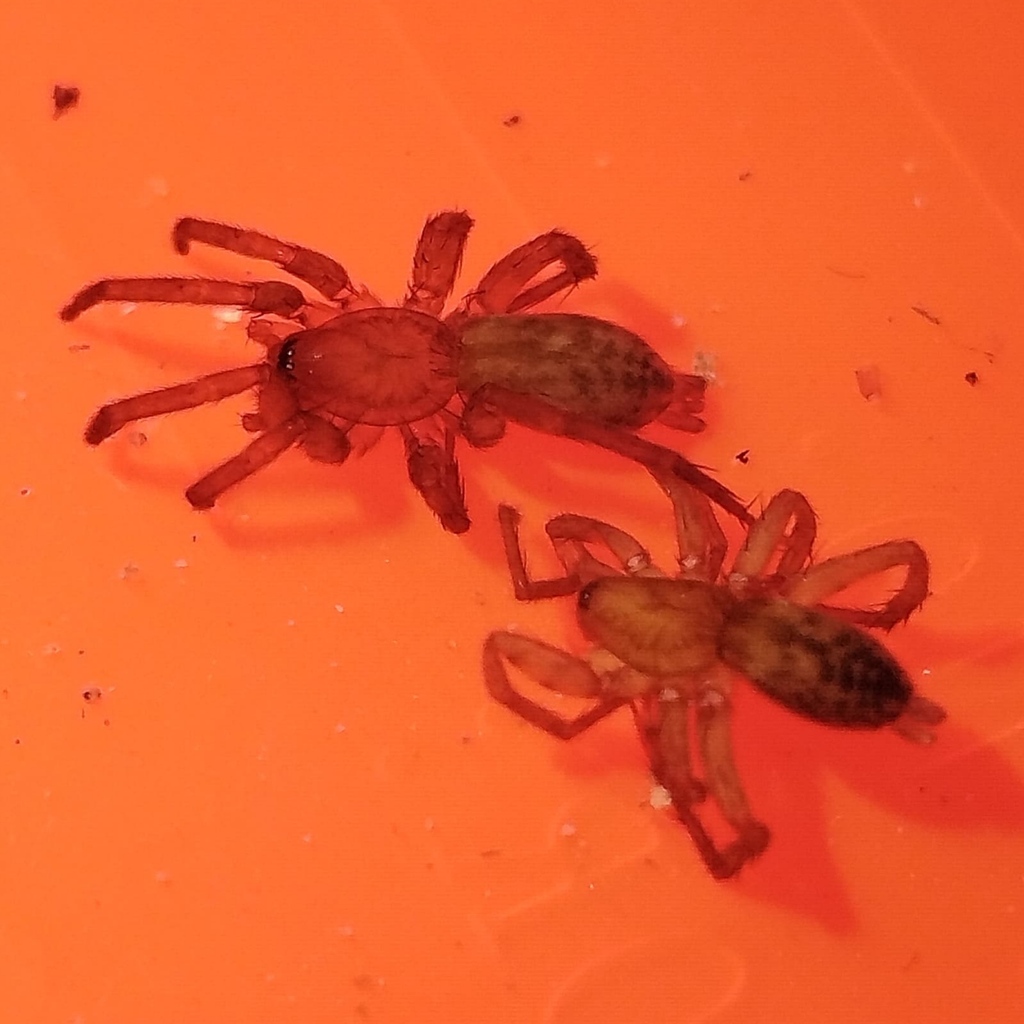
no rights reserved · CC0
Family: Gnaphosidae · Class: Arachnida · Order: Araneae
Conservation status: G1 S1
Talanites ubicki (Ubick's Gnaphosid Spider) is a California animal in the Gnaphosidae family.
Talanites ubicki, commonly known as Ubick's Gnaphosid Spider, is a critically rare arachnid endemic to California. This ground-dwelling spider belongs to the family Gnaphosidae, a group commonly known as ground spiders that are typically nocturnal hunters. Like other gnaphosids, T. ubicki likely possesses a flattened body form with relatively long legs adapted for rapid movement across substrate surfaces, though detailed morphological descriptions of this species remain limited in the scientific literature. The species has an extremely restricted distribution within California, contributing to its Global/State conservation rank of G1 S1, indicating it is critically imperiled both globally and within the state. This ranking suggests that fewer than 5 occurrences or very few remaining individuals are known to exist. The specific localities where T. ubicki has been documented have not been widely published, reflecting the species' rarity and the limited research conducted on California's gnaphosid fauna. Habitat requirements for T. ubicki have not been thoroughly documented, though most gnaphosid spiders are associated with ground-level microhabitats including leaf litter, under rocks, fallen logs, or within soil crevices. These spiders typically prefer areas with adequate moisture retention and protection from extreme temperatures. Given California's diverse ecosystems, T. ubicki may be restricted to specific soil types, vegetation communities, or microclimatic conditions that have not been fully characterized. As a member of Gnaphosidae, T. ubicki is presumed to be a nocturnal predator that actively hunts prey rather than constructing webs for capture. Gnaphosid spiders typically feed on small arthropods including insects, other spiders, and various invertebrates found in their ground-level habitat. The species likely constructs silk retreats under objects or within substrate crevices for molting and protection during daylight hours. Reproductive biology, including mating behavior, egg-laying patterns, and developmental timing, has not been documented for this species. The conservation status of T. ubicki reflects the precarious situation facing many of California's endemic arachnids. While not federally listed under the Endangered Species Act, the G1 S1 ranking indicates this species faces immediate risk of extinction. Primary threats likely include habitat destruction, fragmentation of remaining suitable habitat, urban development, and potential impacts from climate change affecting soil moisture and temperature regimes. The limited distribution makes any habitat alteration potentially catastrophic for the species' survival. Scientific documentation for T. ubicki remains extremely limited, reflecting the broader knowledge gaps in California's arachnid diversity. Comprehensive surveys of potential habitat areas and detailed ecological studies are urgently needed to understand the species' distribution, habitat requirements, and population status. Conservation efforts would benefit from systematic inventory work in areas of suitable habitat and protection of any confirmed localities. If you have additional verified information about this species' biology, distribution, or ecology, please contact us to help improve this species account.
Classification
Class: Arachnida · Order: Araneae · Family: Gnaphosidae
Conservation status
G1 S1
Frequently asked questions
How is Talanites ubicki classified?
Talanites ubicki belongs to class Arachnida, order Araneae, family Gnaphosidae.
What family does Talanites ubicki belong to?
Talanites ubicki is in the Gnaphosidae family.
Is Talanites ubicki protected or of conservation concern?
Talanites ubicki carries the following status: G1 S1.
What is Talanites ubicki?
Talanites ubicki, commonly known as Ubick's Gnaphosid Spider, is a critically rare arachnid endemic to California.
Is Talanites ubicki found in California?
Yes. Talanites ubicki is recorded in California in The California Species Project's catalogue.
Related species
Other California species in the same genus, family, or bioregion.
Data from The California Species Project — 14,000+ California species with verified data from CNPS, CDFW, USFWS, and more.