Tamalia coweni
Manzanita Leafgall Aphid
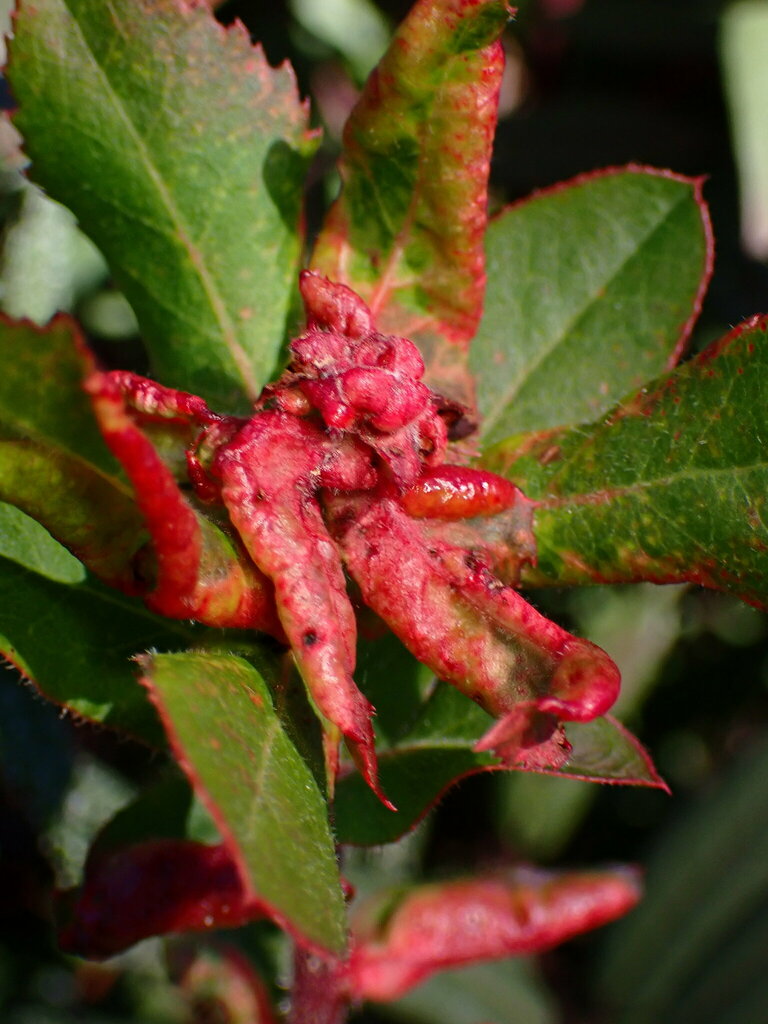
(c) Cricket Raspet, some rights reserved (CC BY) · licence
Family: Aphididae · Class: Insecta · Order: Hemiptera
Tamalia coweni (Manzanita Leafgall Aphid) is a California animal in the Aphididae family.
The Manzanita Leafgall Aphid (Tamalia coweni) is a small, specialized insect in the family Aphididae that creates distinctive galls on manzanita plants. Like other aphids, adults are soft-bodied and typically measure 1-3 mm in length, though specific morphological descriptions for this species remain limited in the scientific literature. This aphid species is endemic to California, where it occurs in areas supporting manzanita (Arctostaphylos) populations. Based on available records, the species has been documented in the Sierra Nevada region, including Lassen County at elevations around 5,050 feet (1,539 meters) (BugGuide 2020). The full extent of its distribution within California has not been comprehensively mapped, but it likely occurs wherever suitable manzanita host plants are present. Tamalia coweni inhabits areas where manzanita shrubs grow, including chaparral, woodland edges, and montane shrubland communities. The species shows a strict association with its manzanita hosts, creating galls specifically on the leaves of these plants. The elevation range appears to extend into montane zones, as evidenced by collections at over 5,000 feet elevation in the Sierra Nevada. The species exhibits a highly specialized life cycle centered around gall formation on manzanita leaves. Adult aphids induce the formation of leaf galls, which serve as both feeding sites and protective chambers for developing colonies. The galls provide shelter from environmental conditions and natural enemies while the aphids feed on plant tissues. Reproductive biology and seasonal timing of gall formation have not been well documented in the scientific literature. Natural enemies include predatory fly larvae from the family Aphididae, which have been observed feeding inside the galls (BugGuide 2020). The conservation status of Tamalia coweni has not been formally assessed by state or federal agencies. The species does not appear on current federal or California state endangered species lists as of December 2025. However, like many specialized gall-forming insects, the species may face conservation challenges related to habitat loss and fragmentation of chaparral and woodland ecosystems in California. Manzanita habitats throughout California have experienced pressure from urban development, fire suppression, and climate change. The species' apparent host specificity to manzanita plants makes it potentially vulnerable to factors affecting these shrub communities. Detailed ecological studies of this species are lacking. The above information synthesizes available observations from BugGuide and limited field reports. Research gaps include comprehensive distribution mapping, detailed life cycle studies, host plant specificity within the genus Arctostaphylos, and population status assessments. We welcome contributions of verified scientific data, photographs, or field observations to enhance this species account.
Classification
Class: Insecta · Order: Hemiptera · Family: Aphididae
Frequently asked questions
How is Tamalia coweni classified?
Tamalia coweni belongs to class Insecta, order Hemiptera, family Aphididae.
What family does Tamalia coweni belong to?
Tamalia coweni is in the Aphididae family.
What is Tamalia coweni?
The Manzanita Leafgall Aphid (Tamalia coweni) is a small, specialized insect in the family Aphididae that creates distinctive galls on manzanita plants.
Is Tamalia coweni found in California?
Yes. Tamalia coweni is recorded in California in The California Species Project's catalogue.
Related species
Other California species in the same genus, family, or bioregion.
Data from The California Species Project — 14,000+ California species with verified data from CNPS, CDFW, USFWS, and more.