Tamias amoenus
Yellow-pine Chipmunk
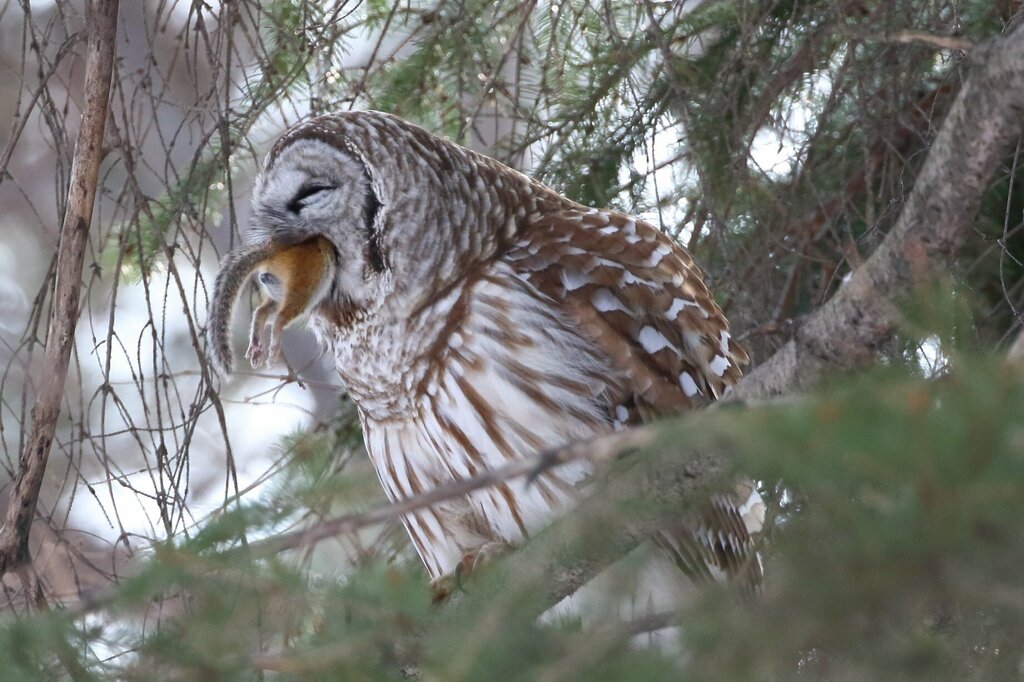
no rights reserved · CC0
Family: Sciuridae · Class: Mammalia · Order: Rodentia
Tamias amoenus (Yellow-pine Chipmunk) is a California animal in the Sciuridae family.
The yellow-pine chipmunk is a small sciurid rodent endemic to western North America. Adults typically measure 85-110 mm (3.3-4.3 inches) in body length with tails of 75-110 mm (3.0-4.3 inches). The species exhibits the characteristic chipmunk pattern of five dark stripes alternating with four light stripes along the dorsal surface. The central dark stripe extends from the nose to the base of the tail, while facial stripes include a dark postauricular stripe and light postauricular patch. The ventral surface is typically grayish-white to buff colored. Yellow-pine chipmunks occur throughout the mountainous regions of western North America, from British Columbia south through Washington, Oregon, Idaho, and into northern California. The species' range extends eastward into western Montana and Wyoming. In California, populations are found primarily in the Sierra Nevada, Cascade Range, and scattered locations in northeastern counties. The species occurs across a broad elevational range from approximately 300 meters in northern portions of the range to over 3,000 meters in montane areas. This species inhabits a diverse array of forest and woodland communities, though it shows preference for coniferous forests. According to Animal Diversity Web, yellow-pine chipmunks are most common in brushy coniferous forests but can be found in a broad range of habitat types. The species occurs in ponderosa pine forests, mixed conifer forests, Douglas-fir stands, and montane shrublands. NatureServe data indicates the species is characteristic of East Cascades oak-ponderosa pine forest and woodland communities, as well as North Pacific montane shrubland and alpine dwarf-shrubland habitats. Elevational preferences vary geographically, with populations occurring from near sea level in northern coastal areas to subalpine zones in montane regions. Yellow-pine chipmunks are primarily granivorous, feeding on conifer seeds, acorns, and other nuts, though they supplement their diet with berries, green vegetation, and occasionally insects. The species exhibits typical chipmunk caching behavior, storing seeds and nuts in underground chambers for winter consumption. Breeding occurs from April through July, with females producing a single litter annually of 2-6 young after a gestation period of approximately 30 days. Young become independent at 6-8 weeks of age. The species demonstrates semi-fossorial habits, constructing extensive burrow systems for nesting, food storage, and winter shelter. Currently, Tamias amoenus maintains stable populations across most of its range and is not federally listed or considered a species of conservation concern. NatureServe assigns the species a global conservation status of G5 (secure). However, some subspecies face localized threats. The subspecies T. a. celeris occurs as a disjunct, isolated population restricted to a single mountain range where it is moderately vulnerable to climate change impacts (NatureServe Explorer). Primary conservation considerations include habitat fragmentation from development and potential climate-induced shifts in suitable forest habitat, particularly for high-elevation populations.
Classification
Class: Mammalia · Order: Rodentia · Family: Sciuridae
Frequently asked questions
How is Tamias amoenus classified?
Tamias amoenus belongs to class Mammalia, order Rodentia, family Sciuridae.
What family does Tamias amoenus belong to?
Tamias amoenus is in the Sciuridae family.
What is Tamias amoenus?
The yellow-pine chipmunk is a small sciurid rodent endemic to western North America.
Is Tamias amoenus found in California?
Yes. Tamias amoenus is recorded in California in The California Species Project's catalogue.
Related species
Other California species in the same genus, family, or bioregion.
Data from The California Species Project — 14,000+ California species with verified data from CNPS, CDFW, USFWS, and more.