Tamias ochrogenys
Redwood Chipmunk
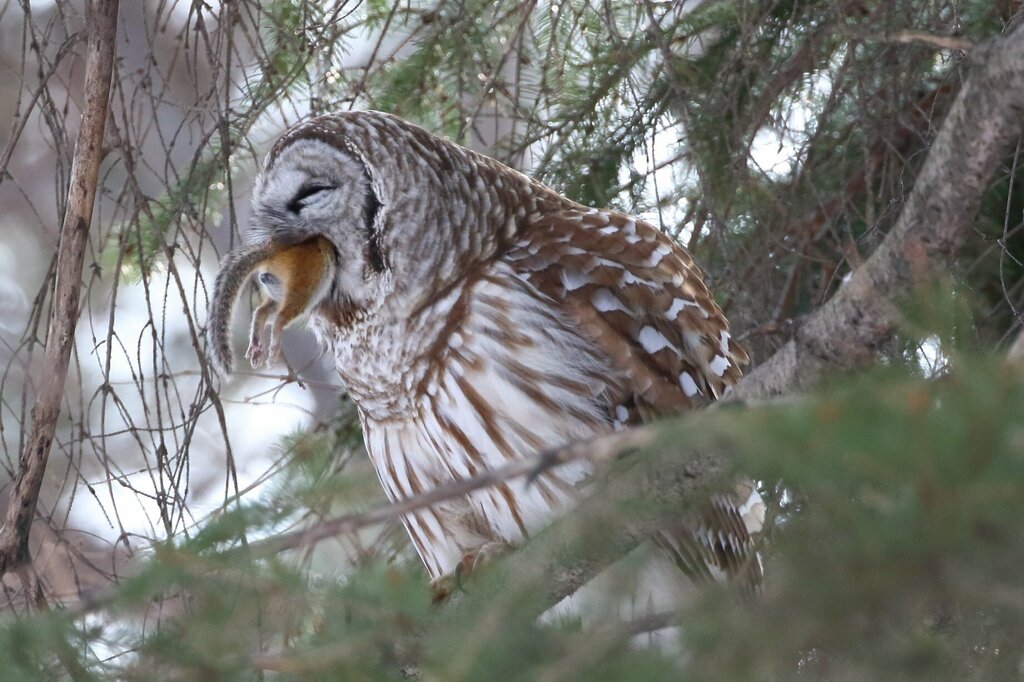
no rights reserved · CC0
Family: Sciuridae · Class: Mammalia · Order: Rodentia
Tamias ochrogenys (Redwood Chipmunk) is a California animal in the Sciuridae family.
The Redwood Chipmunk is a medium-sized member of the squirrel family endemic to the coastal forests of northern California. Adults measure 225 to 270 mm (8.9 to 10.6 inches) in total length, including a bushy tail of 95 to 120 mm (3.7 to 4.7 inches). Body weight ranges from 60 to 85 grams (2.1 to 3.0 ounces). The species displays the characteristic chipmunk pattern of alternating dark and light stripes along the back, with five distinct dark stripes separated by four lighter stripes. The dorsal pelage is reddish-brown to tawny, giving rise to its common name, while the ventral surface is pale gray to white. The species can be distinguished from other California chipmunks by its relatively large size, reddish coloration, and distinctive facial markings with prominent white stripes above and below the eye. The Redwood Chipmunk has the most restricted distribution of any California chipmunk species, occurring only in the coastal redwood forests from southwestern Oregon south to Sonoma County, California. The species' range extends inland approximately 50 kilometers from the Pacific Coast, following the natural distribution of coast redwood groves. In California, populations are documented in Del Norte, Humboldt, Mendocino, and northern Sonoma counties. The species occurs primarily in areas below 600 meters (1,970 feet) elevation, though some populations extend to 900 meters (2,950 feet) in interior valleys. This chipmunk inhabits dense, mature coast redwood forests and adjacent mixed evergreen forests. Primary habitat requirements include a well-developed understory of shrubs such as huckleberry, rhododendron, and salmonberry, along with dense canopy cover that maintains cool, humid microclimate conditions. The species also utilizes Douglas fir forests, tanoak woodlands, and riparian areas within its range. Fallen logs, root systems, and rock crevices provide essential denning sites and refuge from predators. Redwood Chipmunks are primarily granivorous, feeding on seeds and nuts of conifers, particularly redwood, Douglas fir, and tanoak. Their diet also includes berries, fungi, green vegetation, and occasionally insects. The species exhibits typical chipmunk behavior of collecting and caching seeds in underground burrows for winter survival. Breeding occurs once annually, typically from April to June. Females produce litters of 3 to 5 young after a gestation period of approximately 30 days. Young emerge from natal burrows in late summer and disperse to establish territories before winter. The species is active during daylight hours and enters periods of reduced activity during winter months, though it does not undergo true hibernation. The Redwood Chipmunk is not federally or state listed, but its conservation status reflects concerns about habitat loss and fragmentation. The species' restricted range makes it vulnerable to logging activities, development pressures in coastal areas, and climate change impacts on redwood forest ecosystems. Forest management practices that maintain old-growth characteristics and understory diversity are essential for population persistence. Current population trends are poorly documented, though habitat loss has likely resulted in localized declines throughout portions of the species' range.
Classification
Class: Mammalia · Order: Rodentia · Family: Sciuridae
Frequently asked questions
How is Tamias ochrogenys classified?
Tamias ochrogenys belongs to class Mammalia, order Rodentia, family Sciuridae.
What family does Tamias ochrogenys belong to?
Tamias ochrogenys is in the Sciuridae family.
What is Tamias ochrogenys?
The Redwood Chipmunk is a medium-sized member of the squirrel family endemic to the coastal forests of northern California.
Is Tamias ochrogenys found in California?
Yes. Tamias ochrogenys is recorded in California in The California Species Project's catalogue.
Related species
Other California species in the same genus, family, or bioregion.
Data from The California Species Project — 14,000+ California species with verified data from CNPS, CDFW, USFWS, and more.