Tamias panamintinus
Panamint Chipmunk
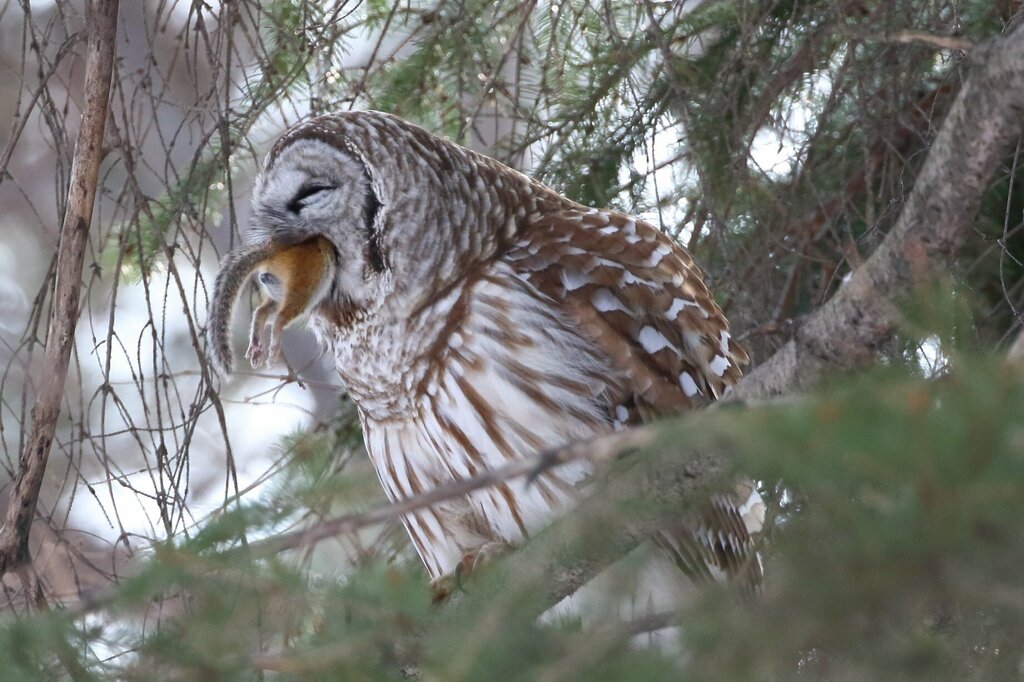
no rights reserved · CC0
Family: Sciuridae · Class: Mammalia · Order: Rodentia
Tamias panamintinus (Panamint Chipmunk) is a California animal in the Sciuridae family.
The Panamint chipmunk is a medium-sized ground squirrel endemic to the mountainous regions of eastern California and southern Nevada. Adults measure 200 to 250 mm (7.9 to 9.8 inches) in total length, with the tail comprising approximately 40% of the total body length. Body mass ranges from 50 to 80 grams (1.8 to 2.8 ounces). The dorsal pelage displays a grizzled grayish-brown coloration with five distinct dark stripes alternating with four lighter stripes running from head to rump. The central dark stripe is typically the most prominent. Ventral surfaces are pale gray to white, and the bushy tail shows alternating dark and light bands with white-tipped hairs. Historically, Panamint chipmunks occurred throughout the Great Basin mountain ranges of eastern California and adjacent Nevada. In California, populations are documented from the Panamint Range, White Mountains, Inyo Mountains, and scattered locations in the northern Mojave Desert mountains. The species also occurs in Nevada's Charleston Peak area and other southern Nevada mountain ranges. Current distribution appears fragmented compared to historical records, with some populations potentially extirpated from lower elevation sites. This species inhabits montane coniferous forests and woodlands, typically occurring between 1,500 and 3,400 meters (4,920 to 11,150 feet) elevation. Preferred habitats include pinyon-juniper woodlands, mixed conifer forests with ponderosa pine and white fir, and subalpine zones with limber pine and bristlecone pine. Panamint chipmunks require areas with adequate rock cover, fallen logs, and dense shrub understory for shelter and foraging. They construct burrow systems beneath rocks, logs, or tree roots, with multiple entrances and chambers for food storage and nesting. Panamint chipmunks are primarily granivorous, feeding on seeds of conifers, shrubs, and forbs. Diet includes pinyon nuts, juniper berries, manzanita seeds, and various grass seeds. They also consume green vegetation, flowers, and occasionally insects. Breeding occurs from April through June, with females producing one litter annually of 3 to 5 young after a gestation period of approximately 30 days. The species exhibits torpor during winter months, relying on cached food stores. They are active during daylight hours and are accomplished climbers, foraging both on the ground and in trees. The Panamint chipmunk is not federally listed but faces conservation challenges from habitat fragmentation, climate change, and wildfire. Rising temperatures associated with climate change pose particular threats to montane populations, potentially forcing range shifts to higher elevations where suitable habitat may be limited. Some populations occur within protected areas including Death Valley National Park and Inyo National Forest. Population trends and current abundance remain poorly documented, highlighting the need for systematic surveys to assess conservation status. The species' restricted range and specialized habitat requirements make it vulnerable to environmental changes affecting Great Basin mountain ecosystems.
Classification
Class: Mammalia · Order: Rodentia · Family: Sciuridae
Frequently asked questions
How is Tamias panamintinus classified?
Tamias panamintinus belongs to class Mammalia, order Rodentia, family Sciuridae.
What family does Tamias panamintinus belong to?
Tamias panamintinus is in the Sciuridae family.
What is Tamias panamintinus?
The Panamint chipmunk is a medium-sized ground squirrel endemic to the mountainous regions of eastern California and southern Nevada.
Is Tamias panamintinus found in California?
Yes. Tamias panamintinus is recorded in California in The California Species Project's catalogue.
Related species
Other California species in the same genus, family, or bioregion.
Data from The California Species Project — 14,000+ California species with verified data from CNPS, CDFW, USFWS, and more.