Tamias senex
Shadow Chipmunk
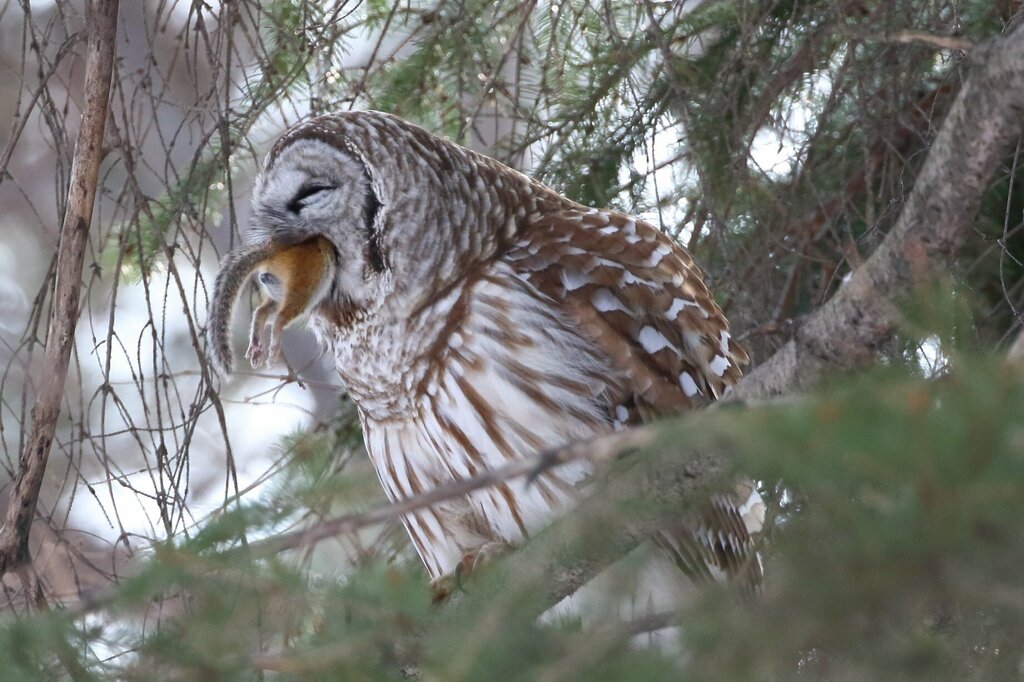
no rights reserved · CC0
Family: Sciuridae · Class: Mammalia · Order: Rodentia
Tamias senex (Shadow Chipmunk) is a California animal in the Sciuridae family.
The shadow chipmunk (Tamias senex) is a medium-sized ground squirrel endemic to the Sierra Nevada and southern Cascade Range of California. Adults measure 210 to 250 mm (8.3 to 9.8 inches) in total length, including a tail of 95 to 115 mm (3.7 to 4.5 inches). Body weight ranges from 50 to 85 grams (1.8 to 3.0 ounces). The dorsal pelage displays five distinct dark stripes alternating with four pale stripes extending from head to rump. The central dark stripe is typically the most prominent, while lateral stripes may be less defined than in other chipmunk species. The sides are grayish-brown, and the underparts are whitish to pale gray. The tail is dark above with pale edges and grayish below. Shadow chipmunks occur in the Sierra Nevada from Plumas County south to Tulare County, and in the southern Cascade Range of Shasta and Lassen counties. The species inhabits elevations ranging from 1,200 to 2,800 meters (3,900 to 9,200 feet), with most populations occurring between 1,500 and 2,400 meters. Historical records indicate the species once occurred at slightly lower elevations, but habitat modification has restricted the current range. This species occupies mixed coniferous forests dominated by ponderosa pine, Douglas fir, white fir, and incense cedar. Shadow chipmunks prefer areas with dense understory vegetation, fallen logs, and rocky outcrops that provide cover and foraging opportunities. They are commonly found along forest edges, in clearings, and near streams where shrub density is high. The species shows particular association with areas containing manzanita, ceanothus, and oak brush. Shadow chipmunks are primarily granivorous, feeding on seeds of conifers, shrubs, and forbs. Their diet includes pine nuts, fir seeds, acorns, and seeds of manzanita and ceanothus. During summer months, they also consume fungi, green vegetation, and occasionally insects. The species exhibits typical chipmunk behavior, storing food in underground caches for winter survival. Breeding occurs from April to June, with females producing a single litter annually. Gestation lasts approximately 30 days, and litters contain 3 to 6 young. Juveniles emerge from burrows in July and August. Shadow chipmunks are active during daylight hours and enter torpor during winter months, though they may emerge on warm days to access cached food. They construct burrow systems up to 1.5 meters deep with multiple entrances, nesting chambers, and food storage areas. The shadow chipmunk is not federally listed and has no special conservation status in California as of December 2025. However, populations face pressure from habitat fragmentation due to logging, development, and fire suppression practices that alter forest structure. Climate change poses an additional threat, as warming temperatures may force populations to higher elevations where suitable habitat becomes increasingly limited. Some local populations have declined due to conversion of mixed coniferous forest to dense single-species stands that lack the understory diversity required by this species.
Classification
Class: Mammalia · Order: Rodentia · Family: Sciuridae
Frequently asked questions
How is Tamias senex classified?
Tamias senex belongs to class Mammalia, order Rodentia, family Sciuridae.
What family does Tamias senex belong to?
Tamias senex is in the Sciuridae family.
What is Tamias senex?
The shadow chipmunk (Tamias senex) is a medium-sized ground squirrel endemic to the Sierra Nevada and southern Cascade Range of California.
Is Tamias senex found in California?
Yes. Tamias senex is recorded in California in The California Species Project's catalogue.
Related species
Other California species in the same genus, family, or bioregion.
Data from The California Species Project — 14,000+ California species with verified data from CNPS, CDFW, USFWS, and more.