Tamias siskiyou
Siskiyou Chipmunk
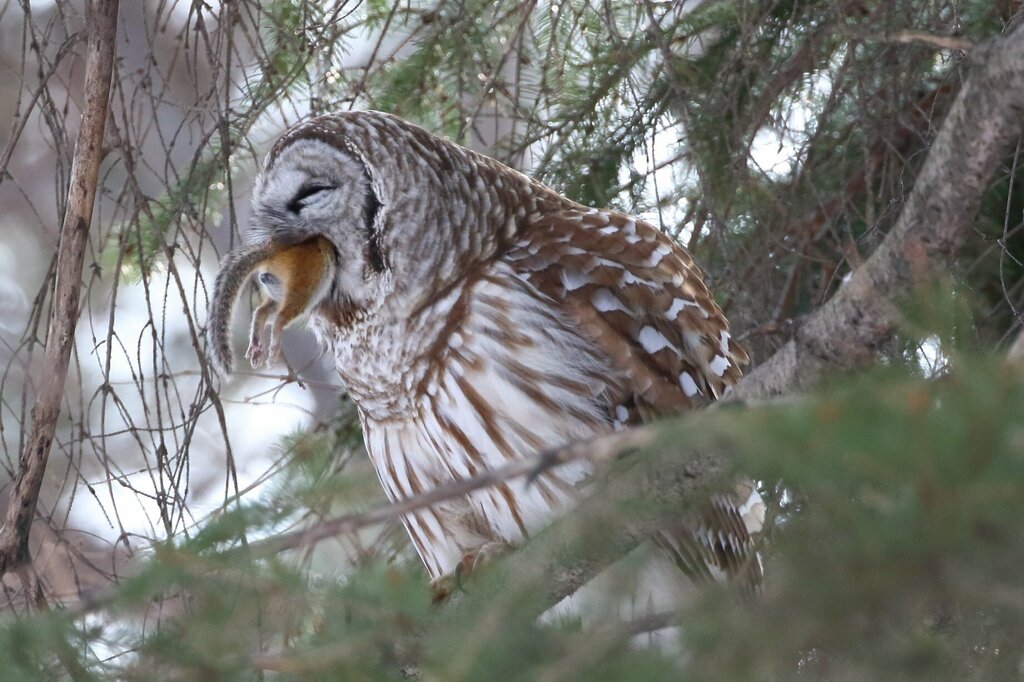
no rights reserved · CC0
Family: Sciuridae · Class: Mammalia · Order: Rodentia
Tamias siskiyou (Siskiyou Chipmunk) is a California animal in the Sciuridae family.
The Siskiyou chipmunk is a medium-sized chipmunk endemic to the Klamath-Siskiyou region of southwestern Oregon and northwestern California. Adults typically measure 90-110 mm (3.5-4.3 inches) in head-body length, with a tail length of 75-95 mm (3.0-3.7 inches). Body weight ranges from 35-50 grams (1.2-1.8 ounces). The species exhibits the characteristic chipmunk coloration with five distinct dark stripes separated by four light stripes running along the back. The central dark stripe is blackish, while the lateral dark stripes are dark brown. Light stripes are grayish-white to buff-colored. The sides of the body are rusty-brown to orange-brown, and the underparts are whitish to pale gray. The tail is dark above with white-tipped hairs and orange-brown below with a black border. The Siskiyou chipmunk occupies a limited range in the Klamath Mountains, primarily in Siskiyou County, California, and adjacent areas of southwestern Oregon. In California, the species is documented from the Castle Lake area, Mount Shasta region, and scattered locations in the Marble Mountain Wilderness and Russian Wilderness areas. The distribution extends northward into Jackson and Josephine counties in Oregon. This range represents one of the most restricted distributions among North American chipmunk species. The species inhabits coniferous forests at elevations ranging from 1,200 to 2,400 meters (3,900 to 7,900 feet). Primary habitat consists of mixed conifer forests dominated by Douglas fir, white fir, red fir, and Shasta red fir, often with an understory of manzanita, chinquapin, and huckleberry. The species shows a preference for areas with rocky outcrops, fallen logs, and dense shrub cover that provide shelter and foraging opportunities. Talus slopes and areas with granite boulders are particularly favored microhabitats. Siskiyou chipmunks are primarily granivorous, feeding on seeds of conifers, particularly Douglas fir, white fir, and pine species. The diet also includes nuts from chinquapin and hazelnuts, berries of manzanita and huckleberry, and occasionally fungi and insects. Like other chipmunks, they are active during daylight hours and cache food in underground burrows for winter survival. Breeding occurs from April to May following emergence from winter dormancy, with females producing a single annual litter of 3-5 young after a gestation period of approximately 30 days. Young are born in May or June and become independent by late summer. The Siskiyou chipmunk is not federally listed but faces conservation concerns due to its extremely limited range and habitat specificity. Climate change poses a significant threat, as warming temperatures may force the species to higher elevations where suitable habitat becomes increasingly fragmented. Forest management practices, including logging and fire suppression that alter forest structure, represent additional threats. The species' restricted distribution makes it particularly vulnerable to stochastic events and habitat loss. Population monitoring is limited, but the species appears to maintain stable numbers within its core range areas.
Classification
Class: Mammalia · Order: Rodentia · Family: Sciuridae
Frequently asked questions
How is Tamias siskiyou classified?
Tamias siskiyou belongs to class Mammalia, order Rodentia, family Sciuridae.
What family does Tamias siskiyou belong to?
Tamias siskiyou is in the Sciuridae family.
What is Tamias siskiyou?
The Siskiyou chipmunk is a medium-sized chipmunk endemic to the Klamath-Siskiyou region of southwestern Oregon and northwestern California.
Is Tamias siskiyou found in California?
Yes. Tamias siskiyou is recorded in California in The California Species Project's catalogue.
Related species
Other California species in the same genus, family, or bioregion.
Data from The California Species Project — 14,000+ California species with verified data from CNPS, CDFW, USFWS, and more.