Tamias umbrinus
Uinta Chipmunk
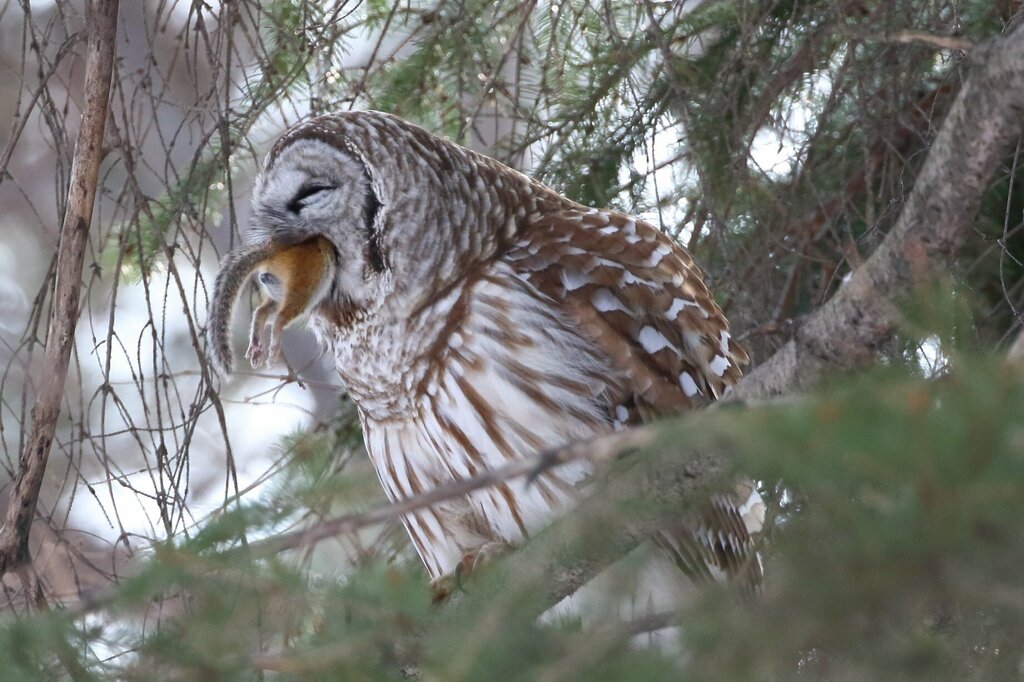
no rights reserved · CC0
Family: Sciuridae · Class: Mammalia · Order: Rodentia
Tamias umbrinus (Uinta Chipmunk) is a California animal in the Sciuridae family.
The Uinta chipmunk is a medium-sized ground squirrel measuring 200 to 235 mm (7.9 to 9.3 inches) in total length, with a tail length of 85 to 105 mm (3.3 to 4.1 inches). Adults weigh between 50 to 70 grams (1.8 to 2.5 ounces). The species displays distinctive coloration with five dark brown to black stripes alternating with four light gray to whitish stripes running longitudinally along the back. The central dark stripe extends from the head to the base of the tail, while the outer stripes are less pronounced. The sides are grayish-brown, and the underparts are pale gray to white. The tail is moderately bushy with dark and light banding, and the ears are relatively small and rounded. The Uinta chipmunk occurs in the mountainous regions of the western United States, with its range extending into extreme northeastern California in the Warner Mountains of Modoc County. The species is primarily distributed throughout Utah, eastern Idaho, western Wyoming, western Colorado, and small portions of Nevada. In California, populations are restricted to high-elevation areas near the Oregon border, representing the westernmost extent of the species' range. This chipmunk inhabits coniferous forests at elevations ranging from 1,220 to 3,350 meters (4,000 to 11,000 feet). Preferred habitats include lodgepole pine, Engelmann spruce, subalpine fir, and aspen forests, often with dense understory vegetation including shrubs and fallen logs. The species shows a preference for areas with rocky outcrops, fallen timber, and dense ground cover that provide shelter and foraging opportunities. In California's Warner Mountains, populations occur in mixed conifer forests dominated by ponderosa pine, white fir, and incense cedar. Uinta chipmunks are primarily granivorous, feeding on conifer seeds, particularly those of lodgepole pine, Engelmann spruce, and fir species. Their diet also includes nuts, berries, fungi, green vegetation, and occasionally insects. The species exhibits typical chipmunk caching behavior, storing seeds and nuts in underground burrows for winter consumption. Breeding occurs once annually, typically from April to June depending on elevation and snow conditions. Females produce litters of 3 to 6 young after a gestation period of approximately 30 days. The species enters torpor during winter months but may emerge during warm periods to access cached food supplies. The Uinta chipmunk is not federally listed and is considered stable throughout most of its range. Population trends in California are not well documented due to the species' limited distribution in the state. The primary habitat threats include climate change effects on high-elevation forest ecosystems, altered fire regimes, and potential impacts from recreational activities in mountainous areas. Forest management practices and timber harvesting may affect local populations through habitat modification, though the species can adapt to some level of forest disturbance if adequate cover and food sources remain available.
Classification
Class: Mammalia · Order: Rodentia · Family: Sciuridae
Frequently asked questions
How is Tamias umbrinus classified?
Tamias umbrinus belongs to class Mammalia, order Rodentia, family Sciuridae.
What family does Tamias umbrinus belong to?
Tamias umbrinus is in the Sciuridae family.
What is Tamias umbrinus?
The Uinta chipmunk is a medium-sized ground squirrel measuring 200 to 235 mm (7.9 to 9.3 inches) in total length, with a tail length of 85 to 105 mm (3.3 to 4.1 inches).
Is Tamias umbrinus found in California?
Yes. Tamias umbrinus is recorded in California in The California Species Project's catalogue.
Related species
Other California species in the same genus, family, or bioregion.
Data from The California Species Project — 14,000+ California species with verified data from CNPS, CDFW, USFWS, and more.